
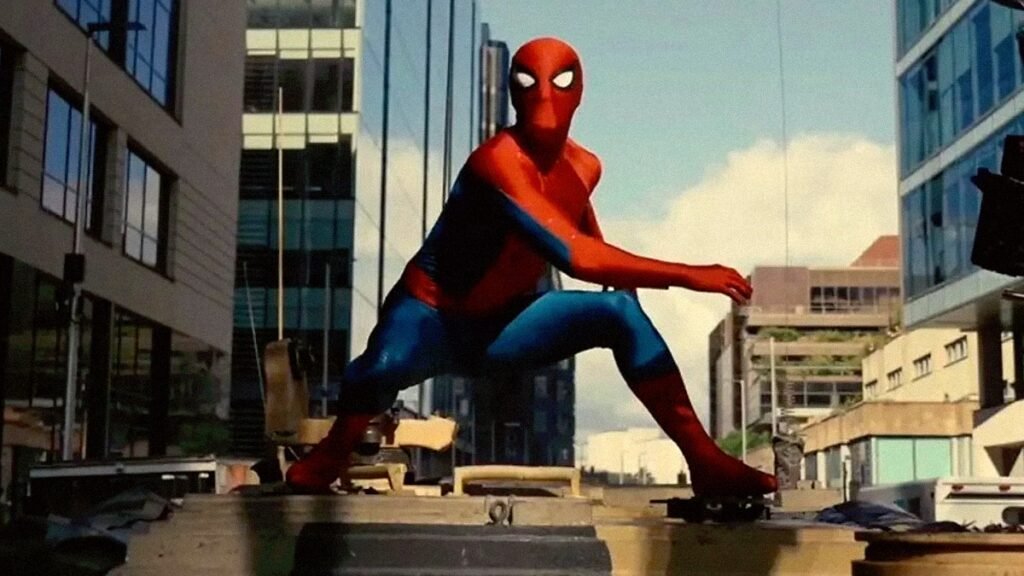
What Comics to Read Before Spider-Man: Brand New Day (2026)
By Jimigrimm
Spider-Man: Brand New Day hits theaters July 31, 2026. It’s the fourth Tom Holland Spider-Man film and the first directed by Destin Daniel Cretton, who directed Shang-Chi. The trailer has confirmed villains including Mr. Negative, Tombstone, and the Hand, along with appearances from Charlie Cox as Daredevil, Mark Ruffalo as Hulk, and Jon Bernthal as the Punisher.
The title comes from a specific comic book storyline, and the trailer draws from at least three separate source arcs. If you want to go into the movie understanding where these stories came from, this is what to read and why each one matters.
Brand New Day (Amazing Spider-Man #546-564, 2008)
This is the comic the movie takes its name from. Written by Dan Slott, Marc Guggenheim, Bob Gale, and Zeb Wells, Brand New Day launched a new era for Spider-Man in the comics. Peter Parker is single, broke, and starting over after the events of One More Day erased his marriage to Mary Jane. That fresh-start DNA, a Peter alone in New York, rebuilding from nothing against street-level threats, is the foundation the film is built on.
The full Brand New Day banner ran from Amazing Spider-Man #546 through #647, spanning 102 issues. You don’t need to read all of them. The opening arc (#546-548) establishes the new status quo and introduces the era’s new rogues, including Mr. Negative, the crime boss with the split identity that the Insomniac PlayStation game later made famous. If you want more, the “New Ways to Die” arc (#568-573) brings back classic villains and is the era at its best.
And one deep-cut receipt for the trivia crowd: of all the villains in the film, the only one pulled straight from the actual Brand New Day comics arc is Ramrod, an obscure bruiser with a handful of appearances to his name. The era’s DNA is all over the movie. Its villains, mostly, are not.
The Brand New Day Complete Collection trade paperbacks collect the key issues across two volumes if you want a clean reading experience.
One More Day (2007)
One More Day is the storyline that CREATED the Brand New Day status quo, and it’s the single most important read on this list. It ran across Amazing Spider-Man #544-545, Friendly Neighborhood Spider-Man #24, and Sensational Spider-Man #41. Written by J. Michael Straczynski with art by Joe Quesada.
The premise: Aunt May is dying from a gunshot wound. Peter makes a deal with the demon Mephisto to save her life. The cost is his marriage to Mary Jane. Mephisto erases their relationship from history. Peter wakes up in a world where he and MJ were never married, and nobody remembers why things are different.
Get the history behind the stories.
One email a week. Read it before it hits the feeds.
This storyline divided Spider-Man fans when it was published and is still debated today. Straczynski publicly disagreed with the ending and asked to have his name removed from the final issues. The reason it matters for the movie: the MCU’s Peter Parker went through a similar reset at the end of No Way Home, where Doctor Strange’s spell erased everyone’s memory of Peter. The comics’ Brand New Day and the MCU’s share the same foundation, Peter Parker starting over in a world that has forgotten him, and the film leans into that parallel harder than any trailer suggested. What the comics bought with a devil’s bargain, the movies bought with a sacrifice, and the difference between those two prices is the whole conversation.
You don’t have to like One More Day to appreciate why it matters. But reading it gives you the context for everything Brand New Day built on top of.
Jean Grey, Sara Grey, and the X-Men Corner Nobody Expected
Here’s the homework no pre-release reading list saw coming, ours included: the film’s most important new character comes from the X-Men side of the shelf, and her story reaches back to 1966.
Jean Grey’s older sister first gets a mention in X-Men #22, where Jean describes visiting “a sister in Albany.” Chris Claremont gave her the name Sara during the Dark Phoenix Saga itself, in Uncanny X-Men #136, when a Phoenix-possessed Jean, in a moment of clarity, goes home, and Sara is standing there, learning for the first time that her sister is a mutant. She existed at the emotional center of the most-adapted X-Men story ever, and every previous screen adaptation cut her. Marvel’s comics only recently circled back to her, with a 2025 Phoenix issue finally giving her cosmic significance after decades in the margins.
If you want the Jean side: X-Men #22 for the first thread, Uncanny X-Men #135-137 for the Dark Phoenix stretch where Sara appears and where every screen Jean has drawn her fire, and the modern Jean Grey solo material if you want to see how the comics handle a young telepath alone with too much power, which is precisely the register the film plays in.
The Street Villains: Scorpion, Tombstone, and the Hand
The Scorpion is the payoff nine years in the making. Mac Gargan appeared in Spider-Man: Homecoming’s post-credits scene back in 2017, jailhouse tattoo and all, promising Spider-Man a reckoning. In the comics, the Scorpion debuts in Amazing Spider-Man #20 (1965): Gargan is a private investigator transformed in an experiment bankrolled by J. Jonah Jameson himself, specifically to destroy Spider-Man, one of the great “the media created the monster” stories in Marvel history. Amazing Spider-Man #19-20 covers it in an afternoon.
Tombstone, Lonnie Lincoln, first appears in Web of Spider-Man #36: an albino kid from Harlem, ostracized for how he looked and how he sounded, who leaned into the fear, filed his teeth, and became one of New York’s coldest crime bosses. His deepest comics material ties him to Daily Bugle editor Robbie Robertson, who knew him in school and buried the story of his first crimes, one of the best long-simmering moral threads Spider-Man comics ever ran. Marvin Jones III plays him in the film, the same voice behind the animated Tombstone in Into the Spider-Verse, a rare piece of casting continuity across two separate Spider-Man universes.
The Hand are the ninja assassin organization from Daredevil’s corner of Marvel, tied to organized crime and dark resurrection magic. The essential reading is Frank Miller’s Daredevil run (Daredevil #158-191, 1979-1983), which introduced Elektra and made the Hand what they are. If you’ve watched Daredevil: Born Again on Disney+, you already have the context for who they are and why they’d surface in a street-level Spider-Man story.
The Punisher
Jon Bernthal’s Frank Castle looms over this film, and the history matters more than usual here. The Punisher’s very first appearance in comics is a Spider-Man story: Amazing Spider-Man #129 (1974), where Castle is introduced as a killer aimed at Spider-Man by someone else’s lies. The two have spent fifty years on opposite sides of one question, what do you do with the people the system can’t handle, and the film puts that exact question center stage. For the modern, uncompromising version of Castle, Garth Ennis’s Punisher MAX run is the standard. If you’ve watched Daredevil: Born Again, you have the MCU context; the comics give you the fifty-year argument behind it.
What You Actually Need
If you only read one thing: One More Day, four issues. It’s the deal that created the Brand New Day status quo, the source of the movie’s title, and the comics’ half of the parallel the film is built on.
If you want the full picture: One More Day into Brand New Day’s opening arc (#546-548) plus “New Ways to Die” (#568-573), then Amazing Spider-Man #19-20 for the Scorpion and Uncanny X-Men #135-137 for the Dark Phoenix stretch where Jean’s sister enters the record. That’s the core in under twenty issues.
If you just want to show up informed: know that the comics’ Brand New Day started after Peter’s life was reset by a deal with a demon, and the MCU’s started after a spell from Doctor Strange, same wound, different knife. The Scorpion is a Jameson-funded monster with a nine-year-old MCU grudge. Tombstone is a whispering Harlem crime boss with a shared history with the Daily Bugle. The Hand are Daredevil’s ninjas. The Punisher was born in a Spider-Man comic. And the most important character homework on this list isn’t a Spider-Man book at all, it’s a sister in Albany, mentioned once in 1966, who waited sixty years for someone to remember her.
MORE LIKE THIS
-
Spider-Man: Brand New Day Is Named After the Most Hated Story in Spider-Man Comics. Twenty Years Later, the Movies Just Redeemed the Name.
6 MIN READ -
The Spider-Man: Brand New Day Trailer Is Hiding a Bigger Story Than You Think. Here’s the Comics That Prove It.
14 MIN READ -

The Most Devastating Thing in Spider-Man: Brand New Day Is a Sister the X-Men Movies Ignored for 60 Years.
6 MIN READ
Co-founder and co-host. Veteran. Grew up on cartoons. The MCU brought all of it back and pulled him into the comics side he never picked up as a kid. Curious by default. Passionate without needing to prove anything. Good at holding a conversation.