
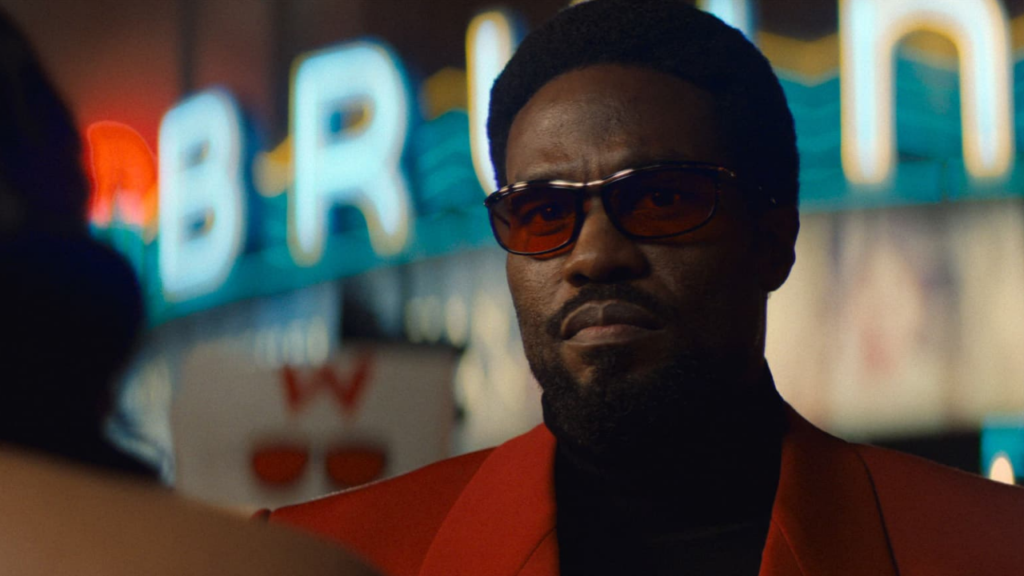
Blade, Armor Wars, Wonder Man, and What Marvel Protects When It Cuts
By Jimigrimm
Marvel renewed Wonder Man. Then Marvel unrenewed it.
Showrunner Andrew Guest said contracts were signed, schedules were cleared, a writers’ room was supposed to open, and production was expected to start in early 2027. Then Disney and Marvel reversed the decision. Yahya Abdul-Mateen II said Marvel told him it came down to viewership, and that he was never given the numbers behind it.
I thought that was interesting. Wonder Man was one of the better products the MCU pushed out in a long time outside of Thunderbolts. It was different, and I enjoyed it start to finish. The episode with the security guard was excellent television. So hearing it got killed after being renewed was surprising, but not shocking.
Put it next to Blade and Armor Wars and it’s obvious. All three are Black-led.
What actually happened to each one
Marvel introduced Mahershala Ali as Blade at San Diego Comic-Con in July 2019. That Hall H slate included Black Widow, The Falcon and the Winter Soldier, Eternals, Shang-Chi and the Legend of the Ten Rings, WandaVision, Loki, Doctor Strange in the Multiverse of Madness, What If…?, Hawkeye and Thor: Love and Thunder. Of the major film and television projects Marvel announced that day, Ali’s Blade is the only one that never reached audiences.
Marvel handed it theatrical dates more than once. None of them held. The project cycled through directors, writers and concepts. Kevin Feige later said Marvel explored several substantially different versions, that the project got tangled up in the studio’s over-expansion, and that Marvel didn’t believe the material was strong enough to rush into production. In 2026, Ali confirmed he had moved on. Seven years from that Comic-Con stage to nothing.
I don’t really have a read on that one. I just find it odd we never got a Blade movie. He would have made sense in Moon Knight. He would have made sense in Werewolf by Night. It was script after script, and from what I understood, Ali wasn’t happy with what they were producing. Marvel also had a lot going on in that stretch. COVID happened. The writers strike happened. I can’t pinpoint that on him being a Black character.
Armor Wars went a different way. Marvel announced it at Disney Investor Day in December 2020, and Feige didn’t float it as a maybe. He said development was “well underway,” with Don Cheadle back as Rhodey, a character Cheadle has played since 2010. It was built as a Disney+ series. Marvel then turned it into a theatrical film. After that, public progress mostly stopped. In October 2024, three years and ten months after the announcement, a TVLine interviewer asked Cheadle where the project stood and he answered, “You can find out and let me know.” He said he wasn’t sure himself because Marvel was going through substantial changes, and that the Skrull-Rhodey storyline in Secret Invasion had been meant to set up what came next.
Marvel has never said Armor Wars is dead. Stalled with no real explanation is where it sits.
Wonder Man is the odd one out because it actually got made. It got strong reviews. Abdul-Mateen picked up an Emmy nomination. Public Nielsen data had it entering the original-series Top 10 at number 8 in its opening week and out of the Top 10 the week after. Disney never released its own viewing data.
Wonder Man was such a good show, but it’s a niche show. Nobody outside Disney has the full numbers to call it a hit, and nobody outside Disney has the full numbers to call it a flop either. Completion rates, retention, cost per viewer, what season two was projected to cost: all of that sits on one side of the table.
The Black Panther history that keeps getting told wrong
The version that circulates online says Marvel never wanted Black Panther until Bob Iger forced the issue. The paperwork says something else. Black Panther was one of ten characters in Marvel’s 2005 self-financed film initiative, a $525 million facility, sitting on the same list as Captain America, Avengers, Ant-Man, Doctor Strange and Shang-Chi. The SEC filing said individual films could carry budgets as high as $165 million and that Marvel would fund initial script development. Marvel had him down as a real movie thirteen years before one came out.
The resistance shows up later, when Marvel moved toward making him a centerpiece. In The Ride of a Lifetime, Iger describes raising Marvel’s lack of diversity while Feige still reported through Ike Perlmutter’s Marvel organization. Iger says Feige agreed and expected pushback from Marvel’s New York leadership, which was working off two assumptions: that female superheroes didn’t produce major box office, and that international audiences wouldn’t turn out for Black superheroes. Iger says he eventually called Perlmutter and told him to clear the roadblocks around Black Panther and Captain Marvel.
So the honest version is that Marvel had been developing the character for years, and executives above Marvel Studios resisted committing to a Black-led blockbuster because of what they assumed about the money, especially overseas.
Black Panther opened in February 2018 and took that assumption apart. By its 26th day in theaters, Black Panther had done roughly $561.8 million in the United States and Canada and roughly $518.2 million internationally, for about $1.08 billion worldwide. It finished around $1.346 billion worldwide with roughly $646.7 million of that coming from international markets. Disney reported a $66.5 million opening in China. Iger told investors afterward that the film had broken old industry assumptions about inclusion and risk.
Get the history behind the stories.
One email a week. Read it before it hits the feeds.
A Black-led Marvel blockbuster could clear a billion dollars worldwide with roughly half of that final number coming from outside the United States and Canada. The ceiling those executives assumed was there did not hold. That’s a narrower claim than saying every market treats every Black-led movie the same, and it’s the one the numbers back.
The people who made that argument are gone
Feige stopped reporting to Perlmutter in 2015, when Disney restructured so Marvel Studios reported into Walt Disney Studios instead of through Marvel Entertainment. Iger later said Perlmutter wanted Feige fired and that he intervened to stop it. Feige’s creative authority widened after that. Perlmutter was out of Disney entirely by 2023.
The power structure behind the old Black Panther fight is gone. Hanging Blade, Armor Wars or Wonder Man on Perlmutter-era thinking means connecting people who left the building to decisions made after they left it.
What's actually killing projects
Disney pushed Marvel into production volume it had never attempted during the streaming era. Marvel television executive Brad Winderbaum has acknowledged there was a mandate to create as much Disney+ content as fast as possible, that the strategy later shifted, and that delays and schedule changes were the fallout from that business change. He also said Marvel now develops more projects than it intends to produce, which is closer to how studios have always worked.
Iger has been more direct about it. In March 2024 he said Disney had privately killed several projects management no longer believed were strong enough. In May 2024 he said Marvel would drop from about four series a year to roughly two, and from about four films a year to two or at most three. By May 2025 he said the effort to flood streaming had caused Marvel to make too much and lose focus. Feige has made the same argument about quantity running past quality.
Marvel is cutting Marvel.
What's confirmed and what isn't
Confirmed: all three of these projects hit major setbacks. Confirmed: Marvel executives once treated Black-led superhero films as a bigger financial risk, specifically internationally. Confirmed: the contraction Marvel is in as of August 2026 is hitting projects across the board, not only Black-led ones.
Not established: that the three setbacks share a cause. Not established: that race drove any single one of these decisions. Not established: that Black-led Marvel projects are cancelled at a higher rate than anything else, because nobody outside Disney has the full denominator to run that math.
Marvel is also still making these movies and shows. Black Panther: Wakanda Forever got made, along with Dominique Thorne’s Ironheart and Secret Invasion built around Nick Fury. Anthony Mackie got a full theatrical Captain America movie, and Marvel spent tentpole money on it. Captain America: Brave New World carried a production budget of around $180 million and finished at roughly $415.1 million worldwide, about $200.5 million of that domestic and about $214.6 million international. Variety later counted it among Marvel’s 2025 commercial disappointments. Marvel put that kind of money behind a Black-led movie in the middle of the contraction, which is the hardest evidence against the idea that the studio stopped investing in Black protagonists. It also gives Marvel’s caution some legitimacy, because the number came back short. Black Panther 3 is on the calendar for December 15, 2028, with Ryan Coogler returning and David Jonsson stepping in as Black Panther.
I know I’m in the minority here, but I enjoyed that movie. It was good to see Sam actually be Captain America instead of getting there in the last episode or two of The Falcon and the Winter Soldier, and good to see that version of the job, no serum, figuring it out as he goes. I’m a huge Captain America fan whether it’s Steve Rogers, Bucky or Sam Wilson, so watching him fly around doing all the cool shit worked for me. My read is that the film took a beating behind the scenes, too much change and too much of it rushed, and I still think the 2023 strikes hit this one.
Abdul-Mateen never claimed Marvel cancelled his show because he’s Black. He said the optics are obvious. He’s right about the optics.
From the outside looking in, it can look like that. I don’t know what gets said in those rooms when they’re deciding what to cut and what to produce. I can’t answer that. What we can look at is what Marvel decides to protect when it stops taking chances.
Marvel built this on characters nobody was asking for
Cut the output in half and somebody has to pick the safest use of what’s left. Avengers. Spider-Man. X-Men. Fantastic Four. Wolverine. Black Panther. Those are brands with decades of investment behind them, and they win that argument every time.
Here’s where I have a problem with it. Marvel licensed the proven ones away. In the nineties, with the company in financial trouble, the movie rights to its biggest characters went out to other studios. Spider-Man went to Sony, and the X-Men and the Fantastic Four went to Fox. Then Marvel built the MCU out of what was left. Iron Man was a B-list hero. He wasn’t Wolverine. He wasn’t the Hulk. He wasn’t Spider-Man. Same with Captain America, Thor, Hawkeye and Black Widow. Guardians of the Galaxy were fairly unknown until the movie came out. If you read the comics and watched the cartoons like I did, you knew all of them. To the casual audience, they were nowhere near Batman, Superman or Wonder Woman.
Marvel made them household names. That is the business. So I don’t care about a character being proven. You make them proven. Did they forget about that?
Money is real. These things cost hundreds of millions of dollars and you have to make it back, and you want products that work. But the MCU is a known brand. Let the brand do the talking. Let the art do the talking. Put together a good product and people are going to watch it. My read is that Fantastic Four didn’t do what they thought it was going to do, and that is a very popular proven brand. I’m not putting a number or somebody’s internal target in front of you, because I don’t have Disney’s. That’s how I saw it land. My prediction is that after Doomsday and Secret Wars, the next Fantastic Four movie does amazing.
Marvel didn’t drop Thor after The Dark World in 2013, and it didn’t drop Captain America after The First Avenger in 2011. It repositioned them, paired them with other characters, and let the audience come around. One movie landing under expectations, Brave New World included, tells you something about that movie. Marvel’s own history says the character doesn’t have to go down with it.
What Marvel needs to learn is how to take a loss and capitalize on it. Fine, we lost money on this one, but the audience loved it, so put that character over here. Cancel the project if the project isn’t working. Killing a second season doesn’t require Marvel to stop using Simon Williams, and the MCU is the one franchise built so a character can walk into somebody else’s project and keep going. I still want to see Wonder Man somewhere else in the MCU. You’re taking away a great character and great actors for what?
I like when Marvel tries different things and does it right. Not different for the sake of being different. She-Hulk took a lot of criticism and I personally enjoyed it, and I understand why people didn’t. Wonder Man was the kind of different I want more of.
Marvel argued internally over Black Panther before 2018 and now guards him with a December 2028 release date. I don’t know if they learned anything from that or just found a new way to run the same math. Cutting back on the swings isn’t fair to the audience, and it costs Marvel the thing it was best at.
So tell me what you’d do with Wonder Man. Leave him cancelled, or put him somewhere else in the MCU and let the character keep going?
MORE LIKE THIS
-
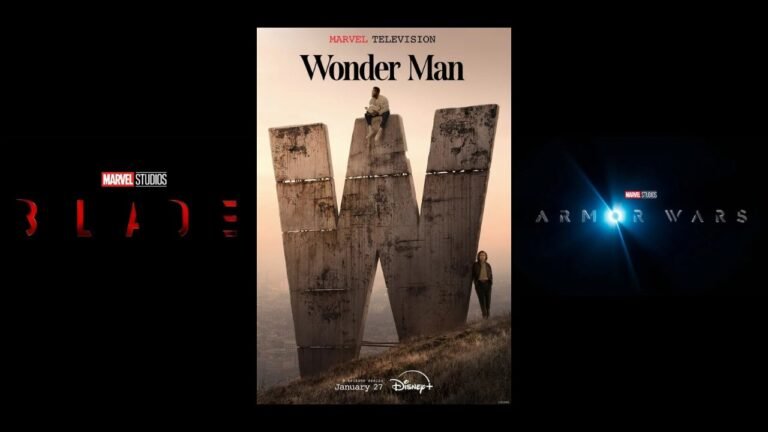
Why Does Marvel Keep Canceling Projects? Blade Is Dead After Seven Years, Wonder Man Lost a Season It Was Already Promised, and the Real Answer Is On the Record.
7 MIN READ -
How Marvel Got From Endgame to Doomsday: The Deals, the Disasters, and the Seven Years Nobody Planned
7 MIN READ -
Everything Marvel Announced at D23: The X-Men Are Cast, Doom Raises the Sentinels, and One Question Finally Got Its Answer
6 MIN READ

Co-founder and co-host. Veteran. Grew up on cartoons. The MCU brought all of it back and pulled him into the comics side he never picked up as a kid. Curious by default. Passionate without needing to prove anything. Good at holding a conversation.