
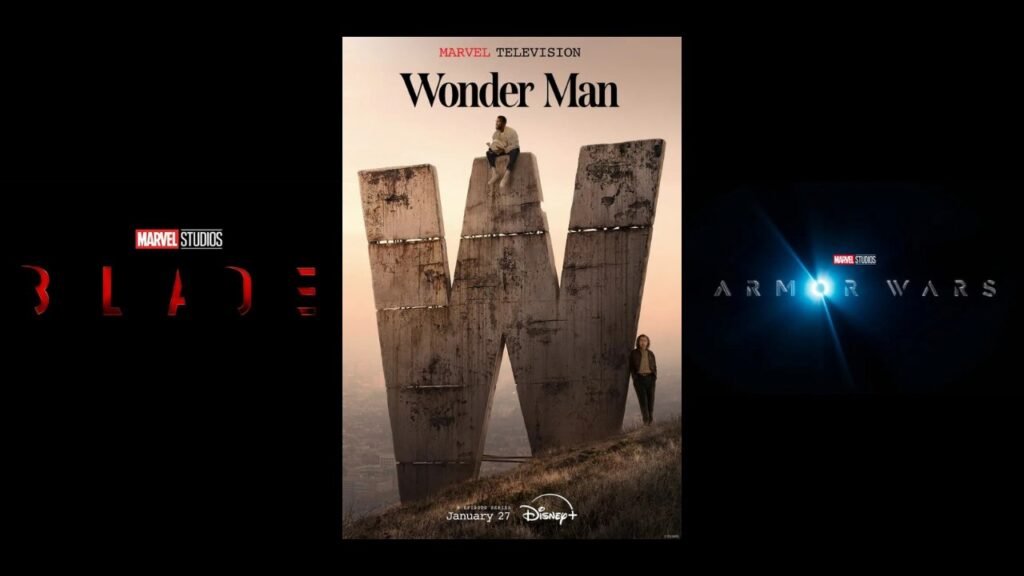
Why Does Marvel Keep Canceling Projects? Blade Is Dead After Seven Years, Wonder Man Lost a Season It Was Already Promised, and the Real Answer Is On the Record.
By Jimigrimm
In the span of a few weeks, Marvel confirmed that the Blade reboot is dead after seven years of development and canceled the already-announced second season of Wonder Man, while Armor Wars, years into a quiet fade, sat absent from the Comic-Con slate entirely. Fans keep asking the same question in every comment section: why does Marvel keep killing projects?
The theories are everywhere. Marvel’s broke. Superhero fatigue won. Blade is cursed. There’s something uglier going on with which projects get cut. Some of those theories have more behind them than others, and we’ll get to all of them. But here’s the thing about this particular mystery: the truth isn’t hidden. Kevin Feige has explained it, on the record, in his own words, more than once. The answer exists. It’s just scattered across a dozen interviews.
So let’s assemble it. The body count first, then the theories, then the truth.
The Body Count
Blade: dead. Announced at San Diego Comic-Con in July 2019 with Mahershala Ali on stage in a Blade hat. Originally dated for November 2023, then September 2024, then November 2025, then pulled from the calendar entirely. In late July 2026, the record closed: Feige spoke about the project in the past tense, Ali confirmed he’s moved on, and the trades called it. Seven years, zero frames shot.
Wonder Man season 2: canceled. And this one stings differently, because the first season was a critical darling, one of the best-reviewed things Marvel has made for Disney+, and Marvel had already announced the renewal, making it just the third live-action Marvel series to earn a second season, after Loki and Daredevil: Born Again. Then the renewal itself got canceled. A promise made in public, taken back in public.
Armor Wars: faded to black. Announced in December 2020 as a Don Cheadle series, upgraded to a movie in 2022, and then years of silence. Cheadle himself, asked for an update, said “I don’t know, I’m not sure where anything is right now.” Marvel has never announced a cancellation. It hasn’t needed to.
Strange Academy and Terror, Inc.: shelved in February 2025 alongside the Nova series, part of a quiet culling of the Disney+ development slate.
And the calendar tells its own story: Marvel wiped previously claimed theatrical release dates off the schedule entirely, untitled films it had been holding, as the studio moved to a two-to-three-movies-a-year ceiling. The operation that once released three movies and three shows a year now runs a slate a fraction of that size.
The Blade Autopsy, Because It Deserves One
Blade wasn’t canceled in a meeting. It bled out over seven years, and the wound-by-wound record is brutal. Two directors, Bassam Tariq and Yann Demange, came and went, Tariq exiting roughly two months before cameras were supposed to roll. The writer chair changed hands at least five times, a list that includes Stacy Osei-Kuffour, Michael Starrbury, Michael Green, Beau DeMayo, and True Detective’s Nic Pizzolatto. Reported castings came and went, Aaron Pierre and Mia Goth among them, and Delroy Lindo, who publicly confirmed he was in and later confirmed he was out. The 2023 strikes froze what little momentum there was. Reports of creative disagreements leaked. And through all of it, Marvel kept publicly promising: “We are committed to Blade,” Feige said at D23 Brazil in 2024. “The character will indeed make it to the MCU.”
Get the history behind the stories.
One email a week. Read it before it hits the feeds.
Then there’s the detail that hurts worse than any of it: Ruth E. Carter, the Oscar-winning costume designer, had already built a warehouse of period costumes for a version of Blade that died. Marvel let the Sinners production buy them at cost, and they ended up on screen in Ryan Coogler’s movie, mostly on the background players of one of 2025’s most celebrated films. The vampire movie Marvel couldn’t make for seven years literally clothed the one that got made, and the Sinners producers have told that story themselves. Ali probably isn’t laughing: his own record on the way out was pointed. He noted that his next project only exists because Blade fell apart, and his parting words to GQ carried thirty years of professional calm and a blade of their own: “No offense to them… one thing I’ve learned is that what is for you is for you and what is not is not.”
The Theories, Honestly Weighed
“Marvel is broke.” This one dies on contact with the numbers. Brand New Day just posted the biggest domestic opening weekend in film history and passed a billion dollars in under a week. Doomsday’s trailer set a Disney record. Whatever is happening, it isn’t poverty.
“Superhero fatigue killed these projects.” Half true, historically. The 2023 stretch, with underperformers and The Marvels’ record-low gross, is real and it’s exactly when the cutting started. But the fatigue narrative can’t explain why the cuts continue into 2026 while the same studio is breaking records. Fatigue started the diet. It doesn’t explain the menu.
“Blade was cursed.” Superstition standing in for a real pattern: a project that loses its director two months before filming, burns five writers, and survives two strikes isn’t cursed, it’s a script that never got solved, held by a studio that kept refusing to shoot the unsolved version. Which, it turns out, is the actual answer, and Feige has said so.
And the heaviest one, which deserves to be treated as more than a comment-section theory because it’s now a published critique: the pattern of who gets cut. Blade, Armor Wars, and Wonder Man are all Black-led projects, and The Nerds of Color put the critique in print days after Comic-Con: the Blade death and Wonder Man cancellation landed almost immediately after Marvel announced Black Panther 3 to a standing ovation, and the piece asks directly why heroes like Blade and Rhodey never received the sustained investment that one franchise gets. Marvel would point to that same Black Panther 3 announcement, and to David Jonsson’s casting, as the counterargument. Both facts sit in the record together, and fans get to weigh them for themselves. We’d just note the critique isn’t coming from nowhere: the canceled column has a pattern in it, and Marvel has never addressed it directly.
The Truth, In Feige's Own Words
Now the explanation, straight from the man himself, because it exists and it’s remarkably complete.
On over-expansion: “We had spent 12 years working on the Infinity Saga, saying, ‘That’s never going to happen to us,'” Feige said. “We always had more characters that people were asking about than we could possibly make… Suddenly there’s a mandate to make more, and we go, ‘Well, we do have more’… maybe that’s what we fell into.” That mandate was the Disney+ era, and Bob Iger has said his own version: the company “lost focus” chasing streaming volume. Feige has also admitted the interconnected sprawl made the franchise hard for casual audiences to even follow.
On the new rule that’s doing the killing: “Only accept insanely great.” That’s the internal mandate Feige described, and he applied it to Blade directly: “We didn’t want to simply just put a leather outfit on him and have him start killing vampires. It had to be unique… And it wasn’t ‘insanely great’ at the time. We didn’t feel like, as we often do, you can have a good script and make it a great script through production. We didn’t feel confident that we could do that on Blade, and we didn’t want to do that to Mahershala and didn’t want to do that to us.”
And on what it cost him personally: “I am feeling like a gigantic loser and failure that we didn’t get off the ground with Mahershala.”
Put the pieces together and the truth is coherent: Marvel over-expanded chasing a streaming mandate, the 2023 stretch proved the audience wouldn’t absorb everything, and the studio responded by shrinking the slate to a fraction of its size and killing anything that couldn’t clear the “insanely great” bar, no matter how long it had been promised, no matter who was attached, no matter how public the commitment. The cancellations aren’t chaos. They’re the policy. Blade didn’t die of a curse; it died because seven years of scripts never cleared a bar that didn’t exist when it was announced.
The Asterisk: Sometimes "Canceled" Means "Reformatted"
One more piece keeps the picture honest: Nova. Shelved as a Disney+ series in the February 2025 culling, it resurfaced this summer as a feature film with Loki creator Michael Waldron writing. Asked what Marvel had said about it after the Comic-Con panel, Feige answered “Not a damn thing. It’s a movie.” So the shelf isn’t always a grave. Some projects come back wearing a different format. The difference between Nova and Blade is that Nova’s concept survived the bar and Blade’s script never met it. Wonder Man’s second season, canceled with no stated reason after a public renewal, is the one that still doesn’t have a clean answer, and we’re not going to invent one.
So here’s where you land in this. Does “only accept insanely great” justify killing a project seven years and one Oscar winner deep, or does a studio owe more to the people it puts on stage in Hall H? Do you buy the streamlined-slate strategy now that the record-breaking results are in, or did Marvel just learn to break promises efficiently? And the question the record leaves open: what’s your honest read on the pattern in the canceled column? Drop it in the comments. The truth is on the record. What it means is up to you.
MORE LIKE THIS
-
How Marvel Got From Endgame to Doomsday: The Deals, the Disasters, and the Seven Years Nobody Planned
7 MIN READ -
Everything Marvel Announced at D23: The X-Men Are Cast, Doom Raises the Sentinels, and One Question Finally Got Its Answer
6 MIN READ -
Why Does Doctor Doom Look Like Tony Stark?
6 MIN READ

Co-founder and co-host. Veteran. Grew up on cartoons. The MCU brought all of it back and pulled him into the comics side he never picked up as a kid. Curious by default. Passionate without needing to prove anything. Good at holding a conversation.