Neon Genesis Evangelion Was Made by a Man in the Middle of a Four-Year Depression. It Became One of the Most Influential Anime of the 1990s.

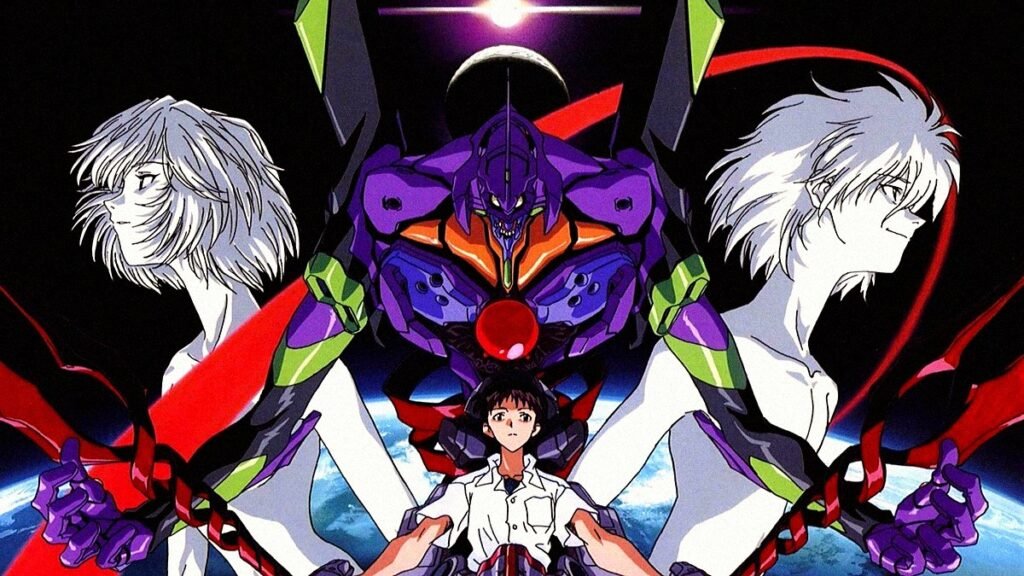
Evangelion starts like a giant robot show. A teenage boy is recruited by his absent father to pilot a biomechanical weapon against massive creatures threatening humanity. The robots are cool. The fights are intense. The sci-fi worldbuilding is dense. And then, somewhere around the halfway point, the show turns inward and starts asking questions about loneliness, self-hatred, the terror of being known by another person, and whether human connection is worth the guaranteed pain it brings.

If you watched Evangelion on Adult Swim or discovered it through Netflix’s controversial re-release, you experienced a show that divided anime fandom in a way few others have. Not because it was confusing, although it is. Not because the ending was controversial, although it was so controversial the creator received death threats. Because Evangelion asks its audience to sit with discomfort that most entertainment is designed to help you avoid, and it does so with a level of psychological honesty that comes directly from the fact that the man who made it was falling apart while he made it.

Anno Made It Because He Had Nothing Else

Hideaki Anno co-founded Gainax in 1984. He directed Gunbuster in 1988. He directed Nadia: The Secret of Blue Water for NHK in 1990-1991, a project that was handed to him from a Hayao Miyazaki concept and had a troubled production that left Anno drained. The stress of producing Nadia and the subsequent failure of a planned sequel project called Uru in Blue broke him. Anno fell into a four-year depression. He later described himself as “a broken man who could do nothing for four years, one who was simply not dead.”

In 1993, while drinking with Toshimichi Otsuki, a representative from King Records, Anno was given an opportunity. Otsuki told him to bring something, anything, and King Records would guarantee it got made. Anno later described the moment he restarted: “Then one thought. ‘You can’t run away,’ came to me, and I restarted this production.” The protagonist would be a boy who had spent his entire life avoiding personal responsibility and who suddenly had to save the world despite being the least equipped person to handle the weight.

That boy was Shinji Ikari. And Shinji was Anno.

Anno wrote in the afterword of the first manga volume: “I tried to include everything of myself in Neon Genesis Evangelion — myself, a broken man who could do nothing for four years; a man who ran away.” The character’s depression, his inability to connect with the people around him, his simultaneous desperation for approval and terror of intimacy, all of it came from Anno’s own psychological state during production. Evangelion wasn’t a show about giant robots fighting aliens that happened to explore depression. It was a show about depression that happened to use giant robots and aliens as the framework.

The Production Nearly Collapsed

Gainax was in financial trouble. The studio’s budget was limited. Deadlines were constant. Anno was rewriting scripts during production, sometimes abandoning entire episode plans and starting over. The 1995 Tokyo subway sarin gas attack by the doomsday cult Aum Shinrikyo forced Anno to alter the show’s plotline because elements were too close to the real-world events, adding even more strain to an already overwhelmed production.

By the final two episodes, the budget was gone and the schedule had collapsed. Anno abandoned the planned narrative ending and replaced it with two episodes set almost entirely inside the characters’ minds. Episodes 25 and 26 use abstract animation, simple line drawings, photographs, still images with voiceover, and extended sequences of characters interrogating their own psyches. Some critics speculated the unconventional approach was purely the result of budget cuts. The production’s issues ran deeper than money. Anno had been rewriting the show throughout its run as his understanding of his own mental state changed, and he had stated before production that he did not know how the show would end.

The result was one of the most debated endings in anime. Some viewers saw it as a genuine artistic statement about self-acceptance. Others saw it as an incomplete mess that abandoned the story’s plot threads for an unwatchable experiment. The divide was so intense that Anno received death threats. Gainax’s studio was vandalized with graffiti, including the phrase “Tenchuu,” meaning divine retribution. Fans sent letters of fury alongside letters of praise. The same show generated both reactions simultaneously.

In 1997, Gainax released The End of Evangelion, a theatrical film that provided an alternate ending. The film includes a live-action sequence with rapidly flashing text made to look like fan letters and emails, and the graffiti from the studio wall appears on screen as well. For years fans assumed those flashing messages were the real hate mail Anno had received. They weren’t. Anno later explained that legal constraints kept the studio from using actual fan correspondence, so the staff wrote the on-screen messages themselves, and Anno said an old friend wrote the hostile ones. Most of the text is praise and anticipation, and it refers to the earlier Death and Rebirth release rather than the TV ending. What Anno put into the film wasn’t a playback of literal hate mail. It was a staged version of the experience of being watched and judged by an audience, turned back on the audience itself.

The Show That Broke the Genre

Before Evangelion, mecha anime followed a template. The hero gets a robot. The hero learns to use the robot. The hero fights increasingly powerful enemies. The hero wins. Evangelion used that template for approximately twelve episodes and then dismantled it. The robots weren’t machines. They were living creatures. The enemies weren’t invaders. They were something far more disturbing. The father who recruited his son didn’t do it out of love. He did it out of obsession with a plan the audience doesn’t fully understand until the very end.

Mecha anime made after Evangelion has had to contend with what it did to the genre. Critics and fans have described Gurren Lagann as a reconstruction of mecha after Eva’s deconstruction, though Gurren Lagann’s director Hiroyuki Imaishi has said he simply wanted to make the giant robot show he’d loved since childhood. Code Geass used Evangelion’s psychological framing applied to political thriller. Darling in the Franxx borrowed so heavily from Evangelion that fans accused it of copying the show’s structure. RahXephon, Eureka Seven, Fafner, every mecha series that has asked its pilot to pay a psychological price for getting in the robot traces that question back to Shinji Ikari refusing to get in the EVA in Episode 1 and being guilt-tripped into it by the sight of a bandaged girl on a stretcher.

The influence extended beyond mecha. Serial Experiments Lain, Paranoia Agent, Madoka Magica, the wave of anime that uses genre conventions against the audience’s expectations, drew from what Evangelion demonstrated in 1995: that a show aimed at anime fans could use the medium’s own conventions to confront those fans with the psychological reality the conventions were designed to avoid.

The American Story

Evangelion’s first American appearance was quieter than its reputation suggests. The series debuted subtitled on KTEH, a PBS station in the San Francisco Bay Area, in March 2000. Three years later Toonami aired the first two episodes during its Giant Robot Week in February 2003, both heavily edited for content. But Evangelion’s real American life happened through home video and Adult Swim, which ran the series almost entirely uncut starting in October 2005, to an audience that was primed by Cowboy Bebop and FLCL to expect anime that challenged them. ADV Films released the series on DVD in the early 2000s, and the Platinum Edition became one of the best-selling anime home video releases of the era.

In 2019, Netflix acquired global streaming rights and released Evangelion with a new English translation and a completely new English dub, replacing the ADV cast that had been the definitive voices for English-speaking fans for nearly two decades. The re-translation altered key dialogue, including changing the phrase “I love you” in a pivotal scene to “I like you,” which shifted the interpretation of a critical character relationship. The opening theme “A Cruel Angel’s Thesis” was retained, but the ending theme “Fly Me to the Moon” was removed due to licensing issues with the Frank Sinatra estate.

The Netflix release introduced Evangelion to millions of new viewers while simultaneously alienating longtime fans who had spent years with the ADV translation. It proved that even after 24 years, Evangelion could still generate the kind of passionate, irreconcilable disagreement that defined its original broadcast.

The Rebuild Took 14 Years

In 2007, Anno began the Rebuild of Evangelion, a four-film theatrical series that retold and then radically reimagined the original story. The first film, Evangelion: 1.0 You Are (Not) Alone (2007), closely followed the original series. The second, Evangelion: 2.0 You Can (Not) Advance (2009), began diverging. The third, Evangelion: 3.0 You Can (Not) Redo (2012), abandoned the original storyline entirely and went somewhere nobody expected. The fourth and final film, Evangelion: 3.0+1.0 Thrice Upon a Time, was delayed repeatedly and finally released in 2021, fourteen years after the project began.

The final Rebuild film is widely interpreted as Anno’s farewell to Evangelion. The ending of Thrice Upon a Time is gentler than anything the original Evangelion offered. It allows its characters to move forward. It allows Shinji to grow up. And it lets the story end in a way the original series never did.

Anno spent 26 years telling this story. He started it during a depression so severe he described himself as simply not dead. He ended it as a man who had married manga artist Moyoco Anno, built his own studio (Studio Khara), directed a Godzilla film (Shin Godzilla), and reached a place where he could look at Evangelion and finally say the story was finished.

When did Evangelion find you? Were you an Adult Swim viewer? A Netflix discovery? A DVD era fan who sought it out because everyone said you had to see it? And the question that defines your relationship with the show: which ending is yours? The original episodes 25 and 26? The End of Evangelion? Thrice Upon a Time? Every Evangelion fan has one ending that feels right and the others that don’t. We want to hear which ending is yours.

READ NOTE

Gundam Wing Beat Dragon Ball Z in the Ratings on Its Own Block. The Ripple Effects Changed American Television.
The Big O Was Cancelled in Japan After 13 Episodes. It Was So Popular in America That Cartoon Network Helped Fund the Other Half.

Leave a Reply

Your email address will not be published. Required fields are marked *