Gundam Wing Beat Dragon Ball Z in the Ratings on Its Own Block. The Ripple Effects Changed American Television.
By Jimigrimm
There’s a specific memory that belongs to anyone who was watching Toonami in March 2000. Dragon Ball Z ends. The bumper plays. And instead of something familiar, a new show appears. Giant robots. Political intrigue. A teenage pilot who tears up his own birthday party invitation and tells a girl he’s going to kill her. You had never seen anything like this on Cartoon Network. You weren’t sure you were supposed to be watching it.
You were. And within weeks, Gundam Wing wasn’t just the new show on the block. It was the highest-rated show on the entire Cartoon Network.
A 21-Year-Old Franchise That America Had Never Seen
The Gundam franchise had been running in Japan since 1979. The original Mobile Suit Gundam, created by Yoshiyuki Tomino, essentially invented the “real robot” subgenre of mecha anime, replacing the fantastical super robots of the era with mechanized military suits in a politically complex war story. By the time Gundam Wing aired in Japan in 1995, the franchise was already six series deep with decades of continuity, model kits, films, and cultural significance. The Japanese government classified the original Gundam as culturally significant to the nation.
America had almost none of this. In 1998, Bandai released the original Mobile Suit Gundam movie trilogy on VHS in the U.S. with English dubs. By then, Western anime fans had moved on to cyberpunk. Akira and Ghost in the Shell were the reference points. Gundam’s late-1970s animation style looked dated. The franchise had effectively missed its window.
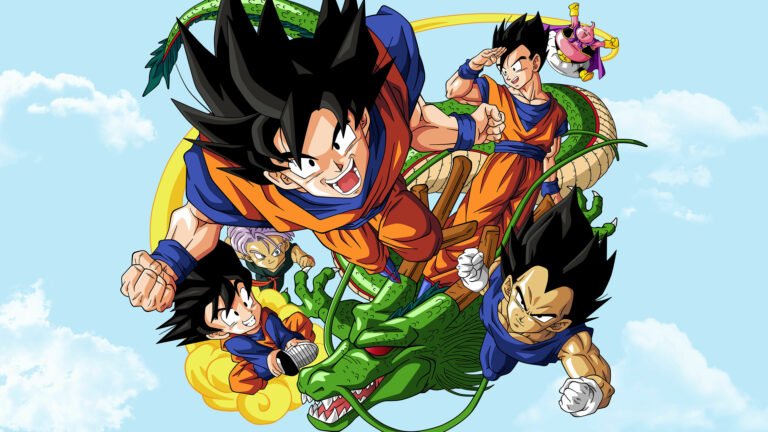
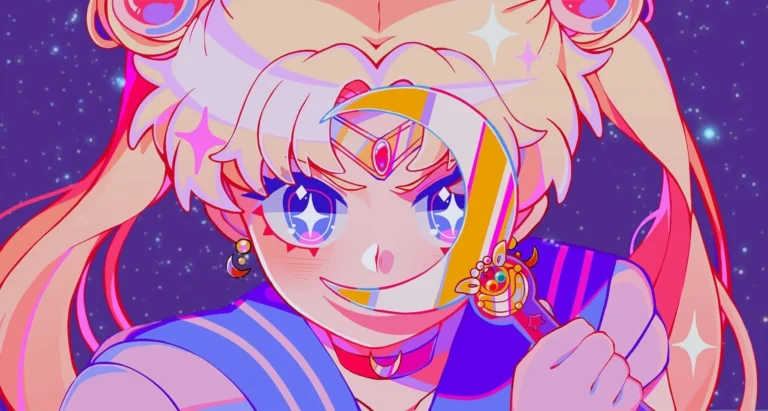
Then Bandai saw what Dragon Ball Z and Sailor Moon were doing on Toonami.
Bandai Came to Toonami. Not the Other Way Around.
In an interview with Complex, Jason DeMarco, Toonami’s co-creator, described how it happened. Bandai approached the Toonami team directly. They had a new Gundam series, self-contained, no prior knowledge required, designed for a younger audience than the original. They wanted Toonami to be the launchpad. DeMarco, a self-described Gundam fan, said they responded immediately: “Hell yeah.”
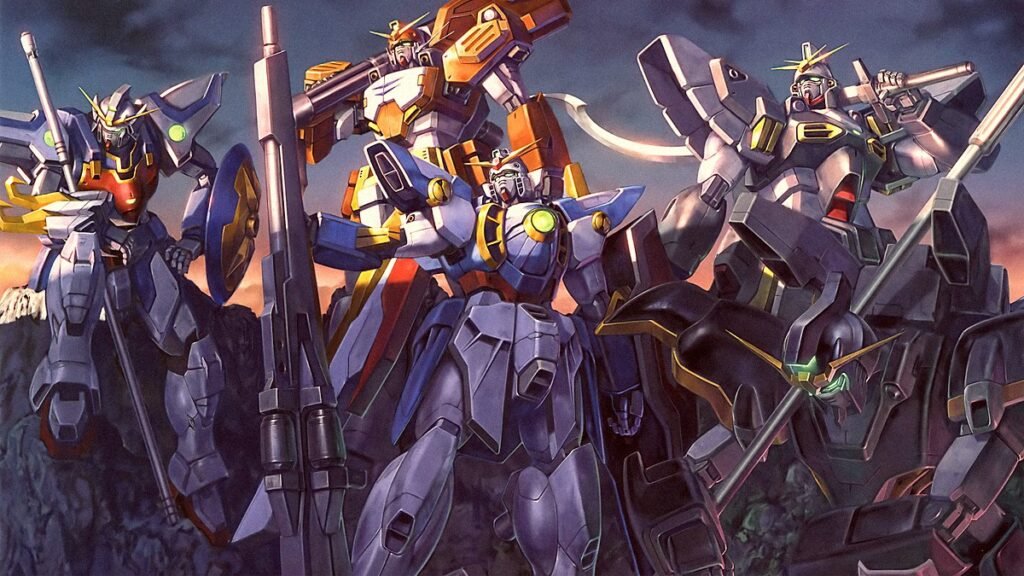
Gundam Wing was the perfect choice for an American debut. Unlike the original series, which required knowledge of the Universal Century timeline, Wing existed in its own standalone continuity. It was accessible. It had five distinct teenage pilots with strong visual designs and competing ideologies. It dealt with war, pacifism, colonialism, and identity in ways that felt genuinely mature compared to everything else airing on the block. And unlike DBZ, which centered on escalating physical power, Gundam Wing’s conflicts were ideological. The question wasn’t “who’s stronger?” It was “who’s right?”
The show premiered on Toonami on March 6, 2000, taking the 5:30 PM slot immediately after Dragon Ball Z. The scheduling was deliberate. Every DBZ viewer was a guaranteed sample audience for the new show.
It Outperformed Everything
On March 15, 2000, Anime News Network reported that Gundam Wing was the highest-rated program on the Toonami block “by a substantial margin,” beating Dragon Ball Z and Sailor Moon in all age categories. It wasn’t just the top show on Toonami. It was the number one show on the entire Cartoon Network among teen viewers. A brand-new anime that most Americans had never heard of accomplished in weeks what had taken Dragon Ball Z months.
The Endless Waltz movie special, which aired on Toonami on November 10, 2000, became the second-highest-rated program in Cartoon Network’s history at that point.
By Christmas 2000, you couldn’t walk into a Toys “R” Us, Walmart, or Target without seeing Gundam model kits, action figures, and merchandise. Bandai’s Ken Iyadomi noted at Licensing Show 2000 that Gundam Wing had become the eighth most searched topic on the Lycos search engine. For a franchise that had been essentially invisible in America two years earlier, the turnaround was staggering.
The Midnight Run Changed Everything
Here’s the detail that matters most and almost nobody talks about.
Gundam Wing aired in two versions on Toonami. The daytime version at 5:30 PM was censored. Blood removed. The word “kill” replaced with “destroy.” Duo Maxwell’s nickname “The God of Death” changed to “The Great Destroyer.” Standard edits for afternoon children’s television.
But Gundam Wing also aired on Toonami’s Midnight Run, a late-night block that ran from midnight to 1 AM on weeknights. That version was uncut. Blood, profanity, and references to death were intact. The original Japanese score played in certain scenes. It was, for many American viewers, the first time they experienced anime the way it was meant to be seen.
And it drew an audience. Jason DeMarco said in a 2002 interview that “the Adult Swim action block wouldn’t have been possible if Cartoon Network hadn’t known there was an older audience out there who might watch that kind of thing.” The proof came from Gundam Wing’s Midnight Run ratings. Teenagers and young adults were staying up past midnight to watch uncut anime on Cartoon Network. That data point is the reason Adult Swim exists.
Without Gundam Wing’s Midnight Run, there’s no Adult Swim. Without Adult Swim, there’s no uncut Cowboy Bebop, no Inuyasha, no FLCL, no Samurai Champloo, no Attack on Titan on American television. The entire late-night anime ecosystem in America traces back to a mecha show that aired after midnight because Toonami wanted to see if anyone was watching.
They were.
The Boom That Didn't Last
Bandai tried to replicate Gundam Wing’s success. They brought the original 1979 Mobile Suit Gundam to Toonami in 2001. It underperformed. G Gundam followed in 2002 and did decent numbers but never approached Wing’s peak. Gundam SEED came later. Each entry found loyal fans, but none of them captured the mainstream the way Wing had.
The audience that fell in love with Heero, Duo, Trowa, Quatre, and Wufei didn’t automatically transfer that love to new characters in new timelines. They had bonded with specific people, not with the concept of giant robots. That’s actually the most important lesson Gundam Wing taught the industry about Western audiences: the characters come first. The mecha is just the vehicle.
The franchise is still going. Gundam celebrated its 30th anniversary in 2025 with new series, collaborations, and the Gunpla model kit industry generating billions. A live-action Gundam film is in development at Legendary Pictures. But every new attempt to break Gundam into the Western mainstream is measured against the benchmark that Wing set on Toonami in 2000. That benchmark has never been matched.
There’s a moment early in Gundam Wing where Heero Yuy self-destructs his own Gundam rather than let it fall into enemy hands. He presses the button, the machine explodes, and he survives the fall. You’re watching a 15-year-old destroy his most powerful weapon because the mission matters more than his survival. Nothing on Toonami had ever asked you to think about sacrifice like that. If you were watching at 5:30 on a weekday afternoon in March 2000, that was the moment you knew this show was different from everything else.
Which Gundam pilot was yours? Were you a Heero loyalist from day one? Did Duo’s energy pull you in? Were you the kid who understood Wufei before anyone else did? Or did you come to Gundam Wing from a completely different angle, maybe the political intrigue, the Midnight Run, or the model kits that took over every shelf? We want to know how Wing found you.