
How the MCU Multiverse Actually Works
By Jimigrimm
Ask ten Marvel fans how the multiverse works and you’ll get ten different diagrams. Some put timelines inside universes. Some put universes inside timelines. Some file the Quantum Realm as another Earth. And a lot of people will tell you Sylvie created the whole thing the moment she killed He Who Remains.
- The short version
- Why "universe," "timeline," and "reality" keep getting swapped
- Dimensions, realms, and planes are not alternate universes
- What Endgame actually established about changing the past
- What returning the Infinity Stones actually fixed
- Where Steve Rogers ended up
- The Sacred Timeline was one man's enforced order
- Why the TVA let the Avengers pull off the Time Heist
- Did Sylvie create the multiverse?
- What Loki actually did at the end of season 2
- What makes someone a variant
- Is the MCU Earth-616 or Earth-199999?
- What actually causes an incursion
- What an Anchor Being is, and whether every universe has one
- What Marvel still hasn't explained
- Why no single explanation ever feels complete
If you’re confused, Marvel earned that. The studio has been pretty consistent about what characters can do and what happens when they do it. It has been careless about what to call any of it, and it has never handed anyone a chart that puts universes, timelines, dimensions, realms, and afterlives in some kind of order. Marvel built a working set of rules and never drew the map that goes with them.
So here’s what the released movies and shows actually establish, what’s only a character’s word, and what nobody can answer yet. When the source is a character talking, we’ll say so, because He Who Remains, Mister Paradox, and Miss Minutes all have reasons to shade the truth.
The short version
A universe is a complete alternate world with its own history and its own versions of people. Earth-616, Earth-838, Earth-10005, and Earth-828 all get presented that way.
A timeline is that world’s history, drawn as a strand. Marvel also uses “timeline” as shorthand for the whole world carrying that history, which is where most of the trouble starts.
A branch is a history that splits off after a choice, a deviation, or a change made by a time traveler. Leave one alone and it works like its own alternate world. Marvel has never defined the moment a branch graduates into a universe.
Dimensions, realms, and planes sit in a different category. The Mirror Dimension, the Quantum Realm, the Ancestral Plane, and the Duat are domains, not numbered Earths.
Several methods can move a person between universes, and interfering too heavily in one you don’t belong to can cause an incursion, which destroys one world or both.
That model holds up across the major released projects that establish multiverse rules. What’s missing is any ranked system putting all of it on one chart.
Why "universe," "timeline," and "reality" keep getting swapped
Deadpool & Wolverine shows the problem better than anything else. Across one movie, the official screenplay calls the same threatened place a universe, a reality, a world, and a timeline. Four words, one location, no distinction drawn anywhere.
Marvel writes that way across the board. If you’ve been trying to build a clean hierarchy out of the dialogue, that’s why it keeps falling apart.
The way that actually works: a timeline is a history, and a universe is the world that history belongs to. In practice Marvel uses either word for the whole package. Treat them as interchangeable when someone’s describing a complete alternate world, and only slow down when a character is specifically talking about a strand splitting off from another one.
Loki is the one project that keeps them separate, and only because the TVA’s job depends on it. A Nexus Event is a deviation. The deviation makes a branch. If the branch grows past the red line, it becomes something worth pruning. Then What If…? takes you inside those branch worlds and shows people living in them, and calling a developed branch an alternate reality stops being a stretch.
Dimensions, realms, and planes are not alternate universes
This one trips up almost everybody, and Marvel’s own vocabulary is what causes it.
When the Ancient One tells Stephen Strange his universe is “only one of an infinite number,” she’s describing other worlds and the other dimensions sorcerers pull power from in the same breath. Doctor Strange used “multiverse” as an umbrella for both. Almost everything since 2021 has used it to mean alternate Earths. Both usages are official, and they don’t describe the same thing.
Here’s where these places land based on how the movies actually use them.
The Mirror Dimension is a separated copy of real space. The No Way Home screenplay calls it an exact replica of the real world, split off from it, which is why Strange can tear it apart without touching New York.
The Quantum Realm is subatomic and adjacent. Janet and Hank call it a secret universe beneath ours in Quantumania, and Loki season 2 files it as a “616-adjacent realm.” Both descriptions point at something local rather than a separate numbered Earth.
The Ancestral Plane, the Duat, and Valhalla are afterlives. Moon Knight gets closer to a hierarchy than anything else when Taweret calls the Duat “an afterlife, not the afterlife” and mentions other planes intersecting with it.
Ta Lo is a mystical world reached through a shifting portal from Earth. Shang-Chi producer Jonathan Schwartz declined to put a final label on it and said more would come later, so the released MCU hasn’t given it a final classification either.
The Gap Junction, where the Book of Vishanti is kept, sits between universes.
“Realm” is doing the most damage of any word in the franchise, because it isn’t a rank at all. Asgard is one of the Nine Realms and it’s an ordinary cosmic location. The Quantum Realm is subatomic. Valhalla is an afterlife. Three unrelated jobs, one word.
The biggest question in this whole area has never been touched. Nobody knows whether every universe has its own Dark Dimension and its own Quantum Realm, or whether those are shared spaces every universe touches. Marvel has never said.
What Endgame actually established about changing the past
The rule is narrower than most people remember, and the official Endgame screenplay states it plainly. Smart Hulk’s version: changing the past doesn’t change the future, because the moment you arrive in the past, that past becomes your present and the present you left becomes your past. You can’t edit your own origin by editing something upstream of it.
That is the rule Endgame establishes for the Avengers’ Quantum Realm method. The film does not establish that every other form of time manipulation must follow it, and treating it that way is where the “Loki contradicts Endgame” argument comes from.
Loki supplies the consequence Endgame skipped. Change something back there and the altered history keeps running as its own branch. The Avengers didn’t rewrite 2012. They produced a 2012 where Loki grabbed the Tesseract and vanished, and that branch kept going until the TVA showed up and pruned it.
Different tools work differently, and once you see that, most of the apparent contradictions stop being contradictions.
The Time Stone reverses local physical states and lets Strange trap Dormammu in a repeating encounter. Branching never comes up.
Kamala Khan’s bangle pulls her into 1947, where she creates the trail of stars her great-grandmother Sana already remembered seeing. That’s a closed loop rather than a change, and head writer Bisha K. Ali said outright it wasn’t a Nexus Event.
Loki’s time slipping in season 2 is something else again. He moves between moments, learns to control it, and revisits conversations he’s already had, and it doesn’t obey the Quantum rule because it isn’t the Quantum mechanism.
So “the past can’t be changed in the MCU” is shorthand for one specific machine, and it falls apart the second you apply it to everything.
What returning the Infinity Stones actually fixed
Steve’s line about clipping the branches gets read as a full reset, and the evidence is narrower than that.
The Ancient One’s demonstration shows one specific harm. Pull a Stone out of a timeline and the flow splits, and the new branch loses its chief defense against the darkness. Banner’s fix targets exactly that. Put each Stone back at the moment it was taken and the offshoot closes.
Which covers Stone removal and nothing else the heist did. The 2012 Loki branch survived long enough for the TVA to arrest him inside it. The 2014 timeline lost Thanos, Gamora, Nebula, and an entire army. Nothing on screen shows any of that undone by a Stone going back in its slot.
Claiming that Steve erased every branch by returning the Stones goes further than the movies support.
Where Steve Rogers ended up
Endgame shows Steve leave with the Stones, miss his return window on the platform, and then turn up on a bench as an old man. Where he lived, how he got to that bench, whether he used a different way back, none of it is on screen.
The people who made the movie don’t agree either. Joe Russo told Entertainment Weekly that Steve created a branch by staying with Peggy and later had to make his way back to the main timeline. Christopher Markus has argued the opposite, that Steve was always Peggy’s unseen husband inside the main history.
Both are interpretations from people who made the film, and neither one is the film.
Apply the branch rules Loki established and Russo’s version fits more cleanly, since a man living a full life with Peggy is the kind of deviation that produces a divergent history. That’s the strongest reading available rather than a confirmed one, and it’s part of why where Steve stands going into Avengers: Doomsday is still an open argument.
The Sacred Timeline was one man's enforced order
Miss Minutes opens Loki with the official story. A multiversal war nearly destroyed everything, the Time-Keepers reorganized reality into a single Sacred Timeline, and any Nexus Event risks starting the war again.
All of that is TVA orientation material, and the show takes it apart by episode four. The Time-Keepers are animatronic props. The agents enforcing the timeline are themselves variants with erased memories. Pruning doesn’t reset anything cleanly, it dumps people and objects into the Void at the end of time where Alioth eats them.
Get the history behind the stories.
One email a week. Read it before it hits the feeds.
He Who Remains gives the real account at the Citadel. A 31st-century version of him discovered universes stacked alongside his own. The counterparts found each other, some of them wanted conquest, and a multiversal war followed. He weaponized Alioth, ended it, isolated his own timeline, and spent the rest of eternity managing time so no branch could ever produce a rival version of himself.
He’s not a neutral narrator, and that’s worth holding onto. But the show independently proves enough of it that his account is hard to wave off. Alioth is real. The Void is real. The TVA leadership was a fraud. Other Kangs exist. And season 2 reveals the Loom carried a failsafe built to preserve his chosen timeline if he ever lost control.
The strongest reading is that both motives were real at once. He was preventing another war and protecting his own monopoly, and neither one cancels the other.
What the Sacred Timeline physically was has never been settled. It’s narrated as one line and drawn as a thick rope. TVA monitors tolerate small deviations before anything crosses the red line, and Loki variants differ wildly from each other. Head writer Michael Waldron described it in 2021 as intertwined near-identical instances all following the path that produces He Who Remains, and he specifically warned that his interview doesn’t overrule what ends up on screen. Marvel’s 2023 official timeline book with DK identifies Earth-616’s history as the Sacred Timeline, which is the current official usage. Whether it was one universe or a bundle of permitted, nearly identical ones is still open.
Why the TVA let the Avengers pull off the Time Heist
Ravonna says it was supposed to happen. That plays like cosmic law in the first episode and reads completely differently after the finale.
Under what the show eventually reveals, “supposed to happen” means compatible with the history He Who Remains allowed. The Time Heist restores half the universe and puts the 2012 Loki on the path that ends at the Citadel. Loki escaping with the Tesseract wasn’t allowed, and the TVA pruned that branch specifically.
So the Avengers didn’t get an exemption. One outcome was permitted and another wasn’t, and a man with an agenda made that call rather than physics.
Did Sylvie create the multiverse?
No, and this is probably the most repeated wrong answer in MCU coverage. It’s still turning up in current articles.
The multiverse already existed. He Who Remains’ entire origin depends on other universes being there before he built anything. His variants found each other. They fought a war. He ended it by isolating one timeline out of many. There’s no way to isolate one timeline from a multiverse that doesn’t exist yet.
The timing in the finale matters. He Who Remains tells Loki and Sylvie they’ve crossed the threshold of what he can see, and the timeline starts branching on the monitors while he’s still alive and talking. The branching is already underway before Sylvie’s blade lands.
What she did was kill the man controlling it, which is an enormous consequence on its own. She removed the person who had successfully suppressed branching, and the branching took over from there.
What Loki actually did at the end of season 2
The other half of that finale gets overstated just as badly.
The Temporal Loom arrives as the TVA’s heart, a machine that refines raw time into physical timeline strands. Season 2 reveals the rest of it. When infinite branches overload the Loom, the failsafe deletes the branches and the TVA and leaves He Who Remains’ preferred timeline standing. Victor Timely works out why nobody can engineer around it: the aperture is finite and the branches aren’t.
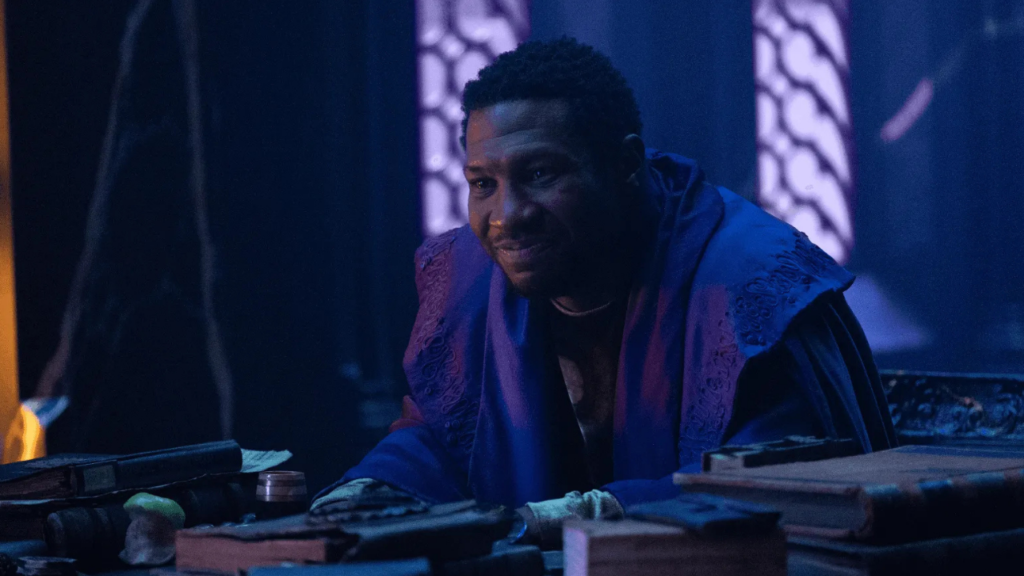
Loki learns to control his time slipping, returns to the Citadel conversation, refuses the choice He Who Remains offered him, and destroys the Loom. Then he walks out among the dying strands, revives them with his magic, gathers them, and pulls them into the shape of a tree, sitting at the center holding them.
He saved and reorganized a multiverse that was already there.
He’s also never called the God of Stories in the series. That’s a comics and fandom label that got attached to the ending, it fits, and Marvel Studios hasn’t said it.
The show leaves a lot open here. Whether the strands now depend on him continuously, how much of the multiverse that tree contains, whether he can ever leave. Those questions matter for how Doom could possibly threaten the god currently holding the multiverse together.
While we’re on the TVA, one more piece of cleanup. It gets described early on as existing outside time and space. Season 2 shows the place has a past, a present, and a future. O.B. remembers centuries of work there and Loki slips through its history. It operates outside ordinary timeline time without being literally without chronology.
What makes someone a variant
The word does two jobs, and people mix them together.
The first one is procedural. In Loki, a variant is a person who stepped off the path the TVA approved, which is a legal category rather than a metaphysical one. It’s why agents tag Loki as a variant for escaping with the Tesseract.
The second is what everybody means now, an alternate version of someone from another timeline or universe. He Who Remains calls the other Kangs his variants. The Council of Kangs in Quantumania are variants of each other.
There’s no stated test for what makes two people versions of each other. No genetic threshold, no soul rule, no required shared biography. Marvel uses correspondence intuitively and has never defined it, which is why appearance is all over the place. Loki variants include Tom Hiddleston, a child, an old man, a boastful warrior, Sylvie, and an alligator. Doctor Strange and Wanda variants usually keep the same face. Nobody has explained the difference.
One precision note, since it comes up constantly. No Way Home never calls Tobey Maguire’s and Andrew Garfield’s Peter Parkers variants. The screenplay has Strange say the damaged spell pulled people from every universe who know Peter Parker is Spider-Man. They’re counterparts from other universes, and calling them variants works fine under the franchise’s broader use of the word. It just isn’t that movie’s language.
Is the MCU Earth-616 or Earth-199999?
Both numbers are real, both are official, and they come from different catalogues.
Earth-199999 came first, from the Official Handbook of the Marvel Universe A to Z, volume 5, in 2008. That was Marvel Comics’ indexing program assigning a number to the new film continuity, not dialogue in Iron Man and not Marvel Studios cosmology. Across the Spider-Verse later used it as a joke when Miguel O’Hara refers to the MCU, and co-director Kemp Powers said the line wasn’t coordinated with Marvel Studios at all.
Earth-616 is what Marvel Studios uses now. In Multiverse of Madness, the Earth-838 Christine says, “We’ve designated your universe 616. Mine, 838.” The 2023 official timeline book uses Earth-616 for the main continuity, and the Deadpool & Wolverine screenplay tags Wade’s TVA interview scene as Earth-616.
Christine’s wording is the most useful line in this whole argument. We’ve designated. An institution assigned those numbers. Nothing in the MCU establishes a cosmic registry handing out objective universe numbers, so the strongest reading is that Earth numbers are local cataloguing systems.
That clears up the conflict. Marvel Comics can call its main continuity 616 and Marvel Studios can call its own main continuity 616 without either one being wrong, because they’re separate catalogues keeping separate books. Sony’s animated films don’t get to overrule Marvel Studios’ naming, and Marvel Studios doesn’t retroactively erase a 2008 handbook entry.
Mysterio also says 616 while inventing a fake multiverse backstory in Far From Home, and how he landed on the number Marvel Studios would later adopt has never been explained. Easter egg, not secret knowledge.
What actually causes an incursion
Reed Richards gives the definition in Multiverse of Madness. An incursion happens when the boundary between two universes erodes and they collide, destroying one or both.
Reed also describes a risk factor that often gets left out of the explanation. He warns that a traveler’s footprint in a universe they don’t belong to raises the danger, not that arrival automatically triggers a collision.
The strongest evidence that travel alone is not established as sufficient is standing in the room with him. America Chavez has traveled through 73 universes, and the film never attributes an incursion to those trips.
What the film does establish is one causal chain. Earth-838’s Strange used the Darkhold to dreamwalk while searching the multiverse for a way to beat Thanos, and inadvertently destroyed another universe doing it. The Illuminati executed him for it after the Thanos fight was already won.
Two things get misread about that sequence constantly. Earth-838 wasn’t destroyed by that incursion, it’s intact for the entire movie, and the universe that died is never named. And their Strange won that fight. The Illuminati executed him anyway, for what the Darkhold cost getting there.
Then Clea shows up in the mid-credits scene and tells Earth-616’s Strange he caused an incursion and they’re going to fix it. Which incursion, caused by which act, involving which two universes, the film never says. A 616 and 838 collision is a popular theory and nothing more than that.
The Marvels gets pulled into this conversation constantly, and it probably shouldn’t be. Dar-Benn overloads the Quantum Bands and the jump-point network and tears a hole in space-time. Monica identifies it as a different reality bleeding into ours, seals it from the far side, and ends up stranded there. The film never uses the word incursion. Incursion-like is fair. Confirmed incursion isn’t.
Worth separating one more thing with Secret Wars coming. In the comics, Jonathan Hickman built an entire system around colliding universes, with Earths as the collision points, Molecule Man, and the Beyonders. Michael Waldron has said he included incursions because he likes Hickman’s work, which is inspiration rather than a promise of a scene-by-scene adaptation, and it’s exactly why the MCU is going to change a lot from the Secret Wars comic.
What an Anchor Being is, and whether every universe has one
Deadpool & Wolverine introduced a new way for a universe to die, and coverage turned it into a universal law the movie never claimed.
What the film establishes: Mister Paradox explains that when a universe loses its Anchor Being, a person of vital importance to that world, the universe slowly withers. The TVA display identifies Logan as Earth-10005’s Anchor Being. Paradox says natural decay would take a couple thousand years, which is why he wants to speed it up with an unsanctioned Time Ripper.
The ending complicates Paradox’s explanation. He says the decay can’t be stopped. By the end of the film, after Wade and Logan destroy the Time Ripper and survive it, B-15 is looking at a monitor showing Earth-10005 regenerating. Paradox was wrong, lying, or working with incomplete information, and the movie doesn’t tell us which or explain why the universe recovers.
Wade calls the Wolverine he recruited a new Anchor Being. That’s Wade’s line in a victory lap. No TVA official and no monitor confirms it, and the film never establishes that an Anchor Being can be replaced at all.
Nothing in the movie says every universe has one either. Paradox speaks in general terms about what happens when a universe loses its anchor, and Earth-10005 is the only case ever identified.
Which raises the question everybody asks. Who is Earth-616’s Anchor Being? Nobody knows. Tony Stark is the popular answer for obvious reasons. Asked directly, Kevin Feige declined to answer, and in a separate interview he said Marvel has several terms for beings of great importance and whether Anchor Beings and nexus terminology describe the same thing “remains to be seen.” That’s about as clear a signal as you get that Marvel hasn’t revealed the answer.
Anchor decay also isn’t an incursion. No boundary erodes, no second universe collides, and the film never uses the word. As released canon stands, they’re two separate ways for a universe to die.
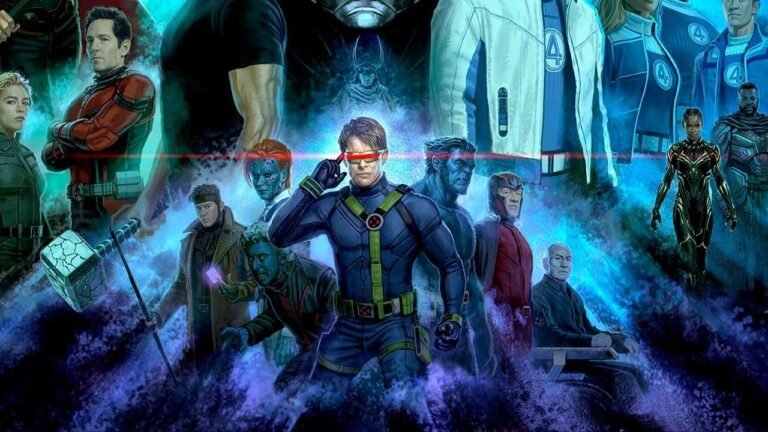
One last thing about Earth-10005, since it comes up in every X-Men conversation now. Giving the Fox films a universe number is a label rather than a continuity repair. It doesn’t fix the internal date and timeline problems those movies had with each other, and it doesn’t tell you which version of those characters is showing up in Doomsday, which is why pinning down which X-Men are actually in the movie is harder than a cast list makes it look.
What Marvel still hasn't explained
These are the real gaps, the questions the released material genuinely doesn’t resolve. If you came here looking for one of these, the honest answer is that nobody has it.
Did every universe start as a branch? Some clearly did. But Earth-828 in The Fantastic Four: First Steps arrives as a complete separate world with no branch point given, and He Who Remains described universes stacked beside his own rather than growing out of it.
When does a branch become a universe? No stated threshold anywhere.
Did other universes keep existing outside He Who Remains’ isolation while the TVA was running? Never addressed.
Does every universe have its own Dark Dimension, Quantum Realm, and afterlives? Or are those shared spaces every universe touches? Marvel has never taken this one up.
How do the TVA and the Watchers relate? Both of them monitor the multiverse and neither one acknowledges the other exists.
How much of the multiverse is inside Loki’s tree? Unstated, and the show never says whether he can leave it.
What makes two people variants of each other? Undefined, and so is why some variants share a face while others don’t.
What was Sylvie’s Nexus Event? Ravonna refuses to tell her, and the show never reveals it.
Where did Steve Rogers live, and how did he get to that bench? Not on screen.
What actually triggers an incursion, and can one be reversed? Unknown, along with which incursion Clea came to fix.
Does every universe have an Anchor Being, can one be replaced, and who is Earth-616’s? All three are open.
Why no single explanation ever feels complete
Marvel never wrote one. The rules arrived in layers across nine years.
Doctor Strange gave us dimensions and a magical time mechanism in 2016. Endgame added branch-preserving travel in 2019. Loki added political control over branches in 2021. No Way Home and Multiverse of Madness added universe hopping, Earth numbers, and incursions. Loki season 2 explained what the Loom was really for and dismantled the TVA’s original mission. Deadpool & Wolverine added an entirely new way for a universe to die. Most of those layers can be reconciled with what came before them, and none of them were built as a rulebook. The production history behind that stretch explains a lot about why.
Going into Avengers: Doomsday and Secret Wars, the behavior is the part worth carrying. Changes create branches instead of overwriting histories. Whole alternate worlds exist, and not all of them have a shown origin. Crossing between them carries risk that scales with how much you disturb the place. And a lot of what sounds like settled cosmology is one character’s word, delivered by someone with a reason to lie.
Marvel’s official synopsis for Doomsday describes heroes from three distinct universes on a collision course. Whether that collision is Reed’s incursion mechanic, whether Clea’s warning is the starting gun, and whether Anchor Beings matter at all, nobody can answer yet. Both films are unreleased, and everything past that point is theory. We’re tracking what’s confirmed and what isn’t on the Road to Doomsday hub.
Co-founder and co-host. Veteran. Grew up on cartoons. The MCU brought all of it back and pulled him into the comics side he never picked up as a kid. Curious by default. Passionate without needing to prove anything. Good at holding a conversation.