
A British Company Helped Pay for Ghost in the Shell. American VHS Buyers Made It No. 1.
By Jimigrimm
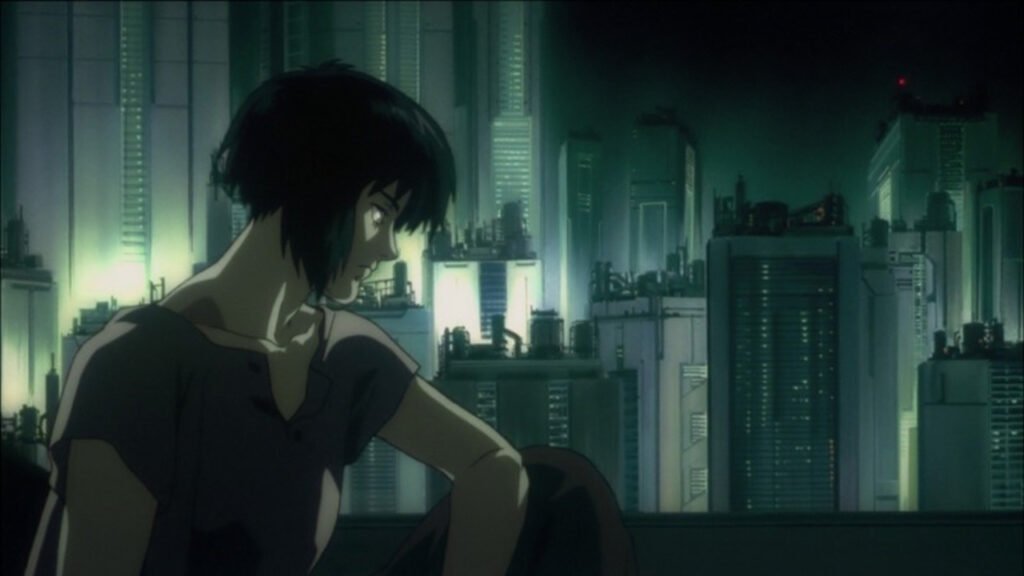
In August 1996, the best-selling videotape in America, according to Billboard, was a Japanese animated movie about a cyborg agent. Billboard’s issue dated August 24, 1996 put Ghost in the Shell at No. 1 on its Top Video Sales chart, in its seventh week on the chart, at $19.95 a tape.
A few months earlier, it had a small theatrical run in America. Part of the money that made it came from a British company, Manga Entertainment.
Bandai Handed Oshii The Manga
Ghost in the Shell started as Masamune Shirow’s manga, published by Kodansha. Production I.G’s Mitsuhisa Ishikawa has said Kodansha came to him about an anime adaptation many times, and “I had actually been turning them down” (Anime! Anime!, 2019, translation). He said what got it made was Mamoru Oshii’s push for it and the backing of Bandai Visual’s Shigeru Watanabe.
Oshii wasn’t looking for it either. In an official 2024 interview, he said he had a different proposal for Bandai Visual at the time, one that later became Jin-Roh, and Bandai put the Ghost in the Shell manga in front of him and asked him to direct it instead.
Money was tight. Geek Culture reported in 2021 that Watanabe put the film’s cost at 330 million yen in a Twitter thread. Oshii said in the 2024 interview, “There was less time and budget than I had imagined” (translation). That’s part of why the Fuchikoma, the spider tanks from the manga, aren’t in the movie. “Leaving out the Fuchikoma was the very first thing I decided,” Oshii said. He thought they’d scatter the theme, and “the budget did not allow for a two-hour film, and given the schedule there was no room to include the Fuchikoma” (translation).
A British Company Came In Before It Was Finished
Manga Entertainment was a British anime label, and it wanted to do more than buy finished movies. Manga’s Andy Frain told Nintendo Magazine System in June 1995 that “the idea for co-productions was there from the start,” and that nobody was prepared to commit Akira-level budgets anymore, as Animation Obsessive quoted him.
Production I.G’s credits list Kodansha, Bandai Visual and Manga Entertainment as the producers. Frain is credited as an executive producer, and Manga’s Laurence Guinness as an associate producer. Guinness told Cinefantastique in August 1996 that he wrote a 25-page appraisal of the script that was discussed with Oshii over many days. “We had storyboard approval,” he said, but “the actual, physical production was managed by our partners at Production I.G.”
How much Manga put in has never been made public. Film historian Andrew Osmond wrote that “about a third of Ghost’s budget was provided by Britain’s Manga Entertainment.” No contract has surfaced. It’s a different version of what happened with The Big O, where Cartoon Network’s money helped get the rest of the series made.
It Had A Small Run In American Theaters
Ghost in the Shell opened in Japan on November 18, 1995, through Shochiku. It came out in the UK on December 8, 1995, according to The Numbers.
Get the history behind the stories.
One email a week. Read it before it hits the feeds.
Its American theatrical run started in early 1996. Animation World Network reported that it played in more than 30 US markets, and Box Office Mojo records its original US gross at $515,905.
Then It Climbed To No. 1
The tape entered Billboard’s Top Video Sales chart at No. 15 in the issue dated July 13, 1996. By July 27 it was No. 6. In its seventh week, the August 24 issue, it hit No. 1. The next week it was No. 2, and it was still on the chart at No. 34 in the October 26 issue, its 16th week.
Billboard compiled that chart from a national sample of retail store sales reports, so this was people buying the tape, not renting it. Bandai Visual later called it the first Japanese video release ever to reach No. 1 on Billboard’s US chart.
The rest of the video business noticed. In Billboard’s October 5, 1996 issue, Orion Home Video president Herb Dorfman said the midyear success of Ghost in the Shell had proved “conclusively that the marketplace is broadening.”
How A Tape Got Into That Many Hands
Manga marketed the movie hard at what Animation World Network called combo retailers, stores like Suncoast and Wherehouse that used to be known as record stores. “As mass as we get,” Manga’s Marvin Gleicher said, “is Musicland and Best Buy.” Rental stores were harder. “We can only persuade them to take one copy of Ghost,” he said. “But that copy is always out!”
Gleicher, Manga’s president and CEO, stayed careful about what it all meant. “I wouldn’t say that Japanimation has gone mainstream, but it is definitely beyond its former cult status,” he told Billboard in October 1996.
The Matrix Connection
The movie also had fans in Hollywood. In a 2004 Wired story, Charles C. Mann wrote that the story had become “Hollywood legend”: the Wachowskis showed Ghost in the Shell to producer Joel Silver while pitching The Matrix and told him, “We want to make a live-action version of this.” That’s Mann’s account years later, not a recording of the pitch. The Matrix wasn’t an official adaptation.
Thirty Years Later
The film has kept coming back. A revised version, Ghost in the Shell 2.0, followed in 2008. The original came back to theaters in IMAX on September 17, 2021. On September 18, 2026, a 30th anniversary 4K release opened in more than 800 North American theaters. In 1996 it played a little over 30 markets.
Science SARU’s new series, The Ghost in the Shell, began airing on July 7, 2026, and on October 23, 2026, the official site announced a new Science SARU animation project. The series director, Mokochan, told Hypebeast he first encountered Ghost in the Shell in high school, reading the manga and watching Oshii’s film around the same time.
What's On The Record And What Isn't
Confirmed: Manga Entertainment as a producer in Production I.G’s credits, the Japanese release date, the Billboard chart run including No. 1 in the August 24, 1996 issue, Bandai Visual’s claim that it was the first Japanese video release to top that chart, and the participants’ own accounts of how the film got made.
Reported: Manga putting up about a third of the budget (Osmond), the $515,905 US gross (Box Office Mojo), the 330 million yen cost (Geek Culture’s report of Watanabe’s posts), and the Wachowskis’ pitch to Joel Silver (Wired, 2004).
Not established: how much Manga paid, the film’s Japanese box office, a reliable worldwide box office total, total US video sales, and whether it made its money back in theaters.
Did you find Ghost in the Shell on a store shelf in the ’90s, or come to it later through The Matrix or Stand Alone Complex? And is the 1995 movie still the version you’d hand to someone new?
MORE LIKE THIS
-
Serial Experiments Lain Was Made by a Team With Almost No TV Anime Experience. The Character Designer Had Never Worked on an Anime Before.
5 MIN READ -
Neon Genesis Evangelion Was Made by a Man in the Middle of a Four-Year Depression. It Became One of the Most Influential Anime of the 1990s.
7 MIN READ -
Cowboy Bebop Became the Show Every Anime Fan Recommends to People Who Don’t Watch Anime. The Reason It Works Is That It Was Never Really Made for Anime Fans in the First Place.

6 MIN READ

Co-founder and co-host. Veteran. Grew up on cartoons. The MCU brought all of it back and pulled him into the comics side he never picked up as a kid. Curious by default. Passionate without needing to prove anything. Good at holding a conversation.