
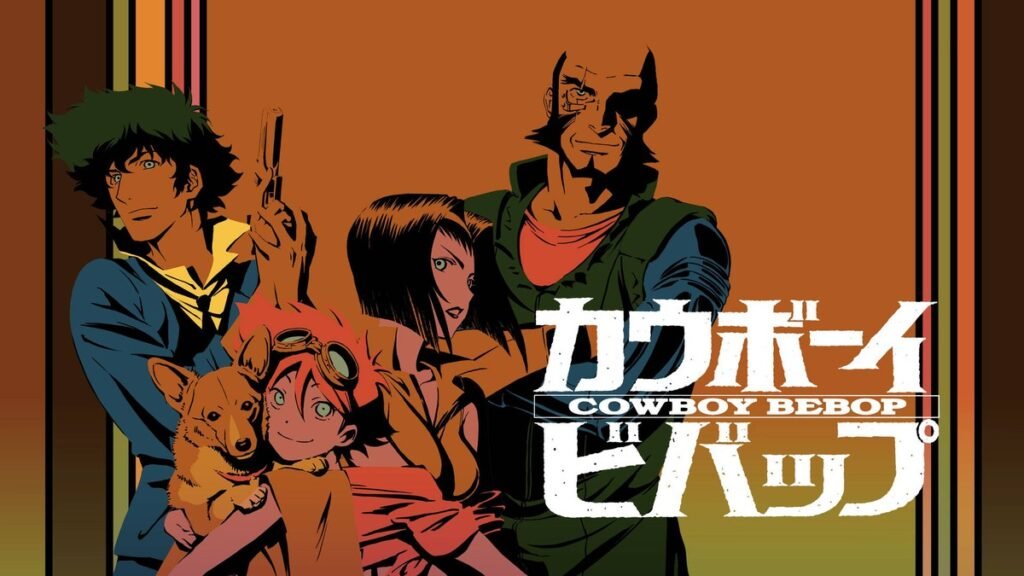
Cowboy Bebop Became the Show Every Anime Fan Recommends to People Who Don't Watch Anime. The Reason It Works Is That It Was Never Really Made for Anime Fans in the First Place.
By Jimigrimm
You’ve said it. Or someone has said it to you. “If you only watch one anime, watch Cowboy Bebop.” It’s the universal recommendation. The one show that crosses every barrier, every demographic, every objection. “I don’t like anime.” “You’ll like Bebop.” “I don’t like subtitles.” “Watch the dub, it’s better.” “I don’t like cartoons.” “This isn’t a cartoon.”
Every anime fan has used Cowboy Bebop as a gateway drug at least once. And most of them have never stopped to ask why this show, out of thousands, became the one that converts non-believers. The answer isn’t that Bebop is the best anime ever made. That’s a debate nobody wins. The answer is that Shinichiro Watanabe built a show out of American influences and sold it back to the West, and the West recognized itself in it without realizing what it was watching.
Watanabe Built It From Everything Except Anime
Shinichiro Watanabe had co-directed one major project before Cowboy Bebop: Macross Plus, a four-episode OVA in 1994, alongside Shoji Kawamori. He was young, ambitious, and obsessed with things that had nothing to do with Japanese animation. Jazz. Blues. Noir cinema. Bruce Lee. Blaxploitation films. John Woo’s Hong Kong action movies. Lupin the Third. He wanted to make a show that felt like channel surfing through the coolest parts of Western culture with a Japanese sensibility holding it all together.
Sunrise agreed to produce it. Bandai agreed to fund it. But there was a condition: the show had to sell toys. Bandai wanted spaceships. They wanted merchandise. Watanabe gave them the Swordfish II and the Bebop and the Red Tail, and then he built a show around bounty hunters who were too broke to eat. The ships existed because a corporate sponsor demanded products. The characters existed because Watanabe wanted to explore loneliness, regret, and the impossibility of outrunning your past. The tension between those two realities is baked into the show’s DNA.
And then there was Yoko Kanno. Watanabe brought the composer on before most of the show was even written. He described what he wanted in terms of music, not plot. Jazz. Blues. Heavy metal. Country. Opera. Music that sounded like it came from a jukebox in a bar on a space station. Kanno composed a soundtrack so eclectic, so confident, and so far removed from typical anime scores that the music became the show’s identity more than any single character or storyline. “Tank!”, the opening theme, is a big band jazz piece with a horn section that sounds like it’s chasing you down an alley. It has nothing to do with space or bounty hunters or anime. It has everything to do with the feeling Watanabe wanted you to have when you pressed play.
Japan Got Half a Show. America Got All of It.
Cowboy Bebop premiered on TV Tokyo in April 1998. Its first run was cut to just 12 episodes plus a special due to its 6 PM timeslot and depictions of graphic violence. The full 26-episode run eventually aired on WOWOW satellite television later that year, but most of the Japanese audience never saw the complete series on its first broadcast.
When Adult Swim launched on Cartoon Network in September 2001, Cowboy Bebop was the first anime on the block. Not one of the first. THE first. The show that introduced Adult Swim’s anime programming to American audiences. It aired uncut, with all 26 episodes and the original soundtrack intact. No censorship. No name changes. No episodes pulled for content. America got the version of Cowboy Bebop that Japan’s network television audience had been denied.
Get the history behind the stories.
One email a week. Read it before it hits the feeds.
The show exploded. It ran continuously on Adult Swim for years, cycling through reruns that kept pulling new viewers. The English dub, directed by Mary Elizabeth McGlynn with Steve Blum as Spike Spiegel, Wendee Lee as Faye Valentine, and Beau Billingslea as Jet Black, is frequently cited as one of the greatest English dubs in anime history. Blum’s Spike became the definitive version of the character for most Western fans, to the point where hearing the Japanese voice feels unfamiliar even to people who watch most anime subtitled.
Why It Converts Non-Fans
Every other anime on Toonami and Adult Swim required you to accept anime’s visual and storytelling conventions. Dragon Ball Z asked you to accept power levels and multi-episode fights. Gundam Wing asked you to accept mecha and political complexity. Sailor Moon asked you to accept transformation sequences and magical girl tropes. Even the shows that transcended their genres still looked and felt like anime.
Cowboy Bebop doesn’t. The character designs are realistic by anime standards. The movement is cinematic, modeled after live-action filmmaking rather than traditional animation shortcuts. The soundtrack is Western. The cultural references are Western. The genre touchstones, noir, jazz, kung fu, are Western. The episodic structure, where most episodes tell self-contained stories with a loose arc connecting them, is closer to American television than to typical anime serialization.
Watanabe didn’t make an anime that appeals to Western audiences. He made a Western show using anime as the medium. That’s why it converts non-fans. When someone who “doesn’t like anime” watches Cowboy Bebop, they’re not overcoming their resistance to the medium. They’re watching something that was built from the culture they already know, just rendered in a form they hadn’t expected to enjoy. The conversion isn’t about changing their taste. It’s about showing them that the thing they already like exists inside a medium they’d dismissed.
"You're Gonna Carry That Weight"
The final episode of Cowboy Bebop ends with five words on a black screen: “You’re gonna carry that weight.” If you’ve seen it, you know what happened before those words appeared. If you haven’t, the show earned the right to that ending across 25 episodes of building a character whose entire existence was defined by the thing he couldn’t stop running from.
Spike Spiegel is cool. He’s effortlessly, magnetically, maddeningly cool. He fights like water. He smokes in the cockpit. He doesn’t care about anything, or at least he performs not caring so convincingly that the performance becomes a kind of armor. And then the show slowly, patiently, across episodes that seem unrelated, peels back that armor and shows you the wound underneath. By the time the final episode arrives, you understand that everything Spike has done, every bounty, every fight, every joke, every nap on the Bebop’s couch, was a man trying to fill the time between the moment his life ended and the moment his body caught up.
That’s not an anime character arc. That’s a literary one. And the fact that millions of people experienced it for the first time at 1 AM on Adult Swim, in a show they were told was “just a cartoon,” is one of the most important things that ever happened to anime in America.
The Show That Made Everything Else Possible
Cowboy Bebop didn’t just succeed on Adult Swim. It defined what Adult Swim’s anime programming could be. It proved that uncut, sophisticated, adult-oriented anime could find a massive audience on American television if it was presented without apology. Every anime that followed it onto the block, from Inuyasha to FLCL to Fullmetal Alchemist to Attack on Titan, benefited from the audience Bebop built and the credibility it established.
The live-action Netflix adaptation in 2021, starring John Cho, was cancelled after one season. It proved what fans already knew: you can recreate the plot, the costumes, and the setting, but you can’t recreate the feeling. The feeling lives in Kanno’s music and Watanabe’s pacing and the specific alchemy of animation allowing these characters to move in ways that real human bodies can’t. The live action didn’t fail because it was bad. It failed because Cowboy Bebop was never about the things you can photograph. It was about the things you can only draw.
When did Bebop find you? Were you an Adult Swim original who caught it at 1 AM? Were you a DVD era fan who binged it on a friend’s box set? Did someone hand it to you and say “just watch it” with the same confidence that every Bebop fan has when they make the recommendation? And the question nobody asks because the answer is too personal: which episode is the one where the show stopped being cool and started being devastating? For most fans it’s a specific moment. We want to know which one is yours.
MORE LIKE THIS
-
Gungrave Launched as a Game and an Anime at the Same Time. Only One of Them Became a Tragedy People Never Forgot.
5 MIN READ -
Wolf’s Rain Was the Only Show Cowboy Bebop’s Head Writer Ever Created From Scratch.
5 MIN READ -
Outlaw Star Was Made by the Same Studio as Cowboy Bebop, Released Months Earlier, and Got Completely Overshadowed. The Fans Who Found It on Toonami Never Let Go.
6 MIN READ
Co-founder and co-host. Veteran. Grew up on cartoons. The MCU brought all of it back and pulled him into the comics side he never picked up as a kid. Curious by default. Passionate without needing to prove anything. Good at holding a conversation.