
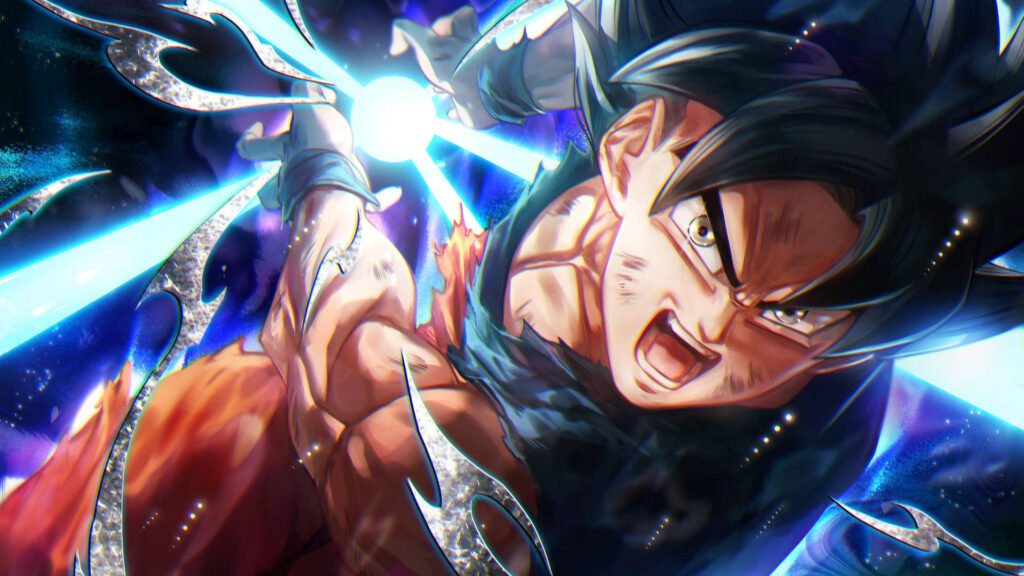
Why Do Anime Characters Yell Their Attacks? The Real Reason Behind the Weirdest Thing in Anime.
By Jimigrimm
“KAMEHAMEHA!” “RASENGAN!” “GETSUGA TENSHO!” “DETROIT SMASH!”
If you’ve watched any anime, you’ve seen it. A character stands in the middle of a fight, screams the name of their attack at the top of their lungs, and then executes it. Sometimes the name appears on screen in giant letters. Sometimes the character explains what the attack does while performing it. Sometimes the opponent just stands there and waits for the name to finish before the hit lands.
To someone who didn’t grow up watching anime, this looks ridiculous. Why would a fighter announce what they’re about to do? In any real fight, telling your opponent your next move is the worst possible strategy. In Western action movies, the hero just punches. In anime, the hero announces the punch, names the punch, and sometimes narrates the punch while throwing it.
There’s a reason for this. Several reasons, actually. And they go back further than anime itself.
It Started on the Page, Not the Screen
The most important reason anime characters yell their attacks is that manga characters have to.
Manga is a still image. There’s no motion. There’s no sound. A fight scene in manga is a series of panels showing frozen moments, and the reader’s brain has to fill in the movement between them. When a character throws a punch in a manga panel, the reader sees the beginning or the end of the punch. They don’t see the punch itself. The speed lines, the impact marks, the motion blur, those are the artist’s tools for implying movement that isn’t actually there.
Naming the attack solves a fundamental problem of the medium. When a character shouts “KAMEHAMEHA,” the text itself communicates what’s happening in a way that the static image alone can’t. The speech bubble tells you this isn’t just a punch. It’s a specific technique with a specific name and a specific power level. The name does the work that animation or live-action movement would do in another medium: it tells you what you’re looking at and why it matters.
This is why Western comics don’t have the same convention. Western superhero comics use narration boxes, sound effects (POW, WHAM, CRACK), and visual storytelling to communicate action. Manga developed a different solution because the medium evolved differently. In Japanese comics, the character’s voice IS the sound effect. The attack name IS the narration. The convention emerged from necessity and became tradition.
Kabuki Theater Set the Template Centuries Ago
The tradition of announcing actions before performing them has deep roots in Japanese performing arts. In kabuki theater, which dates back to the early 1600s, actors perform a technique called mie, where they strike a dramatic pose and hold it at a climactic moment. The name of the character or the significance of the moment is often announced by a narrator or the actor themselves. The audience knows what’s coming. The performer names it. The execution follows.
This isn’t about surprise. It’s about spectacle. In kabuki, the announcement is part of the performance. The audience’s enjoyment comes not from being surprised by what happens but from watching it happen with full knowledge of what’s about to occur. The power is in the execution, not the reveal.
Get the history behind the stories.
One email a week. Read it before it hits the feeds.
Anime inherited this sensibility. When Goku charges the Kamehameha, you know it’s coming. He tells you it’s coming. He charges it for three episodes. The power isn’t in the surprise. It’s in watching the technique build, hearing the name build with it, and experiencing the release when it finally fires. The announcement is the buildup. Without it, the attack is just a beam of light. With it, the beam of light has a name, a history, and a weight that the audience feels because they were told to expect it.
The Radio Drama Connection
Early anime was heavily influenced by Japanese radio dramas, where voice acting was the primary storytelling tool. In radio, you can’t see what’s happening. Every action has to be verbalized. Fights had to be narrated because the audience was listening, not watching. Characters would describe their movements, call out their attacks, and react verbally to every hit because silence meant confusion.
When anime emerged as a visual medium, it carried these conventions forward. The voice acting tradition in Japan treats the voice as a full-body instrument. Anime voice actors don’t just read lines. They perform them physically, matching their body movements to the character’s actions in the recording booth. The scream that accompanies an attack name isn’t just acting. It’s a performance tradition that connects anime to the oral storytelling forms that preceded it.
This is why Japanese voice acting sounds fundamentally different from Western voice acting in animation. Western voice actors typically perform in a conversational register, even in action scenes. Japanese voice actors perform in a theatrical register that draws from kabuki, radio drama, and a cultural tradition of vocal performance that treats the voice as an instrument of physical expression.
The Practical Production Reason Nobody Talks About
There’s a less romantic reason that anime characters yell their attacks, and it has to do with budget.
Animation is expensive. Drawing a character in motion, frame by frame, showing every stage of a complex technique, requires hundreds of drawings per second of screen time. Drawing a character standing still, mouth open, screaming a name while the camera holds on their face, requires significantly fewer drawings. The attack name fills screen time with voice acting instead of animation. A ten-second attack name is ten seconds of a character standing still that didn’t need to be animated.
This is especially true for weekly anime produced on tight budgets and tighter schedules. Dragon Ball Z, which is famous for characters charging attacks across entire episodes, was produced weekly on a schedule that didn’t allow for the kind of fluid, detailed animation that complex fight choreography requires. The solution: let the voice actors carry the moment. Masako Nozawa (Goku’s Japanese voice actor) screaming during a Spirit Bomb charge is doing the emotional work that the animation budget can’t afford to do visually.
As animation budgets and techniques have improved, modern anime has moved toward more fluid, less announcement-heavy fight scenes. Shows like Demon Slayer, Jujutsu Kaisen, and Mob Psycho 100 use named attacks but pair them with animation so detailed that the technique is communicated visually at the same time it’s announced verbally. The convention persists, but the gap between what the voice is doing and what the animation is doing has narrowed significantly.
Why It Works Even When It Shouldn't
Here’s the part that’s hard to explain to someone who’s never watched anime: the attack names become emotional anchors.
When Naruto says “Rasengan” for the hundredth time, it’s not redundant. It’s a callback to every time he’s used it before, every fight where it mattered, every moment where his mastery of that technique represented growth. The name carries the weight of the character’s entire journey compressed into a single word. When Midoriya screams “DETROIT SMASH” in My Hero Academia, you’re not just hearing an attack name. You’re hearing a kid channel everything his mentor gave him into one moment. The name connects the attack to the character’s story in a way that a silent punch can’t.
Western audiences who grow up watching anime internalize this without thinking about it. The first time you hear “Kamehameha,” it sounds strange. By the fiftieth time, it sounds like a promise. The convention that looks ridiculous from the outside becomes, from the inside, one of the most effective emotional tools in the medium.
Why did the attack names work on you? Was there a specific one that stopped being silly and started being powerful? Was it the first time Goku went Super Saiyan and the Kamehameha felt different? The first time Naruto landed a Rasengan on someone who deserved it? Or the first time you screamed an attack name at your TV and didn’t care who heard you? We want to know which name got you.
.
MORE LIKE THIS
-
Why Is Anime So Long? The Real Reason One Piece Has 1,100 Episodes and Western Shows Have 8.
5 MIN READ -
Cowboy Bebop Became the Show Every Anime Fan Recommends to People Who Don’t Watch Anime. The Reason It Works Is That It Was Never Really Made for Anime Fans in the First Place.
6 MIN READ -
Sub vs Dub: The Oldest Debate in Anime. The Real History of Why It Exists and the Honest Answer Nobody Wants to Hear.
6 MIN READ

Co-founder and co-host. Veteran. Grew up on cartoons. The MCU brought all of it back and pulled him into the comics side he never picked up as a kid. Curious by default. Passionate without needing to prove anything. Good at holding a conversation.