Who Is Clayface? Batman's Saddest Villain Has Been at Least Eight Different People, and the One in October's Movie Never Existed as a Single Character in the Comics.
By Jimigrimm
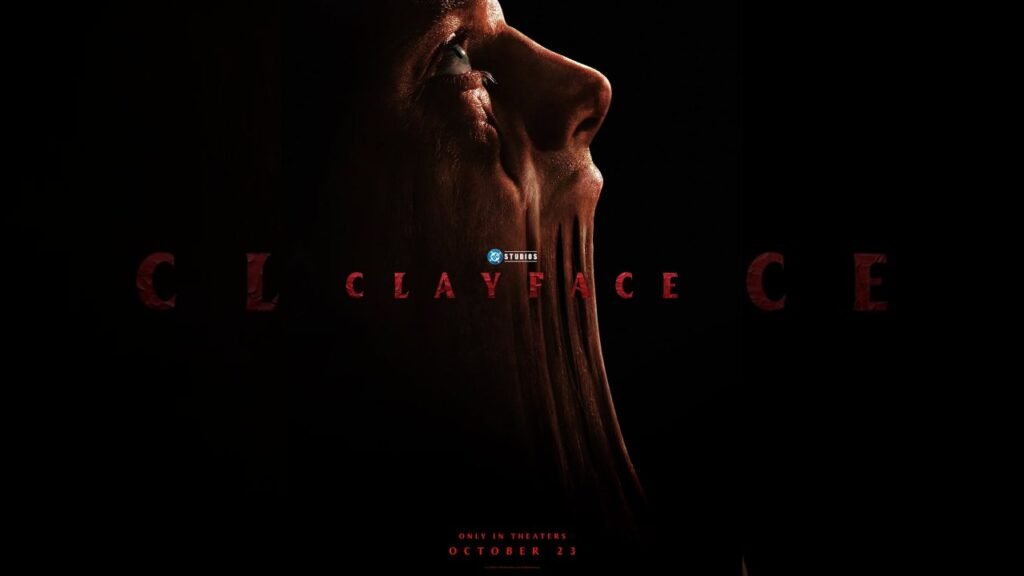
Clayface arrives in theaters on October 23, and he’s carrying something no other Batman villain has ever carried into a movie: no fixed identity.
The Joker is the Joker. The Penguin is Oswald Cobblepot. Two-Face is Harvey Dent. But Clayface is a name, not a man, and at least eight different people have worn it since 1940. Some of them were murderers. One was a firefighter who never wanted any of it. One was a child. And the version Tom Rhys Harries is playing in October, a Hollywood actor named Matt Hagen whose face gets destroyed, is a fusion of two of them that has never existed as a single character on a comics page in eighty-six years.
If you’re walking into this movie cold, here’s who Clayface actually is, why he’s the most tragic name in Batman’s rogues gallery, and what the film is actually adapting.
The First One Wasn't Made of Clay at All
Basil Karlo showed up in Detective Comics #40 in June 1940, created by Bill Finger and Bob Kane, and here’s the part that surprises everyone: he had no powers. None. He wasn’t a monster. He was a washed-up B-list horror actor who found out his most famous film was being remade without him, snapped, and started murdering the cast and crew in the guise of Clayface, a villain he’d played on screen. He killed his victims in the same order the deaths happened in the movie.
That’s not a supervillain origin. That’s a slasher villain, in 1940, eighteen years before the word “slasher” meant anything. Karlo’s whole gimmick was theatrical: makeup, disguise, and the identity of a character he’d once played. He was Batman’s first villain built entirely out of Hollywood.
Hold onto that, because the movie is going back to it.
The Second One Is Where the Clay Came From
The shapeshifting, the mud monster, the thing everyone pictures when they hear the name, all of that arrived with the second Clayface: Matt Hagen, created by Bill Finger and Sheldon Moldoff in Detective Comics #298 in December 1961.
Comics Hagen isn’t an actor. He’s a treasure hunter who finds a pool of radioactive protoplasm in a cave, falls in, and comes out able to reshape his entire body into anyone or anything. The catch, and it’s a good one, is that it wears off. He has to keep returning to the pool to recharge, which turns his whole existence into an addiction story with a countdown clock on it. He became the definitive Clayface of the Silver Age, tangled with Batman and Superman both, and died during Crisis on Infinite Earths, killed by Shadow Demons.
Every Clayface after Hagen inherited his template, and in Preston Payne’s case literally inherited his DNA: touch the wrong chemical, become the sludge.
Get the history behind the stories.
One email a week. Read it before it hits the feeds.
And Then There Were Eight
This is where it gets genuinely strange.
Preston Payne came third, created by Len Wein and Marshall Rogers in Detective Comics #478 in 1978, in a story running through #477-479. He’s a S.T.A.R. Labs scientist with a disfiguring disease who tried to cure himself using a sample of Matt Hagen’s DNA, and ended up melting anyone he touched. Not shapeshifting. Melting. He has to wear a containment suit and he kills by contact, which makes him the most horrifying Clayface by a distance.
Sondra Fuller, sometimes called Lady Clay, came fourth, with shapeshifting she could actually control and the ability to copy other people’s powers along with their faces. Cassius, the child of two Clayfaces, came fifth. And Johnny Williams came eighth, and he’s the one that hurts: a firefighter caught in a chemical explosion who becomes a monster through no fault, no crime, and no ambition of his own. Count the New 52 reworkings and the odd one-offs and the list runs longer still.
They even fought together. In 1989’s The Mud Pack, by Alan Grant and Norm Breyfogle, Basil Karlo recruited every living Clayface into a team to destroy Batman, and then, being Karlo, absorbed their powers for himself. The powerless actor from 1940 ended up as the most powerful version of the thing he inspired.
The Version the Movie Is Actually Adapting
Here’s where the movie’s version actually comes from.
In 1992, Batman: The Animated Series made an episode called Feat of Clay, and it rebuilt the character from scratch. The show took Matt Hagen’s name and powers and gave him Basil Karlo’s soul: an actor, disfigured in an accident, hooked on an experimental compound that lets him reshape his own face to keep working. The corporate villain Roland Daggett controls his supply. When Hagen becomes a liability, Daggett’s men force the compound down his throat, and it soaks into every cell in his body.
That version, voiced by Ron Perlman, is the one that stuck. It’s the one most people picture. And as a single character, he didn’t exist in the comics: comics Hagen is a treasure hunter, comics Karlo is an actor, and the cartoon welded them into one man. Pieces of that fusion eventually reached the page, folded into Basil Karlo’s New 52 rewrite years later, but the man in Feat of Clay was built for television.
The movie is adapting that welded version. Mike Flanagan, who wrote the script, has said directly that the Feat of Clay two-parter was his inspiration. Warner Bros.’ own synopsis describes Matt Hagen as a Gotham street kid turned Hollywood leading man, disfigured by a crime boss, who takes an experimental treatment that restores his face and destroys his mind. Actor, disfigurement, corporate poison, revenge. That’s Feat of Clay’s DNA in a body horror movie.
Why Clayface Is the Saddest Name in Gotham
Every great Batman villain is a distorted mirror of Bruce Wayne. The Joker is chaos to his order. Two-Face is what happens when the system he believes in breaks a good man. Clayface’s mirror is quieter and meaner than either: Batman chose to become someone else and can take the mask off. Clayface didn’t choose, and can’t.
That’s the thread running through every version. Karlo lost his career and became a role. Hagen lost his body and had to keep feeding it. Payne can’t touch another person for the rest of his life. Williams did nothing wrong at all. It’s a rogues gallery slot built entirely around losing yourself, which is why writers keep coming back to it, and why the redemption story DC ran in the 2010s, where Clayface joined the Bat-family and tried to be a person again, is one of the most argued-about arcs of the last decade. We’ll get to that one on its own, because it deserves its own piece.
For now, know this going into October: this is DC Studios’ first-ever horror movie. It’s adapted from a 1992 cartoon episode, the man at its center is a composite of two different villains, and the whole character is about someone who can look like anybody and can’t get back to being himself.
So here’s what we want from you before the movie lands. Which Clayface is your Clayface, the Perlman voice from the cartoon, the comics’ Karlo, or one of the deep cuts most people have never read? Do you want the film to give him a real shot at sympathy, or is Clayface scarier when he’s just a monster? And the big one: this is officially Gunn’s new DC Universe, he’s confirmed it on the record more than once, though you’ll still see reports placing it in Matt Reeves’ Gotham, an easy mix-up since Reeves produces the film. Either way, the DCU’s Batman still isn’t cast. Would you rather he stay out of it entirely and let Clayface carry his own tragedy? Drop it in the comments. October’s coming, and Gotham’s getting its first horror movie.
MORE LIKE THIS
-
DC Just Reinvented Batman, Superman, and Wonder Woman From Scratch. It’s the Biggest Thing Happening in Comics Right Now and Most Fans Have No Idea.
-
Marvel and DC Stopped Making Comics Together for Over 20 Years. The Story of Why They Stopped and What Brought Them Back Is Bigger Than the Crossovers Themselves.

-
The Voices Behind Your Childhood Are Real People. Most Fans Have No Idea How Much They Shaped the Characters You Love.