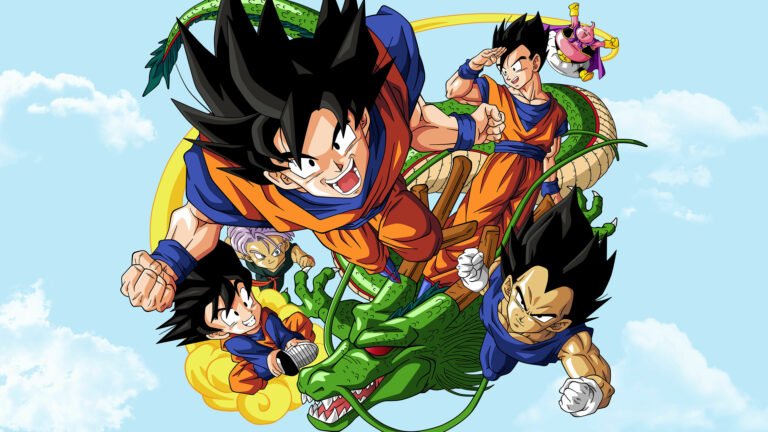
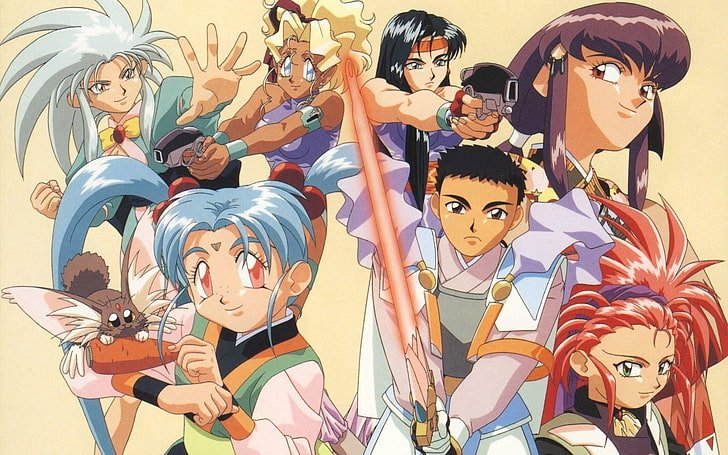
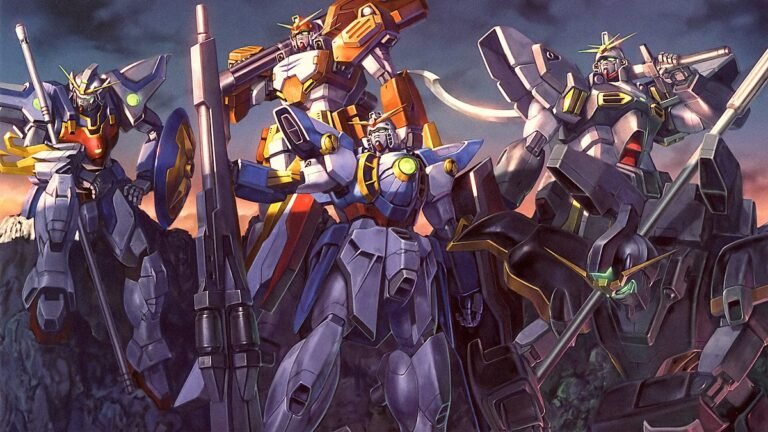
Tenchi Muyo! Showed Up Between Dragon Ball Z and Gundam Wing and Proved That Anime Could Make You Laugh, Think, and Feel Things You Didn't Sign Up For.

Between the power levels and the giant robots, there was a show about a teenage boy who accidentally released a space pirate from a cave and ended up living with a house full of alien women who all wanted his attention. It had sword fights and spaceship chases, but it also had quiet moments around a dinner table where characters who had been trying to kill each other an episode ago were arguing about who got the last rice ball. It was funny in a way that American cartoons weren’t. It was romantic in a way you weren’t prepared for. And it was the first time a lot of Toonami viewers realized anime could be something other than battle after battle after battle.

That show was Tenchi Muyo!, and it didn’t fit neatly into any box Toonami had built. That’s exactly why it mattered.

Born From a Joke That Wouldn't Die

Tenchi Muyo! started in 1992 as a six-episode OVA created by Masaki Kajishima and directed by Hiroki Hayashi. Both had worked on Bubblegum Crisis, a dark, serious cyberpunk OVA. During that production, they kept pitching lighter, comedic episodes, scenes of the characters going to hot springs, having personal moments away from the action. The sponsors rejected every pitch. So Kajishima and Hayashi took the idea and built an entirely new series around it.

They drew inspiration from the American sitcom I Dream of Jeannie. The concept was simple: what if a teenage boy opened a sealed cave, like Jeannie’s bottle, and a beautiful, chaotic woman jumped out and turned his life upside down? Then they added another woman. Then another. Then a genius scientist, a ditzy space cop, and a little girl who was secretly merged with a goddess. Tenchi Muyo! became the template for what the anime industry would eventually call the “harem” genre, where one character is surrounded by multiple romantic interests. Countless series copied the formula afterward. None of them balanced comedy, sci-fi action, and genuine emotional warmth the way the original did.

The first OVA was so successful in Japan that it spawned a seventh special episode, a second six-episode OVA series in 1994, a 26-episode TV series called Tenchi Universe in 1995, another TV series called Tenchi in Tokyo in 1997, three theatrical films, and an entire franchise of spinoffs. By the time it reached America, Tenchi was already one of the most popular anime properties in Japan.

Toonami Got All of It

Pioneer Entertainment handled the English dub and North American distribution. The dubbed OVAs originally aired on KTEH, a PBS station in San Jose, California, as part of its Sunday night sci-fi programming in the late 1990s. But the real audience came when Cartoon Network picked up the series for Toonami in July 2000.

Toonami aired the first two OVA series (13 episodes total) starting July 3, 2000, edited for content. Nudity was digitally covered. Blood was removed. Episode lengths were shortened to fit broadcast standards. Custom opening and closing credits replaced the originals. Tenchi Universe began airing the very next day and ran alongside the OVAs. Tenchi in Tokyo followed later. At various points between 2000 and 2002, you could find some version of Tenchi on the Toonami block almost any given week.

The Show Nobody Expected to Love

On a block defined by escalating power levels and life-or-death stakes, Tenchi was a change of pace that caught people off guard. The first episode has Tenchi releasing Ryoko from a cave and accidentally destroying his school. Within a few episodes, an alien princess arrives, a space cop crash-lands in the living room, and the world’s greatest scientific mind is conducting experiments in the closet. It’s chaos. It’s also genuinely charming in a way that disarms you.

There’s a moment in the OVA where the entire household is sitting together, and the camera lingers on their faces. Nobody is fighting. Nobody is powering up. They’re just existing together, this accidental family that has no business working but somehow does. If you were watching on Toonami, sandwiched between Dragon Ball Z and Gundam Wing, that quiet moment landed harder than it would have anywhere else. Because you had just spent an hour watching characters scream and punch and strategize, and suddenly here was a show asking you to care about whether Ryoko and Ayeka could sit at the same table without fighting.

Tenchi didn’t compete with DBZ or Gundam Wing for intensity. It competed for a different part of your attention entirely. And for a lot of viewers, it was the show that expanded what they thought anime could be. Before Tenchi, anime on Toonami was action. After Tenchi, it could also be funny, romantic, domestic, weird, and tender. That shift mattered more than most people give it credit for.

The Harem Blueprint

Anime historians consistently credit Tenchi Muyo! with codifying the harem genre. The setup of one ordinary male character surrounded by multiple extraordinary female characters who all compete for his affection became one of the most replicated formulas in anime. Love Hina, Negima, Nisekoi, The Quintessential Quintuplets, dozens more. All of them trace their structure back to what Kajishima built in 1992.

But what separated Tenchi from its imitators was that the characters had lives outside of their feelings for the main character. Ryoko had a 700-year history of being controlled by a villain before she was sealed in a cave. Ayeka was a princess searching the galaxy for her missing brother. Washu was a scientific genius with her own agenda. Sasami was a child carrying a secret that connected her to a goddess. These weren’t one-dimensional love interests. They were fully realized characters who happened to live in the same house as a teenage boy.

That depth is why fans who discovered Tenchi on Toonami still talk about it with a warmth that the show’s harem descendants rarely inspire. You didn’t just watch Tenchi Muyo! for the comedy or the romance. You watched it because you genuinely cared about what happened to these people.

Still Going

Tenchi Muyo! is still being produced. A fourth OVA series released in 2016 and 2017. A fifth followed in 2020 and 2021. Masaki Kajishima is still the creative force behind it, nearly 35 years after he first pitched the idea of a show about a boy and a space pirate. The franchise that started because two animators weren’t allowed to make funny episodes of Bubblegum Crisis is still telling stories about the same household of characters.

That kind of longevity doesn’t happen by accident. It happens because the people who watched Tenchi, on Toonami or otherwise, never forgot how it made them feel.

Were you a Ryoko fan or an Ayeka fan? That was the question that defined your Tenchi experience, and everybody had an answer. Or maybe you were the person who watched it for Washu, or for the space battles, or because it was the first anime that made you laugh out loud. We want to know which side of the Tenchi house you lived on.

read next

5 Anime That Turned the '90s Into Anime's Big Bang in the West. And Changed Who the Audience Was Forever.
Toonami Didn't Just Air Anime. It Built the Audience That Made Anime Matter in the West.

Leave a Reply

Your email address will not be published. Required fields are marked *