Spider-Man Noir Explained: Everything You Need to Know Before the Show Drops
Not every Spider-Man swings through sunlit skyscrapers cracking jokes.
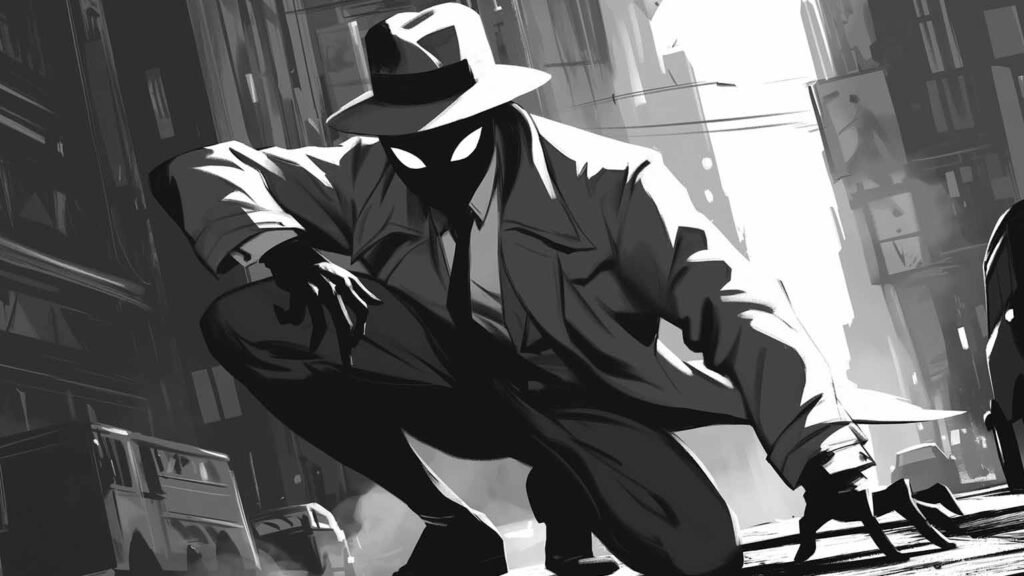
Spider-Man Noir is Marvel’s Depression-era Peter Parker. A trench-coated, gun-carrying vigilante who hunts mobsters through rain-soaked 1930s New York. He trades quips for hard-boiled narration and bright spandex for a black mask and aviation goggles. If classic Spider-Man is a coming-of-age story, Spider-Man Noir is a crime thriller.
And with Nicolas Cage bringing him to live action this spring, this character is about to go from cult favorite to household name.
The Origin Story That Sets Him Apart From Every Other Spider-Man
Writers David Hine and Fabrice Sapolsky created Spider-Man Noir in 2009, with artist Carmine Di Giandomenico drawing his first stories and Marko Djurdjevic designing the now-iconic costume. The concept actually started back in December 2006 when Sapolsky pitched Hine on a 1930s pulp version of Spider-Man. That pitch eventually grew into Marvel’s entire Noir line, but it all started with Spidey.
The setting is 1933 New York, crushed under the Great Depression. Peter Parker is raised by his activist Aunt May and his Uncle Ben, a former World War I pilot. When Ben is murdered by thugs working for Norman Osborn, a crime boss known as “the Goblin” (and in this universe, the Goblin nickname comes from an actual skin condition that gives Osborn reptile-like features, not a costume), Peter is consumed by a need for justice.
He starts working for journalist Ben Urich at the Daily Bugle. While investigating one of Osborn’s warehouses, a spider idol breaks open and releases a swarm of spiders. One bites Peter. He passes out. He has a vision of a spider-god who promises him power. And he wakes up inside a web cocoon with superhuman abilities.
Peter becomes “the Spider-Man,” a feared vigilante waging a one-man war against organized crime. And here’s the line that tells you everything about why this character is different from every other version of Peter Parker. His uncle’s motto isn’t “With great power comes great responsibility.” It’s: “If those in power can’t be trusted, it’s the responsibility of the people to remove them.”
That’s not a superhero mantra. That’s a revolutionary one. And it changes the entire DNA of what a Spider-Man story can be.
What Makes Noir Different From the Spider-Man You Know
He has the core spider powers. Superhuman strength, speed, agility, wall-crawling, spider-sense. But the differences define him.
His webbing is organic, produced from glands in his wrists instead of mechanical web-shooters. He’s a trained investigator who learned detective work under Ben Urich at the Bugle. And unlike almost every other Spider-Person in Marvel’s history, he carries a gun. Spider-Man Noir isn’t trying to be friendly or neighborly. He’s trying to survive a world where the system is broken and the people running it are worse than the criminals they’re supposed to be stopping.
The original comics tackled socialist agitation, American fascism, lynchings, and systemic racism during the New Deal era. These are heavy themes for any comic, and they were especially bold for a Spider-Man book. The Great Depression setting gives everything real-world weight. The poverty isn’t a backdrop. It’s the reason the story exists.
His powers come from a spider-god, not a radioactive accident, which gives him a supernatural edge that no other Spider-Man has. He was killed in the Spider-Geddon event in 2018 and resurrected by that same spider-god. Even his relationship with death is different.
Get the history behind the stories.
One email a week. Read it before it hits the feeds.
And then there’s the look. Black trench coat. Fedora. Aviator goggles from Uncle Ben’s World War I pilot gear. That silhouette is one of the most visually distinct Spider-Man designs ever created. You see it once and you never forget it.
Nicolas Cage and the Performance That Changed Everything
Nicolas Cage voiced Spider-Man Noir in Spider-Man: Into the Spider-Verse (2018) and the performance became an instant fan favorite. Cage was actually the first actor cast for the film. He reportedly showed up to the recording studio in character, wore dark glasses, never broke character during the session, and walked out after three hours. That level of commitment is exactly why the performance works. Cage’s Noir is dry, world-weary, and genuinely funny without ever trying to be. He made a brief return in Across the Spider-Verse (2023) and the demand for more never stopped.
Now Cage is bringing the character to live action in Spider-Noir, premiering spring 2026. It’s his first leading television role. The series will stream on MGM+ in the United States and globally on Prime Video the following day across 240+ countries. The first season is eight episodes.
Here’s what’s interesting about the show. Cage isn’t playing Peter Parker. He’s playing Ben Reilly, described as a seasoned, down-on-his-luck private investigator in 1930s New York who is forced to grapple with his past life following a deeply personal tragedy as the city’s one and only superhero. The name Ben Reilly carries enormous weight in Spider-Man history (he’s the clone saga character from the ’90s comics), so the choice to use that name instead of Peter Parker is a deliberate signal that this show is doing its own thing within the Noir framework.
The confirmed cast includes Lamorne Morris as Robbie Robertson, Brendan Gleeson as Silvermane, Li Jun Li as Cat Hardy, Jack Huston as Flint Marko, Karen Rodriguez as Janet, and Abraham Popoola. Co-showrunners Oren Uziel and Steve Lightfoot are running the series with Harry Bradbeer (who directed Fleabag and Killing Eve) directing the first two episodes. Phil Lord, Christopher Miller, and Amy Pascal are executive producers, the same producing team behind the Spider-Verse animated films, which has fans speculating about potential connections to the animated universe down the line.
One detail that sets the show apart immediately: it will stream in both an “Authentic Black and White” format and a “True-Hue Full Color” format. Giving the audience the choice to watch it as a literal noir experience is a creative swing that tells you the people making this show understand the character.
The series is not confirmed to be connected to the MCU. It’s produced by Sony Pictures Television and exists within Sony’s Spider-Man Universe, separate from both the MCU and the mainline SSU film properties.
The Comics to Read Before the Show
If you want to understand the character before Cage brings him to the screen, here’s the path.
Spider-Man Noir #1-4 (2009) is the origin. Depression-era Peter Parker versus Norman Osborn’s criminal empire. This is where you start, no question.
Spider-Man Noir: Eyes Without a Face #1-4 (2009-2010) is the sequel and it goes harder. New villains, themes of American fascism and racism in the New Deal era. This is also the series that added the fedora to the costume, which became his signature look.
Edge of Spider-Verse #1 (2014) is where Noir gets pulled into the larger multiverse. Set in 1939, Peter gets recruited into the Spider-Verse event alongside dozens of other Spider-People from across realities.
Spider-Man Noir: Twilight in Babylon (2020) by Margaret Stohl and Juan Ferreyra is a globe-trotting noir mystery that takes the character from New York’s Black Cat club to Nazi-occupied Europe. It expands the world significantly.
And Spider-Man Noir: The Gwen Stacy Affair (2025-2026) by Erik Larsen and Andrea Broccardo is the most recent series, timed to build momentum ahead of the show. Peter is hired by Gwen Stacy to investigate her father’s murder. It’s the freshest entry point for fans who want to be current when the show drops.
Why This Moment Matters
Spider-Man Noir started as a niche four-issue miniseries in 2009. A cool concept with a cult following but no real mainstream visibility. Then Nicolas Cage voiced him in the biggest animated film of 2018 and everything changed. Now he’s getting a live-action series with a stacked cast, a new comic run, and the kind of spotlight that characters like this rarely get.
His rise has been completely organic. No billion-dollar marketing push. No forced integration into a cinematic universe. Just a great character with a great design who kept earning his moments until the moments got big enough that the whole world noticed.
You don’t need CGI spectacles and multiverse mechanics to make a Spider-Man story work. Sometimes all you need is a trench coat, a dark alley, and a character who knows that doing the right thing usually costs you something.
Are you watching in black and white or full color? And if you’ve read the Noir comics, which one should new fans start with? Drop it in the comments.
MORE LIKE THIS
-

The Most Devastating Thing in Spider-Man: Brand New Day Is a Sister the X-Men Movies Ignored for 60 Years.
6 MIN READ -
Spider-Man: Brand New Day Is Named After the Most Hated Story in Spider-Man Comics. Twenty Years Later, the Movies Just Redeemed the Name.
6 MIN READ -
What Comics to Read Before Spider-Man: Brand New Day (2026)
6 MIN READ
Co-founder and co-host. Veteran. Grew up on cartoons. The MCU brought all of it back and pulled him into the comics side he never picked up as a kid. Curious by default. Passionate without needing to prove anything. Good at holding a conversation.