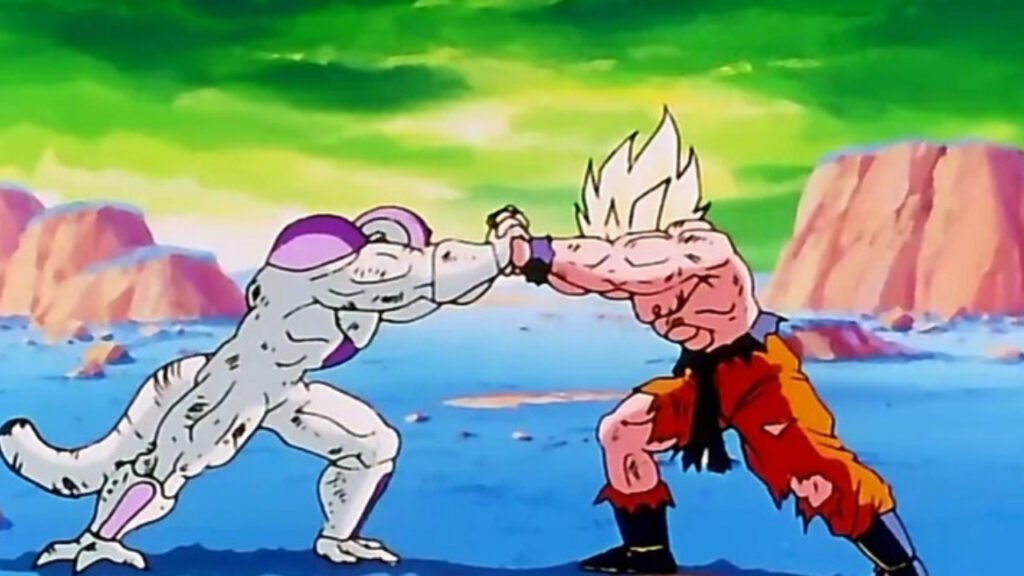

Goku and Frieza clash on Namek in Dragon Ball Z

Cartoon Network Streamed Dragon Ball Z Online in 2001. YouTube Was Still Four Years Away.

In February 2001, only 13 percent of American internet users had a high-speed connection at home, according to Pew. Most people were still on dial-up. The next month, Cartoon Network put full episodes of Dragon Ball Z on a website and told fans to come watch.

The site was called Toonami Reactor. It launched four years before the first YouTube video went up on April 23, 2005, and five years before Toonami Jetstream. It ran, went away and came back, and we couldn’t find anybody at Cartoon Network saying when or why it ended.

Toonami Reactor Went Live On March 26, 2001

Cartoon Network launched Toonami Reactor on March 26, 2001. Animation World Network described it as “a 12-week offering of popular TOONAMI anime programming on-demand,” built for broadband. The plan for those 12 weeks was 40 episodes of Dragon Ball Z from the Frieza Saga, 26 episodes of Star Blazers, four games, and background material from the editors of Animerica magazine.

Cartoon Network sold it as a trial. Its announcement, as AnimeNation ran it, said the site would be open for three months and that “its success will determine whether the site will become a permanent addition.” Jim Samples, the general manager of Cartoon Network Online, said at launch, “This broadband program lays the groundwork for future projects of a similar nature.”

The site was up before the official date. On March 19, AnimeNation reported it was “still a work in progress, and much of the site is inactive or unavailable,” and that Cartoon Network was asking fans for feedback. Two days later, Anime News Network reported that Dragon Ball Z was the only show streaming on it. Star Blazers took another month. ANN reported an April 30 start date, and on May 3 it reported episode 1 was up, with the rest of season one coming “over the next few months.”

What You Needed To Watch It

You needed a PC running Windows 98, 2000 or ME, with Windows Media 7 and Flash. Broadband was the point, but dial-up users could still get in. AWN’s launch report said 56K users could reach the games and features, and when one of its writers tried the site that May, he found that “a 56K modem is adequate to view most features and watch medium-quality streaming video without a problem.” He still said it was best on broadband.

The page looked different from streaming now. The episode played in one window, with commentary, trivia and games running next to it. AWN called it a split-screen format. One of the windows was set aside for advertising, and the layout let you click through to sponsor sites.

Was it free? We couldn’t find Cartoon Network saying so in its own words. A fan on Toon Zone in January 2002 called it “an awesome free service,” and nothing we found shows anyone being charged.

Why Cartoon Network Tried It

Samples told AWN that May that his team was in “active, ongoing conversations with the anime clubs at universities,” and that the online division was “expected to generate sufficient revenue to more than cover the expenses.” Making money online was an open question in 2001. In the same article, Sam Register, the vice president of Cartoon Network Online, said, “Visitors and page views don’t seem to equal dollars like everyone thought they would.”

Get the history behind the stories.

Two emails a week. No algorithm deciding whether you see them.

Toonami co-creator Jason DeMarco looked back on it in a 2008 interview with the fan site Toonami Fan. “Reactor was really an experiment,” he said.

The numbers Cartoon Network gave out looked good. In June 2001 the whole CartoonNetwork.com site drew 3,102,000 unique users, double the year before, and the company credited Cartoon Orbit, its Web Premiere Toons and Reactor. Those numbers are for the whole site, not Reactor by itself. The first run ended that same month. ANN’s look back at 2001 says, “At the end of June, the experiment ended, and Cartoon Network deliberated the future of the Toonami Reactor.”

Reactor Came Back That November

Cartoon Network brought Reactor back on November 14, 2001. In a statement posted on Toon Zone that month, the company said the first three-month run had averaged 30 million page views a month from 800,000 unique users. Those are Cartoon Network’s own figures, and it didn’t say how they were counted. Paul Condolora, who was running Cartoon Network Online by then, said, “We received such positive feedback from the fans during the initial release of Reactor, that we decided to continue the program.”

On the day it returned, ANN reported that Star Blazers: The Comet Empire and four Daft Punk videos were up. In early December it reported that the first two episodes of Record of Lodoss War and the first episode of Harlock Saga had been available “since the middle of November.” Patlabor was announced for the relaunch too, and Cartoon Network later set its premiere for February 18, 2002.

The Daft Punk videos had been on the site since before the relaunch. Ain’t It Cool News noted the fourth one going up that September. DeMarco said in 2008 that they put them there “because they were cheap content.”

The relaunch ran on RealPlayer, and fans in that Toon Zone thread weren’t happy about it. One asked, “they are RealPlayer…. WHY?” Another wrote, “Suck for us who have dial-up.” Years later, Mike Toole remembered the picture quality in his ANN column. He wrote that Reactor was for a long time the only legal way to watch Star Blazers without paying for the DVDs. “Instead, you got to watch the show on smeared, mediocre-looking streams!” he wrote. “It was the style at the time.”

Sputnik7 Was Streaming Anime A Year Earlier

In 2006, Condolora said of Cartoon Network, “And we were the first to stream, in 2001, full-length animé series online.” That’s the company’s claim, from its own press release.

Anime was streaming before Reactor. In May 2000, AnimeNation reported that a site called Sputnik7 was webcasting the movie X from May 26 to May 28 and already had Bounty Dog, Psychic Wars and Dangaioh available, at speeds “from 28.8k to full screen, broadband display.” Toole wrote in that same column that he watched Mad Bull 34 on Sputnik7 for free in 2000. What Reactor had was Cartoon Network’s name and Dragon Ball Z.

Nobody Recorded How It Ended

We couldn’t find a shutdown announcement, a final date, or anyone from Cartoon Network explaining why Reactor stopped. What does exist doesn’t line up.

Toole wrote that “Reactor hung in there for a few years” and that its library grew, first with more Central Park Media titles and later with Shonen Jump series. A fan-kept glossary on Toon Zone describes something called Adult Swim Pipeline as “a short lived attempt to integrate Shonen Jump into Adult Swim in a digital manga format” that ran from November 2002 to May 2003. A trademark application for Adult Swim Pipeline was filed in February 2003 and abandoned in 2005. None of that tells you when the last Reactor stream played.

Toonami Jetstream Came Next

What came next is on the record. On April 25, 2006, Cartoon Network and VIZ Media announced Toonami Jetstream, a free site for full episodes paid for by ads. ANN reported it logged more than 9.5 million streams in its first month. Jetstream ended up outliving the Toonami TV block, which we covered in Toonami Was Cancelled in 2008. An April Fools’ Joke Brought It Back in 2012.

Samples said in 2001 that Reactor would lay the groundwork for future projects like it. Five years later, the press release announcing Jetstream pointed back to 2001.

Did you ever watch an episode on Toonami Reactor? What were you watching it on, and how long did you wait for it to load?

Co-founder and co-host. Veteran. Grew up on cartoons. The MCU brought all of it back and pulled him into the comics side he never picked up as a kid. Curious by default. Passionate without needing to prove anything. Good at holding a conversation.

Leave a Reply

Get the history behind the stories.

Two emails a week. No algorithm deciding whether you see them.