
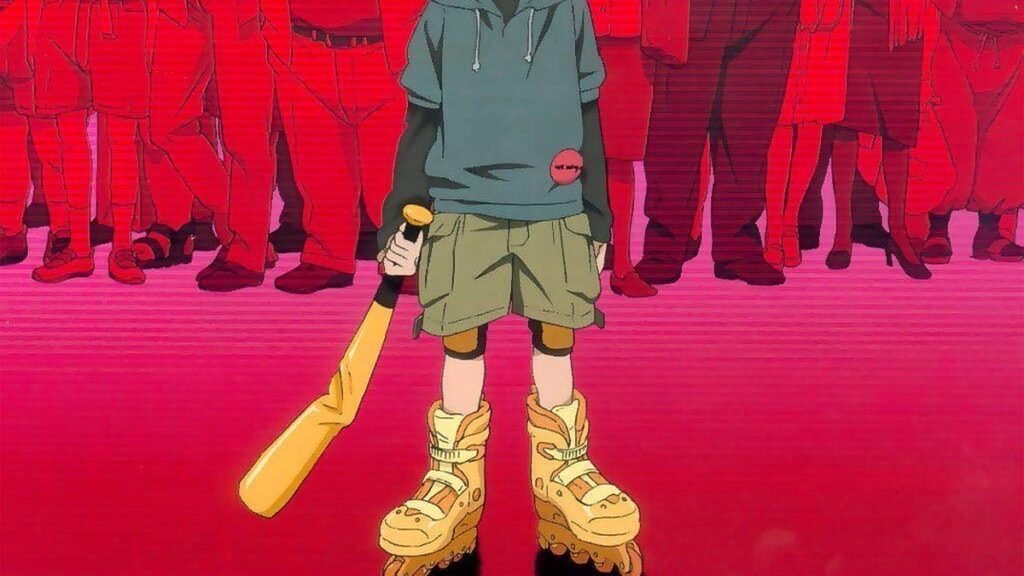
Paranoia Agent Was Built From Ideas That Didn't Fit Into Satoshi Kon's Films. It Was His Only TV Series.
By Jimigrimm
Between 1997 and 2006, Satoshi Kon directed four films. Perfect Blue. Millennium Actress. Tokyo Godfathers. Paprika. Each one was a different genre. Three of the four explored what happens when the line between what’s real and what’s imagined starts to dissolve. Tokyo Godfathers went in a different direction entirely, a grounded Christmas comedy, but Kon’s fascination with identity and perception ran through the rest of his work. During the production of those films, he accumulated ideas that didn’t fit into any of them. Character concepts, structural experiments, social observations that worked in isolation but didn’t belong in a specific movie.
Rather than throw them away, he gathered them into a television series. Madhouse gave him the space to do it. The result was Paranoia Agent: 13 episodes, aired on WOWOW in Japan from February to May 2004 and on Adult Swim in the United States starting May 2005. Susumu Hirasawa, who had scored Millennium Actress, composed the soundtrack.
It was the only TV series Kon ever made. He died six years later.
What the Show Is
A kid on roller skates is attacking people across Tokyo with a golden baseball bat. The attacker is called Lil’ Slugger. Nobody can catch him. Nobody can explain him. And the people he attacks share a pattern: each one is under enormous pressure, trapped in a crisis they can’t resolve on their own.
Each episode focuses on a different character. A designer who created a popular mascot and is terrified she can’t produce another hit. A police detective consumed by the case. A tutor living a double life. A woman with dissociative identity disorder. The show spends its first half as character studies, with each episode revealing how the victim’s crisis connects to the larger pattern. The second half pulls back and shows what Lil’ Slugger actually is: not a person, but a shared delusion, born from collective anxiety and the human need for something external to blame when the pressure becomes unbearable.
The show aired in 2004. It explores themes of social pressure, escapism, mass anxiety, and the stories people tell themselves to avoid facing reality. Those themes have become more visible in daily life since the show aired, which is part of why it holds up. Kon and his writers were paying close attention to the pressures of modern Japanese society, and many of those pressures have only intensified in the two decades since.
Adult Swim at 1 AM
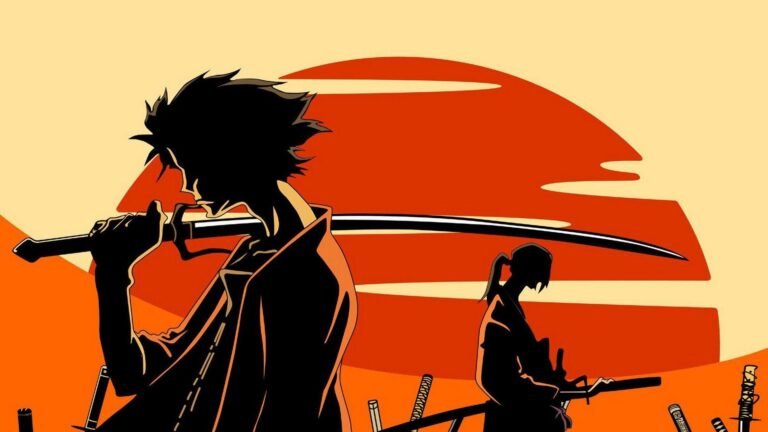
Paranoia Agent premiered on Adult Swim in 2005 alongside shows like Cowboy Bebop, FLCL, and Samurai Champloo. Kon designed the opening and closing credits with the late-night time slot in mind. The opening is loud, fast, and deliberately jarring, a sequence of characters laughing against increasingly surreal backdrops. Kon said it was meant to wake viewers up. The closing is the opposite: a quiet lullaby over images of the characters at rest. Wake you up at the beginning. Put you to sleep at the end.
The audience that found it was small but committed. The show had no built-in fanbase from a manga or game. It had no action sequences to attract the Toonami crowd. It was a psychological series about social anxiety told through fractured narratives with no clear hero. The people who watched it at 1 AM on Adult Swim tended to be the people the show resonated with most, and they’ve carried it since.
Get the history behind the stories.
One email a week. Read it before it hits the feeds.
It holds a 100% approval rating on Rotten Tomatoes from 13 critic reviews. It was selected for the Jury Recommended Works at the 8th Japan Media Arts Festival in 2004. It’s been compared to the work of David Lynch for its dreamlike quality and its willingness to abandon conventional narrative structure.
Kon's Five Completed Works
Satoshi Kon was born on October 12, 1963. He studied at Musashino Art University and began his career in manga before transitioning to animation. His first film, Perfect Blue (1997), was a psychological thriller about a pop idol whose identity fractures as she’s stalked by an obsessed fan. Darren Aronofsky purchased the rights to Perfect Blue and recreated a specific shot from the film in Requiem for a Dream (2000). Aronofsky’s later film Black Swan (2010) has been widely compared to Perfect Blue’s themes and structure.
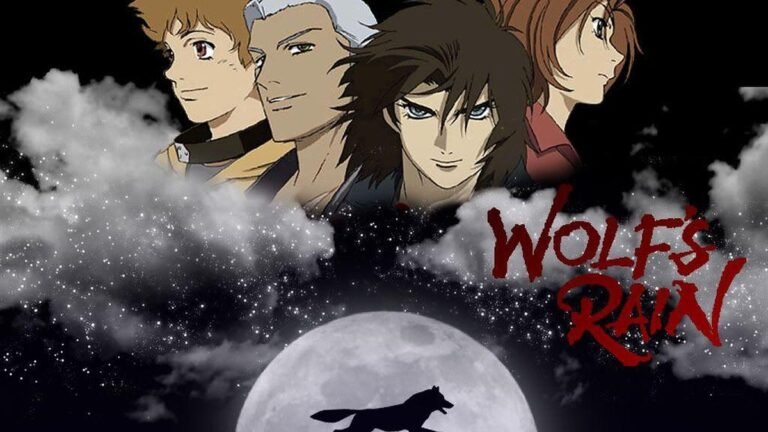
Millennium Actress (2001) told the story of a retired actress whose memories blend with the films she starred in until neither she nor the audience can separate them. Tokyo Godfathers (2003) was a Christmas comedy about three homeless people in Tokyo who find an abandoned baby. The screenplay was co-written by Keiko Nobumoto, the creator of Wolf’s Rain and the head writer of Cowboy Bebop. Paprika (2006) was a science fiction film about a device that allows people to enter each other’s dreams. The premise and visual language of Paprika predate Christopher Nolan’s Inception (2010) by four years. Both films deal with dream infiltration, layered realities, and the consequences of losing track of which level is real.
Those four films and Paranoia Agent are everything Kon completed. Five works between 1997 and 2006. Each one in a different genre. Each one exploring the same question from a different angle: what happens when the boundary between what’s real and what’s imagined stops holding.
The Letter
In May 2010, Kon was diagnosed with terminal pancreatic cancer. He chose not to make the diagnosis public. He continued working on Dreaming Machine, his fifth film. Kon described it as “a road movie for robots” and “a fantasy-adventure targeted at younger audiences.” It centered on three robot characters named Ririco, Robin, and King. It would have been his first project aimed at a young audience.
He kept his illness hidden from most of his staff, including Madhouse co-founder Masao Maruyama. As the cancer progressed, Kon composed a farewell letter addressed to his fans, his family, and his collaborators. It was posted to his blog by his family after his death.
In the letter, he described his body’s deterioration honestly. He thanked the people in his life. He ended with: “With my heart full of gratitude for everything good in the world, I’ll put down my pen.”
Kon died on August 24, 2010. He was 46. The announcement was met with shock because almost nobody knew he was sick.
Dreaming Machine remains unfinished. 600 of the planned 1,500 shots were animated before Kon’s death. Maruyama approached multiple directors about completing the film. None took the project. By 2013, funding had stalled. As of 2026, the film has not been completed.
Darren Aronofsky wrote Kon’s eulogy, published in a Japanese retrospective book of his career.
Paranoia Agent Is 13 Episodes
If you’ve seen Kon’s films and haven’t seen this, it’s the place where all the ideas that didn’t fit into those films ended up. If you’ve never seen any of his work, this is 13 episodes and a complete story. Either way, the show asks a question that’s been relevant since 2004 and hasn’t stopped being relevant: when the pressure of your life becomes unbearable, do you face it, or do you wait for something to come along and break you out of it?
Have you seen Paranoia Agent? Did you find it on Adult Swim, or did you come to it through Kon’s films? Which of his five works did you see first? And if you’ve seen more than one, which one stayed with you longest? We want to hear which door you walked through.
MORE LIKE THIS


Co-founder and co-host. Veteran. Grew up on cartoons. The MCU brought all of it back and pulled him into the comics side he never picked up as a kid. Curious by default. Passionate without needing to prove anything. Good at holding a conversation.