Wolf's Rain Was the Only Show Cowboy Bebop's Head Writer Ever Created From Scratch.

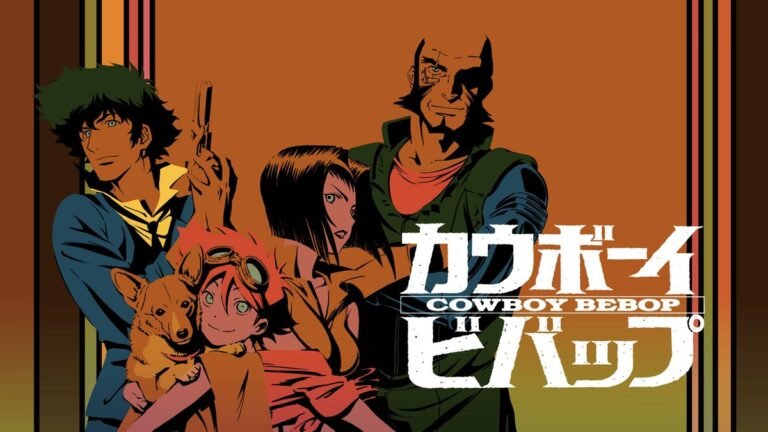
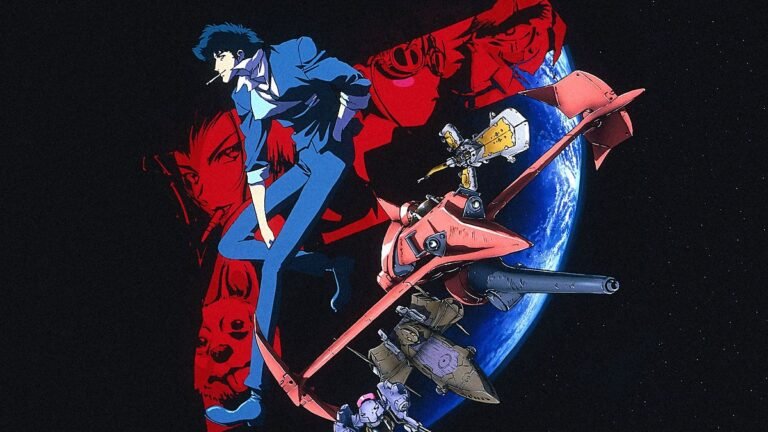
If you watched Cowboy Bebop and wondered who was responsible for the way those characters talked to each other, the answer is Keiko Nobumoto. She was the series composition writer, the person who oversaw the overall story, maintained the voice across every episode, and wrote nine of the twenty-six episodes herself, including the first episode, the Jupiter Jazz two-parter, and The Real Folk Blues finale. She also wrote the Cowboy Bebop movie. She wrote scripts for Macross Plus, Samurai Champloo, and Space Dandy, and co-wrote Tokyo Godfathers with Satoshi Kon.

She worked on a lot of other people’s shows. She was very good at it. But she only created one show from scratch. It was called Wolf’s Rain.

What Nobumoto Built

Wolf’s Rain is set in a dying world. Wolves were thought to be extinct, but a handful survive by projecting human disguises. A lone white wolf named Kiba follows the scent of something called the Lunar Flower toward a place called Paradise, which an old legend says only wolves can find when the world ends. Three other wolves join him: Tsume, Hige, and Toboe, each carrying damage from a different life. They travel together. They don’t always like each other. And the show never promises them, or you, that Paradise is real.

This is not an action anime. There are fights, but they aren’t the draw. Wolf’s Rain is a show about moving forward when there’s no evidence that forward leads anywhere good. The world Nobumoto built feels less like a catastrophe and more like a long exhale. Cities crumble slowly. Snow covers everything. The human characters, a hunter tracking wolves, a pair of nobles fighting over the Lunar Flower maiden, are caught in their own stories of loss. Everyone in the show is reaching for something they’ve already lost. The question it keeps asking is whether reaching for something you might never find is worth the pain of reaching.

Why wolves? Nobumoto rarely gave interviews, and we couldn’t find her explaining it in her own words. Director Tensai Okamura told Anime News Network in 2017 that she “was sort of intrigued by the two different aspects of wolves,” the noble wolf of legend and the real animal, and admitted he wasn’t sure he ever fully understood what she was going for.

The Bebop Creative Team Came Back Together

Studio Bones produced it in 2003, five years after the studio was founded. Bones was started by Sunrise staffers, and two of its founders came straight off Bebop: producer Masahiko Minami and character designer Toshihiro Kawamoto. Both came back for Wolf’s Rain. Minami produced it, and Kawamoto designed the characters. Yoko Kanno, who composed the Bebop soundtrack, composed the Wolf’s Rain soundtrack. Nobumoto handled series composition and wrote nine of the twenty-six TV episodes plus all four OVA episodes. Tensai Okamura directed.

The soundtrack is worth talking about on its own. Kanno’s score for Wolf’s Rain sounds nothing like her Bebop work. Where Bebop was jazz and funk, Wolf’s Rain is orchestral, choral, and heavy. The opening theme “Stray” pulls you in. The ending theme “Gravity,” performed by Maaya Sakamoto, is the kind of song that makes you sit through the credits instead of reaching for the remote. The music carries the emotional register of a show that doesn’t use dialogue the way most anime does. Characters are quiet. Scenes breathe. Kanno fills the silence with music that tells you what the characters can’t say.

Get the history behind the stories.

Two emails a week. No algorithm deciding whether you see them.

The show aired late at night on Fuji TV from January to July 2003 for twenty-six episodes. Four of those, episodes 15 through 18, were recap episodes, and we couldn’t find any reason for them ever given by Bones, Fuji TV or the staff. The broadcast ended without finishing the story. In January and February 2004, four new episodes came out on DVD in Japan and gave the story its full ending, written by Nobumoto. The complete version is the twenty-two original episodes plus those four. It premiered on Adult Swim in the United States starting April 24, 2004. Adult Swim skipped the recaps and aired the four final episodes from September 25 to October 16, 2004, so American fans got the ending on TV. Bandai put those episodes on DVD as Volume 7 on May 24, 2005.

Why It Didn't Break Through

This section is my read, because the hard numbers aren’t out there. I couldn’t find Nielsen ratings or sales figures for the show. What does exist: in Japan it aired around 2:30 in the morning, and AnimeNation’s Ask John column reported in September 2003 that Air Master pulled roughly double its viewers and Dear Boys beat it too, though it out-drew Texhnolyze and Last Exile.

Wolf’s Rain never built the kind of audience that Cowboy Bebop or Fullmetal Alchemist did. Part of that is timing. It aired on Adult Swim in 2004 alongside shows that were louder, faster, and easier to describe in one sentence. Part of it is the show itself. Wolf’s Rain asks you to sit with grief. It moves at its own pace. It gives you four wolves walking through snow toward something that might not exist, and it asks you to care about whether they get there.

The fans who connected with it connected deeply. But it’s not a show most people casually recommend. You have to know someone is ready for it. You have to know they’re okay with a show that doesn’t promise a happy ending and might not deliver one at all. That’s a narrower audience than most anime aim for, and it’s why Wolf’s Rain has stayed in the margins while other Bones shows from the same era, like Fullmetal Alchemist, became mainstream.

Who Nobumoto Was

Keiko Nobumoto was born on March 13, 1964, in Hokkaido. She became a professional screenwriter after winning the Third Fuji TV Young Scenario Grand Prix in 1989. Her working relationship with Shinichiro Watanabe began on Macross Plus in 1994, and they collaborated repeatedly across three decades: Cowboy Bebop, Samurai Champloo, Space Dandy, and Carole & Tuesday.

At a 2018 Cowboy Bebop anniversary panel, Watanabe said he would sit with her “for long, long periods of time,” and that “Keiko and I made sure to keep everything in line,” per Sakugabooru. Dai Sato, a writer who worked alongside her on Wolf’s Rain, Bebop, Champloo, and Space Dandy, called her “the person who guided me, like a master” in a memorial post, as CBR reported.

She died of esophageal cancer on December 1, 2021. She was 57. When Toonami ran a Cowboy Bebop marathon on New Year’s Day 2022, it opened by honoring her. Lazarus, the series Watanabe premiered in 2025, started as something they built together. At New York Comic Con in 2024, he told Popverse the two of them “worked on the initial concepts and stories for Lazarus,” and that she died “before the project really got going into the scriptwriting stage.” Because it was the last work she worked on, he said, he really wanted to make it a success.

Wolf’s Rain is the show she made when she wasn’t working on someone else’s vision. She created the world, the characters, the story. She oversaw the scripts. She wrote the conclusion. It’s the closest thing that exists to seeing what Keiko Nobumoto’s imagination looked like when it wasn’t being filtered through another creator’s framework. That alone makes it worth watching.

Did you see Wolf’s Rain on Adult Swim, or did you find it later? If you’ve seen it, were you ready for the ending or did it catch you off guard? And if you’ve never watched it, does knowing who made it and what she built for Cowboy Bebop and Champloo change whether you want to? We want to hear from the fans who carry this show and the people who are just now finding out it exists.

Co-founder and co-host. Veteran. Grew up on cartoons. The MCU brought all of it back and pulled him into the comics side he never picked up as a kid. Curious by default. Passionate without needing to prove anything. Good at holding a conversation.

Leave a Reply

Get the history behind the stories.

Two emails a week. No algorithm deciding whether you see them.