Samurai Champloo's Soundtrack Was Built by Four Hip-Hop Producers. One of Them Died at 36.

The record needle scratches across a scene transition. A sword fight breaks out and the choreography matches the beat. Two guys who hate each other sit in a teahouse while a lo-fi instrumental plays underneath the rain outside, and for a second you forget this is supposed to be feudal Japan because it sounds like 2 AM in a bedroom with headphones on.

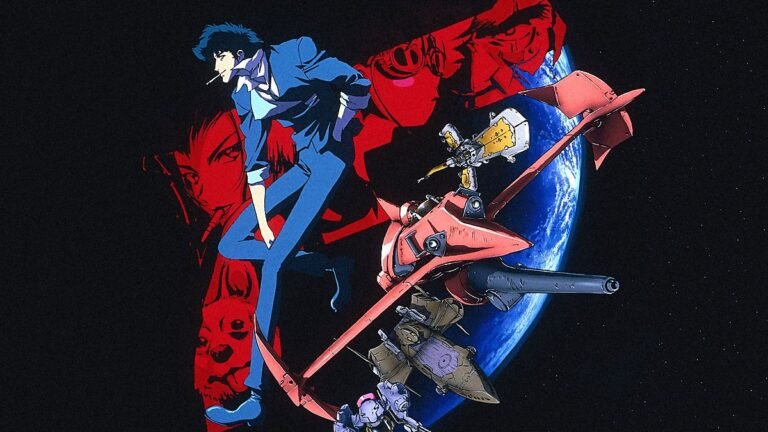
That’s Samurai Champloo. 26 episodes. Shinichiro Watanabe directing, the same person behind Cowboy Bebop. And if Bebop was built on jazz, Champloo was built on hip-hop. Not hip-hop as a soundtrack underneath an anime. Hip-hop as the foundation the entire show stands on. The music dictates the editing. The beats pace the fights. The scratches transition the scenes. Take the music out and the show doesn’t just lose its flavor. It stops working entirely.

If you know what Watanabe does with Cowboy Bebop, you already understand the approach. He builds a show around a genre of music and lets the music tell the story as much as the animation does. Bebop proved it could work with jazz. Champloo was him doing it again with an entirely different sound, an entirely different setting, and an entirely different energy. Where Bebop was cool and melancholic, Champloo runs hot. Where Bebop’s characters were running from their pasts, Champloo’s characters are running toward something they’re not sure exists. The emotional direction is reversed. The creative approach is the same.

Samurai and Rappers

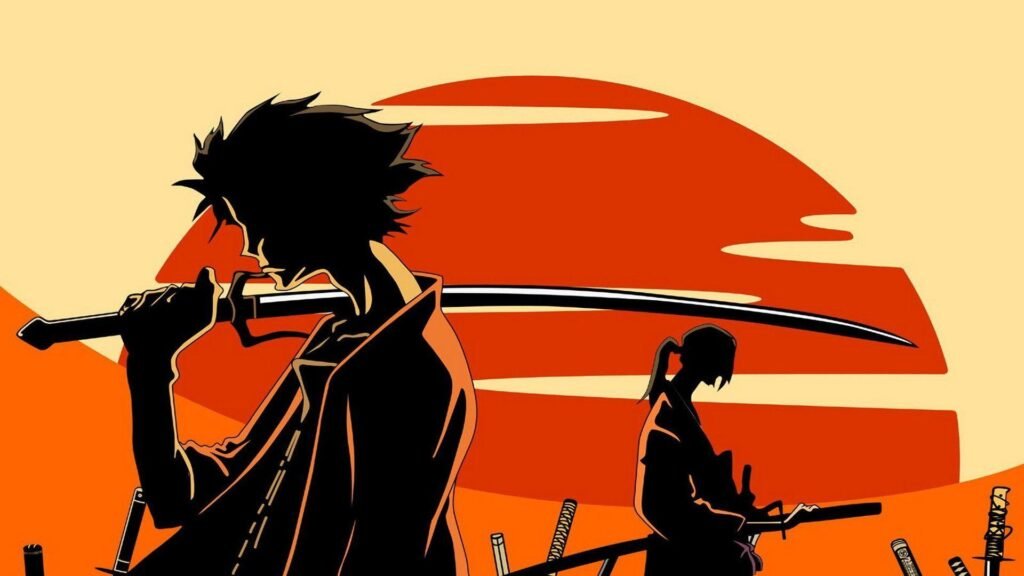
The word “champloo” comes from chanpuru, an Okinawan word that means “something mixed.” That’s the show. Feudal Japan mixed with graffiti, beatboxing, baseball, and a character carrying a six-shooter 200 years before guns like that existed. The anachronisms aren’t mistakes. They’re the recipe. Watanabe saw a connection between samurai and hip-hop that sounds strange until he explains it: both cultures valued personal style above everything, both defined themselves through individual expression, and both operated on a code where how you carried yourself mattered more than what anyone else thought of you. “Samurai would determine their own fate with their own sword,” he said. “Very similar to rappers.”

Built Like a Freestyle

He conceived the idea in 1999 while finishing work on the Cowboy Bebop movie. Studio Manglobe, a brand new studio founded by Sunrise veteran Shinichiro Kobayashi, gave Watanabe complete freedom. “I was told I could do whatever I wanted,” he said. Pre-production took a full year because Watanabe kept rewriting the scenario, hadn’t decided the main characters’ fates, and didn’t even know who the sunflower samurai was during early development. The show was improvised the same way a freestyle is. Fitting for what it became.

The three leads are built to clash. Mugen fights like a breakdancer with a sword, all spinning and unpredictable. Jin fights like a classical samurai, quiet and precise. Fuu hired both of them to help her find a samurai who smells of sunflowers, and she holds the group together through sheer stubbornness despite having no combat ability at all. The show sends them on an episodic road trip across Edo-period Japan, and the structure works because Mugen and Jin are so fundamentally different that their friction generates energy no matter what scenario they’re dropped into.

The Sound Came First

Watanabe had been into hip-hop since high school in the early 1980s. Grandmaster Flash. A Tribe Called Quest. De La Soul. The Jungle Brothers. When he decided Champloo would be a hip-hop anime, his staff wanted him to bring back Yoko Kanno, who had scored Cowboy Bebop. Watanabe refused. He didn’t want a composer imitating hip-hop. He wanted the real thing.

He assembled four producers. Tsutchie from the group Shakkazombie, a friend who had worked with Watanabe on Bebop’s final episode. Fat Jon, an American producer from Ohio living in Germany, who was such a massive Cowboy Bebop fan that he nearly cried when Watanabe contacted him. Force of Nature, a DJ team. And a record store owner from Shibuya named Jun Seba.

Nujabes

Most people know Jun Seba by his stage name: Nujabes. It’s his name reversed. He ran a shop in Shibuya that stocked underground hip-hop based entirely on his own taste. His production style blended jazz samples with hip-hop beats in a way that felt more like thinking than performing. Melodic. Contemplative. The kind of music that makes a room feel different. Watanabe heard his singles and knew immediately that this was the sound Champloo needed.

The opening theme “Battlecry,” produced by Nujabes with vocals from Shing02, became one of the most recognized openings in anime. The rest of the soundtrack across all four producers doesn’t just accompany the animation. It drives it. Watanabe admitted later that choosing hip-hop probably limited the show’s audience and alienated some Japanese fans. He didn’t care. The music was on the same artistic level as the animation, and compromising either one wasn’t something he was willing to do.

Jun Seba died on February 26, 2010, in a car accident on the Shuto Expressway in Tokyo. He was 36.

After Nujabes

By 2010, tracks from the Champloo soundtrack like “Aruarian Dance,” “Feather,” and “Shiki no Uta” had already been spreading across early YouTube for years. The jazzy, atmospheric, melancholic production style that Nujabes developed became a major influence on what would eventually be called lo-fi hip-hop. The 24/7 “lofi hip hop radio” streams with millions of viewers, the study playlists, the chill beats, Nujabes wasn’t the only producer shaping that sound, but his work on the Champloo soundtrack is one of the most frequently cited influences by the people who built the genre. J Dilla, DJ Shadow, Madlib, and others were working in similar lanes before and alongside him, but Nujabes’ specific combination of jazz sampling and hip-hop production introduced that sound to an audience that might never have found it without an anime attached to it.

Fans within the lo-fi community widely regard him as one of the genre’s foundational figures. He didn’t live to see how far that influence spread.

In 2024, for the show’s 20th anniversary, the Samurai Champloo soundtrack finally hit global streaming platforms for the first time, after being available only on out-of-print CDs and unofficial uploads for two decades. And Tomorrow Studios, the production company behind the One Piece live-action show, confirmed early development on a live-action Samurai Champloo with Watanabe attached as creative consultant.

Some of the same creative voices that shaped Cowboy Bebop also shaped Champloo. Keiko Nobumoto, who wrote the screenplay for Bebop, wrote scripts for Champloo too. Watanabe’s circle of collaborators carried across both shows and beyond, and the connections between them run deeper than most fans realize. That’s a story for another time. For now, Champloo stands on its own.

When did Champloo find you? Was it Adult Swim in 2005? Toonami in 2016? Or was it a playlist? A lot of people found Nujabes first. They heard “Battlecry” or “Aruarian Dance” on a lo-fi stream and traced it back to an anime they’d never heard of. Other people watched the show first and the music followed them home. Which track was the one that grabbed you? Not the show in general. The specific track. The one you went back and played again before the episode was even over. We want to hear which one it was.

read next

Cowboy Bebop Became the Show Every Anime Fan Recommends to People Who Don't Watch Anime. The Reason It Works Is That It Was Never Really Made for Anime Fans in the First Place.
The Big O Was Cancelled in Japan After 13 Episodes. It Was So Popular in America That Cartoon Network Helped Fund the Other Half.

Leave a Reply

Your email address will not be published. Required fields are marked *