You Were Watching Anime Before You Even Knew What Anime Was. Thank Saturday Morning Cartoons.
By Jimigrimm
Here’s a question that’s going to make you rethink your entire childhood.
When was the first time you actually watched anime? Not the first time you knew it was anime. The first time you actually sat down and watched a Japanese-produced animated show on an American television channel without having any idea that what you were looking at came from Japan.
For a lot of us, it wasn’t Toonami. It was Saturday morning.
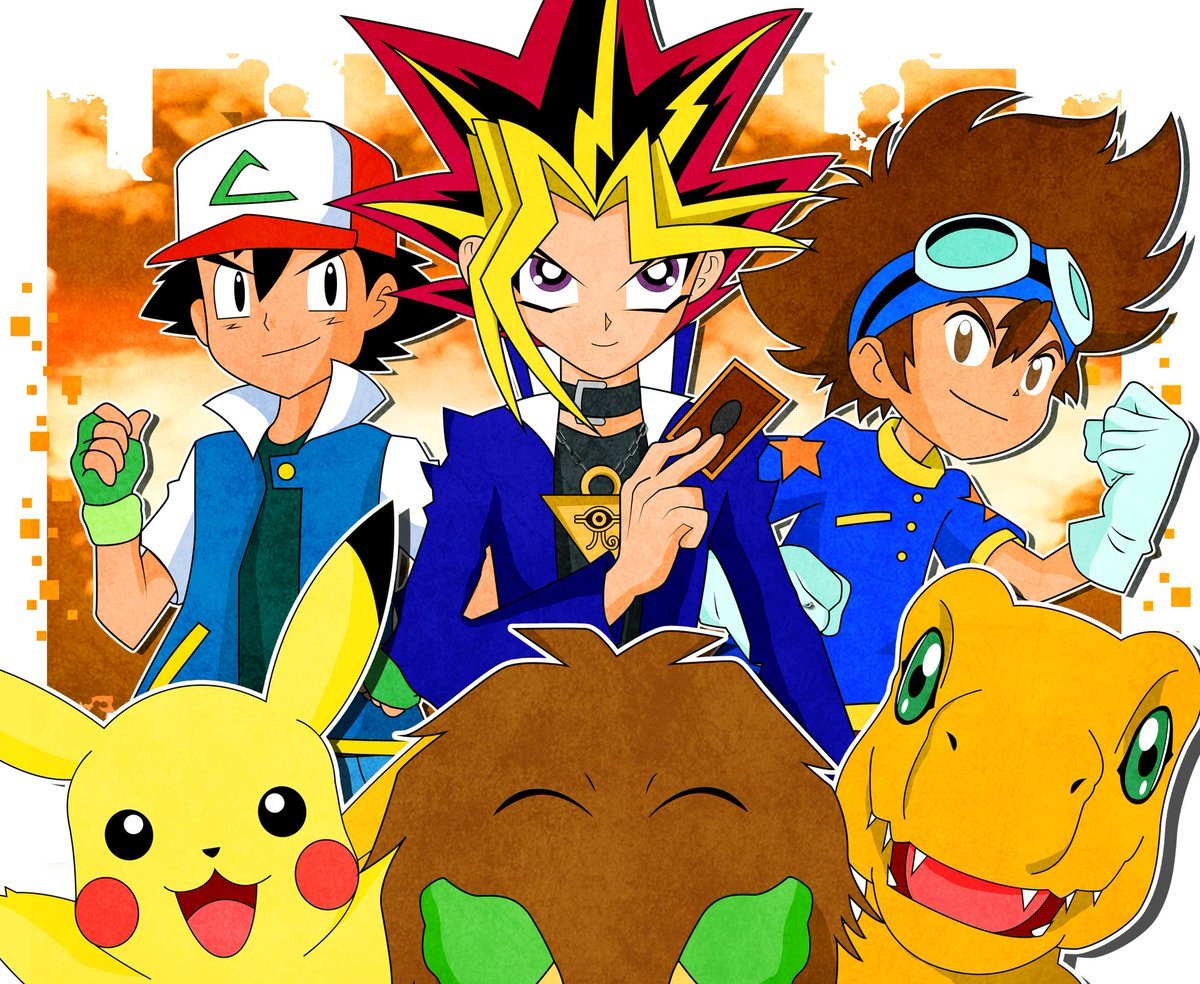
You woke up early. Grabbed a bowl of cereal. Parked yourself in front of the TV. And somewhere between Power Rangers and the commercial breaks, you watched Pokemon, Digimon, Yu-Gi-Oh!, Sonic X, Cardcaptors, Beyblade, Kirby: Right Back at Ya!, Monster Rancher, or Medabots without ever once thinking “this is anime.” You just thought it was cartoons. Really good cartoons that were a little different from everything else on TV but you couldn’t explain why.
That was anime. And the networks that programmed those Saturday morning blocks knew exactly what they were doing.
The Blocks That Built Your Weekend
Before streaming. Before Crunchyroll. Before you even knew the word “anime.” There were programming blocks on broadcast television specifically designed to capture kids on Saturday mornings, and they were loaded with Japanese animation that had been dubbed into English and repackaged for American audiences.
Fox Kids launched on September 8, 1990, and ran for over a decade. It started with shows like Bobby’s World and X-Men: The Animated Series, but by the late ’90s, it was airing Digimon, Escaflowne, Flint the Time Detective, Monster Rancher, and Medabots. Digimon in particular was Fox Kids’ direct answer to Pokemon’s dominance on the rival Kids’ WB block, and it worked. Digimon Adventure became one of the most popular shows on the network and turned an entire generation of kids into anime fans who thought they were just watching a cooler version of Pokemon.
Kids’ WB debuted on September 9, 1995, and became the undisputed king of Saturday morning anime. This was the block that brought Pokemon to American television. That alone would be enough to make the list, but Kids’ WB also aired Yu-Gi-Oh!, Cardcaptors (the dubbed version of Cardcaptor Sakura), and later shows like Jackie Chan Adventures, Static Shock, and Batman Beyond alongside its anime lineup. Pokemon and Yu-Gi-Oh! were such massive hits that when Kids’ WB lost the rights to both shows in 2006, the block never recovered. It was essentially dead within two years.
4Kids TV (originally “FoxBox”) took over Fox’s Saturday morning slot in 2002 after Fox Kids shut down. This was 4Kids Entertainment’s block, the same company responsible for dubbing Pokemon and Yu-Gi-Oh! into English. Their lineup leaned heavily into anime with shows like Sonic X, Teenage Mutant Ninja Turtles (2003), Kirby: Right Back at Ya!, Shaman King, and One Piece (though the 4Kids One Piece dub is a whole other conversation that still makes fans flinch). The block ran until 2008.
Jetix launched in 2004 on Toon Disney and ABC Family as a more action-oriented block. It carried Digimon: Data Squad, Power Rangers, Beyblade, Naruto (internationally), and a mix of Western and Japanese action shows. For kids in Europe, Latin America, and parts of Asia, Jetix was THE anime gateway. It was the Toonami equivalent for an entire international audience that didn’t have access to Cartoon Network’s lineup.
And then there was the WB’s early morning slot, where some markets aired Sailor Moon and Dragon Ball Z at 6 AM before the main Kids’ WB block even started. If you were the kid who set an alarm to catch DBZ before school, you know exactly what that dedication felt like.
The Shows You Didn't Know Were Anime
This is the part that blows people’s minds when they actually think about it.
Pokemon is anime. Produced by OLM, Inc. in Japan. Based on the Game Boy games developed by Game Freak. The original Japanese version, Pocket Monsters, premiered in Japan in April 1997. By the time it hit Kids’ WB in September 1998, it had been dubbed by 4Kids Entertainment with a new theme song, edited content, and Americanized character names. Ash Ketchum’s real name is Satoshi. Brock is Takeshi. Misty is Kasumi. You grew up watching a Japanese show with Japanese characters in Japanese cities that had all been carefully repackaged so American kids wouldn’t notice.
Digimon is anime. Produced by Toei Animation, the same studio behind Dragon Ball Z and Sailor Moon. The original Japanese version, Digimon Adventure, aired in Japan in March 1999. Saban Entertainment dubbed it for Fox Kids. The English version changed the music entirely, added jokes that weren’t in the original, and gave it a completely different tone. But the animation, the character designs, the storytelling structure, all of it was Japanese.
Yu-Gi-Oh! is anime. Produced by Nihon Ad Systems and animated by Studio Gallop. The original Japanese version is significantly darker than the 4Kids dub, which famously censored violence, removed references to death, and turned guns into “invisible guns” by literally erasing them from frames. The card game that dominated school cafeterias across America was born from a Japanese manga by Kazuki Takahashi that ran in Weekly Shonen Jump alongside Naruto and One Piece.
Sonic X is anime. Beyblade is anime. Kirby: Right Back at Ya! is anime. Cardcaptors is anime. Shaman King is anime. Medabots is anime. Monster Rancher is anime. Even shows like Mega Man NT Warrior and Dinosaur King were anime that got dubbed and dropped into American Saturday morning blocks.
An entire generation of American kids spent their Saturday mornings watching Japanese animation and had absolutely no idea. And that’s not an accident. That’s how the pipeline worked. These blocks were the first exposure point. They planted the seed. And when those same kids got a little older and found Toonami, or found fansubs online, or found Crunchyroll, they were already fans. They just didn’t have the word for it yet.
What Happened to Saturday Morning Cartoons?
The short answer: cable and streaming killed them.
By the mid-2000s, the broadcast networks were losing the Saturday morning battle to cable channels like Cartoon Network, Nickelodeon, and Disney Channel, which aired cartoons 24 hours a day, seven days a week. Why would a kid wait until Saturday morning to watch cartoons when they could watch them any time they wanted?
NBC dropped its Saturday morning cartoon lineup in 1992 and never looked back. ABC replaced its block with Disney Channel reruns and eventually live-action shows. CBS leased its slot to various partners. Fox sold its slot to 4Kids. Kids’ WB shut down in 2008. 4Kids TV ended the same year. The CW tried to keep it alive with CW4Kids and later Vortexx, which finally ended in September 2014. That was it. The last traditional Saturday morning cartoon block on American broadcast television.
The era was over. But the impact wasn’t.
The Seed That Grew Into a Forest
Here’s what matters about all of this. The anime industry in the West didn’t grow just because of Toonami. It grew because anime was everywhere, on every block, on every channel, disguised as regular cartoons and introduced to kids who had no idea what they were actually watching.
Toonami gets the credit (and it deserves a lot of it), but Fox Kids, Kids’ WB, 4Kids TV, and Jetix were doing the same work from a different angle. Toonami was the block where you discovered anime on purpose. Saturday morning was the block where anime discovered you.
The kid who watched Digimon on Fox Kids at age 7 became the teenager who watched Naruto on Toonami at age 14 who became the adult streaming Attack on Titan on Crunchyroll at age 25. That pipeline didn’t start in one place. It started everywhere.
So the next time someone asks when you got into anime, think about it for a second. Was it really when you think it was? Or was it years earlier, sitting cross-legged on the living room floor with a bowl of cereal, watching a show you loved without knowing what it really was?
What was the first anime you watched without knowing it was anime? We already know the comments section is about to be wild for this one. Drop your answer.
thecomeuppodcast.com
READ NEXT