Toonami Didn't Just Air Anime. It Built the Audience That Made Anime Matter in the West.
By Jimigrimm
If you watched anime growing up in the West, there’s a good chance you owe your entire relationship with the medium to a programming block you didn’t fully appreciate at the time. You came home from school, flipped on Cartoon Network, and somewhere between 4 and 6pm, a robot on a spaceship told you what was coming on next. You didn’t think about it too hard. You just watched.
That was Toonami. And what it did for anime in the West wasn’t just important. It was foundational. Without Toonami, the conversation about anime in America looks completely different. Maybe it still happens. But not like this. Not this fast. And not for this many people.
This is the story of where Toonami came from, why it mattered more than any other programming block in American television history, and why it keeps coming back no matter how many times the industry tries to move on.
Where It Started
In 1996, Cartoon Network executive Mike Lazzo wanted an action-oriented programming block for the network. He tapped Sean Akins, a creative director at Cartoon Network, to build it. Akins brought in his friend Jason DeMarco, and the two of them spent about a year developing what would become Toonami. The name itself is a combination of “cartoon” and “tsunami,” which tells you exactly what they were going for.
Toonami launched on March 17, 1997. St. Patrick’s Day. The first lineup was ThunderCats, Voltron, and The Real Adventures of Jonny Quest. No anime. Akins and DeMarco wanted anime from the start, but they had to work with what was available. The block was hosted by Moltar, a character from Space Ghost Coast to Coast, animated in CG on a budget that was basically nothing.
In those early days, Toonami was scrappy. DeMarco has talked openly about how there was no money and no guarantee the block would survive. They treated every opportunity like it might be their last. That mentality shaped everything about how Toonami operated going forward.
The Moment Everything Changed
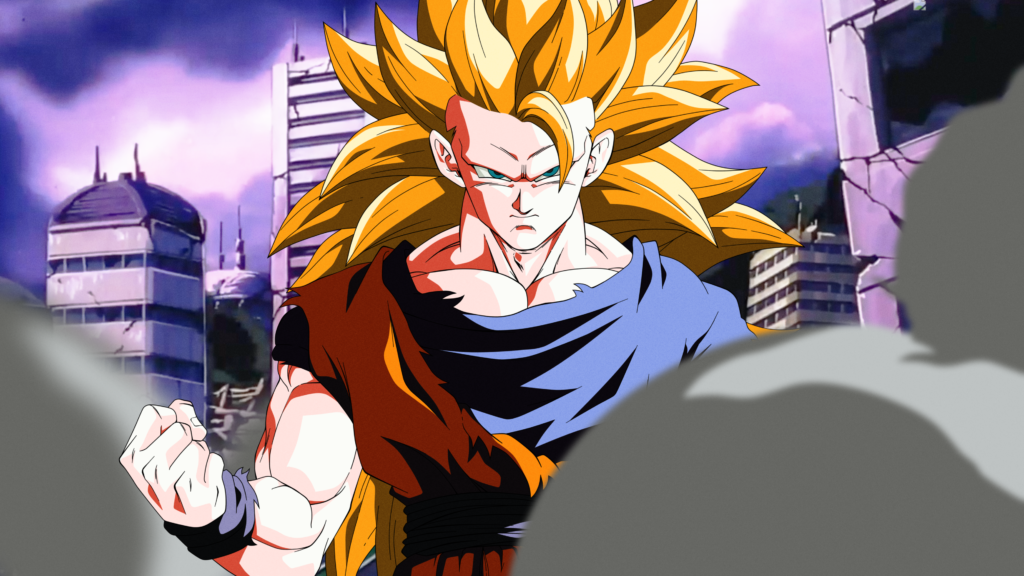
In 1998, Toonami got the rights to air Sailor Moon and Dragon Ball Z. Both had been tried on American television before through syndication and neither had found traction. DBZ specifically had been cancelled after two seasons because nobody was watching.
Toonami changed that by doing something deceptively simple: they put DBZ at 5pm, right when kids were getting home from school. That scheduling decision sounds minor, but it changed everything. By September 1999, Dragon Ball Z was the #1 show on all of cable television for boys 9-14 and men 12-24. Not the #1 cartoon. The #1 show. On a single cable channel, a Japanese anime was outdrawing broadcast network programming.
Sailor Moon captured the female audience that anime hadn’t been reaching. Together, DBZ and Sailor Moon didn’t just prove anime could work on American television. They proved there was a massive, untapped audience waiting for it. Every anime that aired on Toonami after, Gundam Wing, Rurouni Kenshin, Yu Yu Hakusho, Outlaw Star, Cowboy Bebop, all of them walked through the door that DBZ and Sailor Moon opened.
More Than a Programming Block
Here’s what separated Toonami from every other block on television: it respected its audience.
In the late ’90s and early 2000s, kids’ programming in America talked down to kids. Everything was sanitized, simplified, and designed to sell toys. Toonami did the opposite. It treated its viewers like they were smart enough to handle complex stories, serialized narratives, and themes that went way beyond what American cartoons were offering at the time.
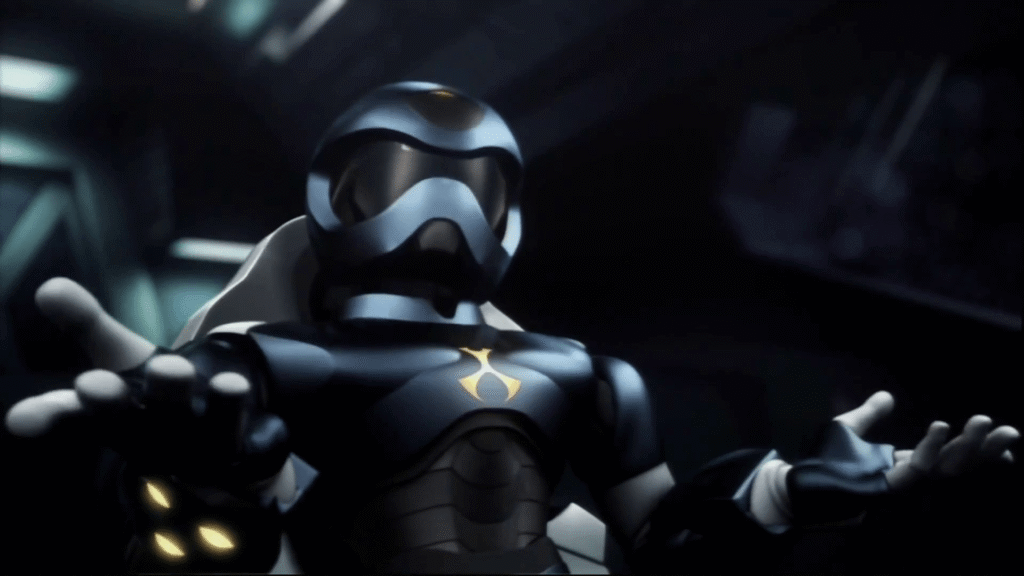
The block had its own mythology. When TOM replaced Moltar as host in July 1999, Toonami got a full sci-fi narrative built around a robot piloting a spaceship called the Absolution. They created Total Immersion Events, multi-episode storylines where TOM faced threats to the ship, paired with interactive online games. In one event, TOM was actually killed and came back in a new body. A programming block had lore. A programming block had stakes. Nothing else on television was doing that.
The music mattered too. Toonami used original electronic and drum-and-bass compositions that gave the block a sonic identity. The promos were edited like mini films, set to music that made you feel like what you were about to watch was important. And between shows, Toonami ran motivational speeches from TOM about believing in yourself, not giving up, and pushing through failure. Those weren’t just bumpers. For a lot of kids going through hard times, those messages landed.
DeMarco and Akins weren’t just curating a TV schedule. They were building a culture around anime that made it feel cool, accessible, and worth caring about. That mattered more than any individual show.
The Golden Era
From roughly 1999 to 2004, Toonami was untouchable. The lineup during this stretch is absurd when you look at it now. Dragon Ball Z. Sailor Moon. Gundam Wing. Outlaw Star. Rurouni Kenshin. Yu Yu Hakusho. The Big O. Tenchi Muyo. Cowboy Bebop eventually made its way to Adult Swim’s late-night block, which Toonami’s Midnight Run had paved the way for.
This era produced the generation that built the modern anime fanbase in the West. Every convention, every anime club, every fan community that exists today has roots in what Toonami was doing during this stretch. The kids who came home from school and watched DBZ on Toonami in 1999 are the adults running anime YouTube channels, writing for anime publications, and working in the localization industry now. Toonami didn’t just air anime. It raised anime fans.
In 2004, Cartoon Network moved Toonami from weekday afternoons to Saturday evenings. The reasoning was that the audience had aged out of what the network wanted for afternoon programming. This was the beginning of the end for the original run, even if nobody realized it at the time.
The Cancellation
On September 20, 2008, Toonami aired its final broadcast on Cartoon Network. The last shows to air were Naruto, Ben 10: Alien Force, and Samurai Jack. TOM, voiced by Steve Blum, delivered a final monologue and then flew off into the distance. His last words echoed Spike Spiegel from Cowboy Bebop, the same character Blum had voiced in one of Toonami’s most iconic shows. It was quiet. No fanfare. Just an ending.
The cancellation came down to a combination of factors. Ratings had declined as the block moved from its prime weekday afternoon slot to Saturday nights. Cartoon Network was shifting its programming strategy. And most critically, the internet was changing how people watched anime. Fansubs were everywhere. Legal streaming was starting to emerge. Crunchyroll launched in 2006 and was rapidly growing. The idea of waiting for a TV block to air your favorite show was starting to feel outdated.
But here’s what the network didn’t anticipate: Toonami wasn’t just a delivery system for anime. It was a community. And communities don’t disappear just because the programming does.
The Resurrection
For four years after the cancellation, fans kept Toonami alive online. Projects like NeoToonami popped up. Fan-made bumpers and compilations circulated on YouTube. The nostalgia wasn’t just about the shows. It was about the feeling. That 5pm ritual. TOM’s voice. The music. The sense that you were part of something.
Then came April 1, 2012.
Adult Swim’s annual April Fools’ Day tradition was to air The Room, the infamous “Citizen Kane of bad movies.” At midnight, the movie started playing as expected. Thirty seconds in, it cut to black. And then TOM appeared on screen. Steve Blum’s voice came through the speakers for the first time in nearly four years. The rest of the night was a full Toonami block: Bleach, Dragon Ball Z, Gundam Wing, Outlaw Star, Yu Yu Hakusho, Trigun, The Big O.
The internet lost its mind.
The next day, Adult Swim posted a single tweet: “Want it back? Let us know. #BringBackToonami.” The hashtag exploded. Within days, Adult Swim followed up: “We’ve heard you. Thank you for your passion and interest. Stay tuned.” On May 26, 2012, Toonami officially returned as a Saturday night block on Adult Swim. The announcement came with the hashtag #ToonamisBackBitches.
Jason DeMarco was transparent about the reality of the revival. The budget was almost nothing. He tweeted that the block would need strong ratings to receive more funding. But the Toonami faithful showed up. And they kept showing up.
Why It Keeps Coming Back
This is the question that matters most. In an era where you can stream any anime you want, any time you want, on your phone, why does Toonami still exist?
The answer isn’t about access. It was never about access. Even in 1997, you could technically find anime if you knew where to look. Import VHS tapes. Fan conventions. Specialty stores. Toonami didn’t succeed because it was the only way to watch anime. It succeeded because it made watching anime feel like an event.
That sense of shared experience is what streaming can’t replicate. When an episode of Dragon Ball Z aired on Toonami, millions of kids watched it at the same time. The next day at school, everyone was talking about it. That collective energy, that feeling of being part of a moment, is what people are chasing when they tune into Toonami on a Saturday night in 2026. It’s the same impulse that drives people to watch a sporting event live instead of recording it.
Toonami also benefits from something that very few brands in entertainment have: genuine trust from its audience. DeMarco and his team have spent nearly three decades treating anime fans with respect. They don’t talk down. They don’t chase trends cynically. They curate with care, and the audience knows it. That relationship is why Toonami can survive cancellation, budget cuts, time slot changes, and the rise of streaming. The trust between the block and its audience is earned, and it runs deep.
The revived Toonami has also continued to innovate. It co-produced original anime series with Japanese studios, including FLCL sequels with Production I.G and collaborations with Crunchyroll. It aired the final season of Samurai Jack. It continued the Total Immersion Events. It wasn’t just a nostalgia play. It was a living block that kept evolving while honoring what made it special.
The Legacy
Toonami’s impact on Western culture goes beyond anime. It influenced how an entire generation consumed media. The serialized storytelling that Toonami normalized in American animation paved the way for shows like Avatar: The Last Airbender, which borrowed heavily from anime’s narrative structure and visual style. Western animation studios took notice of the appetite Toonami’s audience had for longer, more complex stories, and the industry shifted to meet it.
The block also changed the dubbing industry. Before Toonami, English dubs of anime were often treated as an afterthought. Toonami proved there was a massive audience for dubbed anime, which led to increased investment in dub quality. Cowboy Bebop’s English dub is still considered the gold standard, and that standard exists in part because Toonami demonstrated that the audience cared about how the shows sounded, not just what they looked like.
And then there’s the human impact. For millions of kids in the late ’90s and 2000s, Toonami was their first exposure to Japanese culture. It sparked interest in the Japanese language, in manga, in Japanese food, music, and storytelling traditions. It opened a cultural bridge that didn’t exist before in mainstream American media. That bridge is now a highway, but Toonami built the first road.
The Block That Won't Die
Toonami has been cancelled, revived, shrunk, expanded, moved from afternoons to late nights, and counted out more times than any programming block should survive. And it keeps coming back.
The reason is simple. Toonami isn’t just a TV block. It’s a relationship between the people who make it and the people who watch it. Jason DeMarco and Steve Blum and the entire team behind Toonami built something that transcends scheduling and ratings. They built something that means something to people. And as long as that connection exists, Toonami will find a way to survive.
The anime industry in the West is now a multi-billion dollar business. Crunchyroll has 120 million users. Netflix invests hundreds of millions in anime content. Demon Slayer films outgross Hollywood blockbusters. None of that happens the way it did without a robot on a spaceship telling kids at 5pm that something great was about to come on.
Toonami didn’t just air anime. It built the audience that made anime matter in the West. And that audience has never stopped being faithful.
READ NEXT