
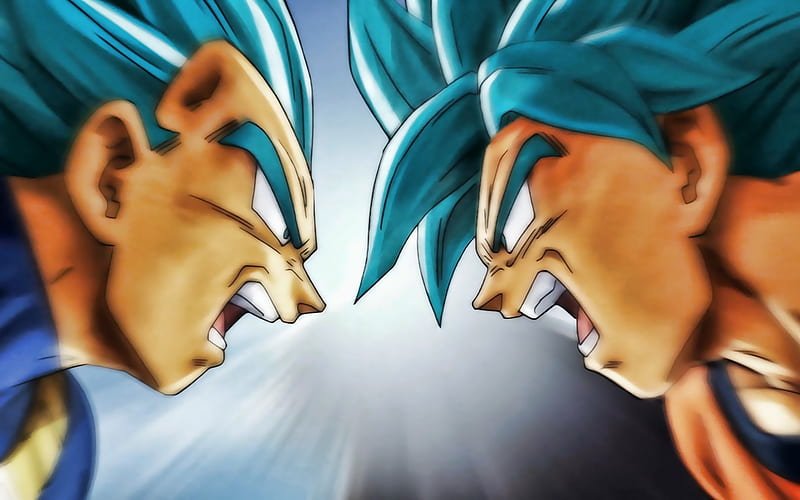
Sub vs Dub: The Oldest Debate in Anime. The Real History of Why It Exists and the Honest Answer Nobody Wants to Hear.
By Jimigrimm
The first time someone told you “subs are better than dubs,” they said it like it was a fact. Like there was an objective answer and you just hadn’t learned it yet. And the first time someone told you “the dub is fine, stop being elitist,” they said it with the same certainty. Both sides are convinced they’re right. Neither side is willing to concede. And this argument has been going on since anime first arrived in the West.
Here’s the honest answer that neither side wants to hear: the debate isn’t about subtitles versus dubbing. It’s about two fundamentally different ways of experiencing a story, and which one is “better” depends entirely on what you value. But the reason the debate exists at all, the reason it generates more heat than almost any other topic in the fandom, has nothing to do with preference. It has to do with history.
The Quality Gap Used to Be Real
In the 1990s and early 2000s, when the sub vs dub debate first became a defining argument in Western anime fandom, the sub side had a legitimate case. Early anime dubs were often produced on tiny budgets with limited talent pools, compressed production schedules, and scripts that prioritized lip-sync over accuracy. The Saban-era Dragon Ball Z dub changed “Hell” to “Home For Infinite Losers.” The DiC Sailor Moon dub turned a romantic relationship between two women into a family relationship between cousins. The 4Kids One Piece dub replaced cigarettes with lollipops and guns with water pistols.
These weren’t minor adjustments. They were wholesale rewrites of the source material, driven by the assumption that American audiences (specifically American children, since animation was assumed to be for children) couldn’t handle the original content. Fans who discovered the Japanese versions through fansubs, imported DVDs, or early streaming sites experienced a completely different show. Scenes that had been cut were restored. Dialogue that had been rewritten was original. Emotional beats that had been softened were intact. The gap between what the Japanese creators intended and what American audiences received was enormous.
That gap created the sub purist movement. If the dub was going to lie to you, the only way to experience the real show was to watch it in Japanese with subtitles. This wasn’t elitism. It was a logical response to a genuine quality problem. The dubs were objectively worse than the originals in many cases, and the fans who pointed this out were correct.
The Gap Closed. The Argument Didn't.
The modern anime dubbing industry is unrecognizable compared to what it was 20 years ago.
Funimation (now Crunchyroll) built a stable of experienced voice actors, directors, and writers who specialize in anime. Actors like Steve Blum (Spike Spiegel in Cowboy Bebop), Colleen Clinkenbeard (Luffy in One Piece), Justin Briner (Deku in My Hero Academia), and dozens of others have spent years developing performances that are faithful to the original while being natural in English. Directors like Mike McFarland, Colleen Clinkenbeard, and Christopher Sabat work with translators to produce scripts that capture intent and tone, not just literal meaning.
Simuldubs, where the English dub releases within weeks or days of the Japanese broadcast, have become the industry standard. This means dubs are being produced faster, but it also means the talent pool is deeper and the industry infrastructure is more developed than at any point in history. The quality floor for modern anime dubs is higher than the quality ceiling for 1990s dubs.
The censorship problem is also largely gone. Modern anime is released in America with its content intact. Blood stays. Violence stays. Complex themes stay. The era of lollipop cigarettes and interdimensional death is over. When you watch a dubbed anime in 2026, you’re watching a translation of the original, not a rewrite.
But the argument persists because the sub purist position hardened during the era when it was justified, and the emotional attachment to that position survived even after the conditions that created it changed. Many fans who say “subs are always better” formed that opinion 15 or 20 years ago when it was true and haven’t re-evaluated it since.
Get the history behind the stories.
One email a week. Read it before it hits the feeds.
What Each Version Actually Gives You
Here’s where the honest answer lives.
Watching in Japanese with subtitles gives you the original voice performances. Japanese voice acting is a distinct art form with its own traditions, training, and performance styles. Actors in Japan specialize in voice work in a way that’s less common in the West. The performances are calibrated for the animation they’re paired with, and the emotional range, the comedic timing, and the dramatic intensity are designed by the director to match the visuals precisely. When you watch subbed, you hear the version the Japanese creative team built.
The tradeoff: you’re reading. Your eyes are split between the subtitles at the bottom of the screen and the animation above them. You will miss visual details. During fast dialogue scenes, you’ll spend more time reading than watching. During action sequences with rapid dialogue, you’ll miss either the words or the animation. Subtitles are a translation, and translations are interpretive. The subtitle script makes choices about how to render Japanese idioms, wordplay, and cultural references that don’t have direct English equivalents. You’re not hearing the “original.” You’re reading one translator’s interpretation of the original.
Watching dubbed gives you the ability to watch. Your eyes are on the animation the entire time. You catch visual gags, background details, subtle character animations, and action choreography that subtitle viewers miss. The English performances, when done well, convey the same emotional range as the Japanese performances in a language you process instinctively rather than through reading.
The tradeoff: dubbing requires fitting English words to mouth movements animated for Japanese dialogue. This constraint sometimes forces awkward phrasing. The vocal register of English-language voice acting is different from Japanese voice acting. Some character types that work in Japanese (the high-pitched female lead, the gravelly mentor, the screaming villain) can sound different in English because the performance traditions are different. And some fans, having watched a show subbed first, find that any dub sounds “wrong” simply because it’s not what they heard originally, which is a familiarity bias, not a quality judgment.
The Shows That Break the Rules
Some anime are widely agreed to be better dubbed. Cowboy Bebop’s English dub, directed by Mary Elizabeth McGlynn with Steve Blum as Spike, is frequently cited as superior to the Japanese version because the show’s Western cultural influences (jazz, noir, Americana) resonate more naturally in English. Black Lagoon, a show about mercenaries in Southeast Asia filled with profanity and Western cultural references, feels more authentic in English. Panty and Stocking, a show deliberately styled after Western cartoons, was dubbed with a sensibility that matches its inspiration.
Some anime are widely agreed to be better subbed. Monogatari, a series built on Japanese wordplay, puns, and linguistic humor that’s untranslatable, loses entire layers of meaning in English. Gintama, which references Japanese pop culture, politics, and history constantly, requires subtitles that can provide context a dub can’t. Any show deeply rooted in Japanese language and culture will carry nuances that dubbing can’t fully replicate.
Most anime fall in between. The sub version and the dub version are both good. They’re different experiences of the same story. Neither is wrong. The “best” version is whichever one lets you connect with the characters and the story most fully, and that depends on you, not on the show.
The Debate Is Really About Identity
The sub vs dub argument generates so much passion because it’s not really about audio tracks. It’s about how you relate to anime as a medium and what your fandom means to you.
Sub purists often see watching in Japanese as a form of respect for the original creators and the culture that produced the work. Choosing subs is choosing to engage with anime as a Japanese art form rather than a product translated for Western consumption. There’s a gatekeeping element to this, but there’s also a genuine philosophical position about honoring the medium’s origins.
Dub defenders often see dubbing as the democratization of anime. Not everyone can read subtitles comfortably. Not everyone wants to. Insisting that the only valid way to watch anime is in a language you don’t speak creates a barrier to entry that keeps people out of the medium. Dubbing makes anime accessible, and accessibility is how the medium grows.
Both positions contain truth. Both positions contain blind spots. And the argument will never end because it’s not an argument about audio. It’s an argument about identity within a fandom, and identity arguments don’t have winners.
Where do you fall? Sub, dub, or depends on the show? And the question that cuts deeper than preference: when did you form your position, and have you ever re-evaluated it? If you were a sub purist in 2005, have you listened to a modern dub recently? If you’ve always watched dubbed, have you ever tried a show subbed and understood why the other side feels the way they do? We want to hear where people are now, not where they’ve always been.
MORE LIKE THIS
-
Why Is Anime So Long? The Real Reason One Piece Has 1,100 Episodes and Western Shows Have 8.
5 MIN READ -

Why Do Anime Characters Yell Their Attacks? The Real Reason Behind the Weirdest Thing in Anime.
6 MIN READ -

Serial Experiments Lain Was Made by a Team With Almost No TV Anime Experience. The Character Designer Had Never Worked on an Anime Before.
5 MIN READ

Co-founder and co-host. Veteran. Grew up on cartoons. The MCU brought all of it back and pulled him into the comics side he never picked up as a kid. Curious by default. Passionate without needing to prove anything. Good at holding a conversation.