Anime Didn't Start With Toonami. It Took 35 Years of Bootleg Tapes, Borrowed Robots, and One Movie That Changed Everything to Get There.
By Jimigrimm
If you grew up watching Toonami, there’s a good chance you think anime in the West started with a robot on a spaceship telling you to watch Dragon Ball Z after school. That’s fair. For an entire generation, Toonami was the beginning. But by the time Toonami launched on March 17, 1997, anime had already been in the West for over three decades. It just didn’t look like anime. It didn’t have a name most people recognized. And the people who loved it had to work harder than you can imagine just to watch it.
This is the real story of how anime got here. The people who smuggled, adapted, traded, and sometimes butchered Japanese animation to get it into American living rooms, one VHS tape at a time.
The 1960s: You Were Already Watching Anime. You Just Didn't Know It.
The first anime to hit American television was Astro Boy in 1963. Osamu Tezuka created the character for manga readers in 1952, and when the animated version was picked up by NBC Enterprises for syndication, it became the first Japanese animated series on American TV. But most viewers didn’t think of it as Japanese. They just thought it was a cartoon.
That was by design. American distributors renamed characters, rewrote scripts, and scrubbed anything that felt too foreign. Japanese names disappeared from the credits. The goal wasn’t to introduce Americans to Japanese animation. It was to sell cartoons that happened to come from Japan.
Gigantor followed in 1964. Kimba the White Lion in 1965 became the first anime broadcast in color in the U.S. Then in 1967, Speed Racer landed and became the biggest anime hit of the decade. The theme song alone is burned into pop culture history. But after Speed Racer, the pipeline dried up. From 1969 to 1978, almost no new anime made it to American shores.
The 1970s: Star Wars Accidentally Saved Anime in America
Then Star Wars happened. In 1977, America’s appetite for science fiction exploded, and TV networks scrambled to find anything that could ride the wave. Japan had been making space opera anime for years. Suddenly, that content had value.
In 1978, Sandy Frank Entertainment took Science Ninja Team Gatchaman, a Japanese superhero series from 1972, edited it heavily, and released it as Battle of the Planets. It aired on over 100 network affiliates by 1979. That same year, Space Battleship Yamato became Star Blazers. Both shows brought serialized storytelling to American children’s television in a way domestic cartoons weren’t doing. Episodes connected. Characters grew. Stakes were real. But these were still heavily edited adaptations disguised as American cartoons. America was watching anime on America’s terms.
The 1980s: Robotech and the Birth of the Underground
The 1980s changed everything on two completely different tracks.
On television, Voltron premiered in 1984 by combining two separate Japanese series into one to hit the 65-episode syndication minimum. Then in 1985, Robotech arrived. Producer Carl Macek took three completely unrelated Japanese series, Super Dimension Fortress Macross, Super Dimension Cavalry Southern Cross, and Genesis Climber MOSPEADA, and rewrote them into a single 85-episode saga because Macross only had 36 episodes on its own.
Robotech was unlike anything American kids had seen. Characters died and stayed dead. Love stories had real consequences. The narrative ran continuously instead of resetting every week. Macek kept mature plotlines that other adapters would have cut, saying he could have easily stripped out the emotional scenes for more action footage but chose not to. Purists coined the term “Macekre” to describe what he’d done. But historians consistently credit Robotech with starting the second major wave of anime fandom in North America. Macek even credited the original Japanese studio in the ending credits. He wasn’t hiding anime’s origins. He was smuggling it in through the only door that was open.
Meanwhile, something entirely different was happening in basements, dorm rooms, and comic book shops.
The Cartoon Fantasy Organization in Los Angeles was one of the first anime fan clubs in the country. Members traded VHS tapes with contacts in Japan, sometimes exchanging American TV recordings for raw Japanese anime with no subtitles at all. Media scholar Henry Jenkins described it perfectly: “We didn’t know what the hell they were saying, but it looked really cool.”
If you wanted a specific show, you mailed a blank VHS tape, a self-addressed stamped envelope, and sometimes a money order to another fan. Then you waited weeks. Sometimes months. And when your tape arrived, it might be a 15th-generation copy so degraded you could barely see what was happening. But you watched it anyway. Because it was the only way.
By the mid-1980s, fans started using Amiga computers and devices called genlocks to overlay translated subtitles onto video signals. These were fansubs. Groups like Arctic Animation and TechnoGirls became the biggest distributors in this underground network, translating shows no American company would ever license. The unwritten rules were simple: don’t charge more than the cost of a blank tape and postage, and if a show gets officially licensed, stop circulating. The culture that grew out of tape trading built the infrastructure that the entire Western anime industry would eventually stand on.
1989: One Movie Blew the Door Open
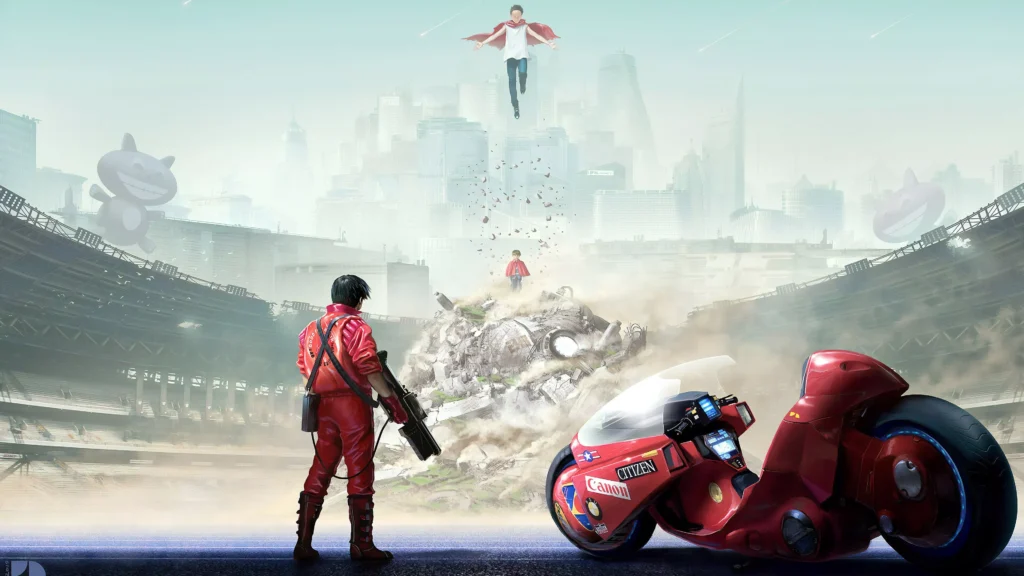
On Christmas Day, 1989, Akira opened in limited release across a handful of American theaters, distributed by Streamline Pictures, co-founded by the same Carl Macek who created Robotech.
Akira was nothing like anything American audiences had seen in animation. Violent. Philosophically dense. Set in a dystopian Neo-Tokyo. Visually stunning in a way that made Disney films look tame. This was not a children’s cartoon. This was cinema.
The theatrical run made roughly $439,000 domestically. But the real impact came through VHS and word of mouth. College students passed copies around dorm rooms. The Criterion Collection released it on LaserDisc in 1992, their first animated release and their only one for over two decades. The Wachowskis cited it as an influence on The Matrix. The Duffer Brothers pointed to it when discussing Stranger Things. Kanye West recreated its imagery shot-for-shot in his Stronger video.
Akira proved anime was an entirely different art form. And the people who watched it weren’t going back.
The 1990s: The Industry Catches Up, Then Hits a Wall
Small American companies started licensing anime. AnimEigo had been at it since 1988. Central Park Media entered in 1990. ADV Films released Neon Genesis Evangelion on VHS in 1996, completely uncut, signaling that the market had matured beyond edited children’s programming. Anime conventions were growing from hotel ballrooms into real events. The community was ready.
Then two shows tried to break through on American television and both hit the same wall.
DiC Entertainment licensed Sailor Moon and aired a heavily edited dub in syndication starting in 1995. But syndication meant local stations could air it whenever they wanted, and many buried it in early morning time slots. Ratings were poor. The dub was cancelled after 65 episodes. Fans launched Save Our Sailors, gathered 30,000 signatures on a 1996 internet petition, and organized a “procott” where they bought Pop-Tarts specifically to convince General Mills to advertise during the show. It worked. The show returned and eventually made it to Cartoon Network.
Funimation brought Dragon Ball Z to American TV in September 1996 with Saban Entertainment. Same story. Heavily edited, placed in syndication, cancelled after 53 episodes.
Both proved the appetite for anime was real. The problem was never the content. It was the delivery system. Syndication was built for self-contained cartoons, not serialized stories that required every episode in order. TV executives kept airing episodes out of sequence, in random time slots, cut to pieces. Anime needed a dedicated home, a programming team that understood why these shows were different and presented them that way.
So What Did Toonami Actually Inherit?
By March 1997, three decades of people had already fought to get anime into Western hands. The 1960s put it on American TV without anyone knowing what it was. The 1970s proved Star Wars wasn’t the only space story worth telling. The 1980s gave us Robotech on screen and an entire underground tape trading network off screen. Akira proved anime was art. And Sailor Moon and Dragon Ball Z proved the content worked even when the system delivering it didn’t.
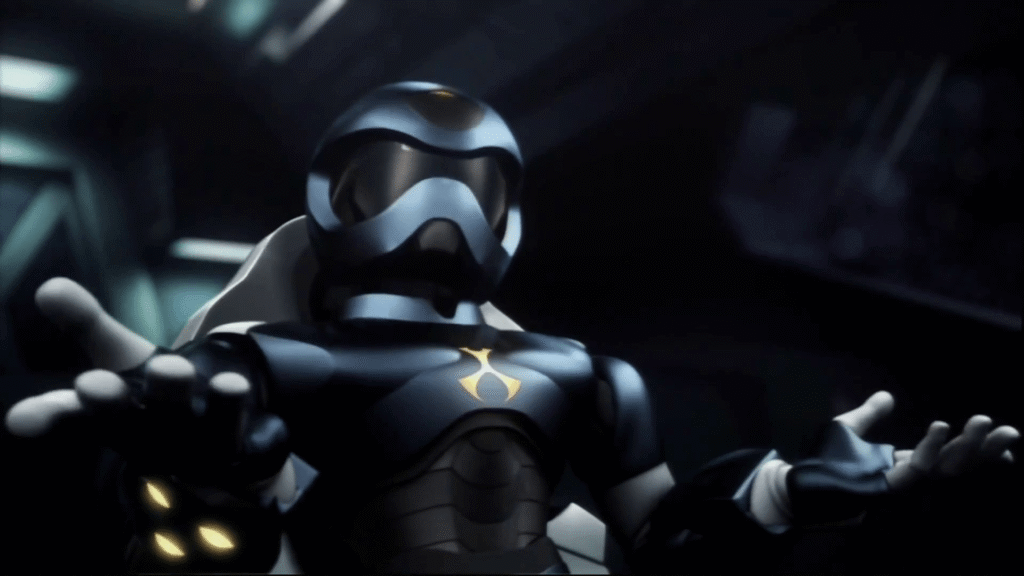
Toonami didn’t create the audience for anime in the West. It gave that audience a home. Sean Akins and Jason DeMarco built a block that respected these shows, presented them in order, and made watching anime feel like being part of something. But they were standing on 35 years of adapters, tape traders, fansub groups, and fans who refused to let this medium stay invisible.
Toonami lit the fire. But 35 years of people carried the matches.
What was your first anime? Not the first one you watched on Toonami. The first one you ever saw, even if you didn’t know it was anime at the time. Was it Speed Racer reruns? Voltron after school? A bootleg VHS your older cousin handed you? We want to hear your origin story.
read next