
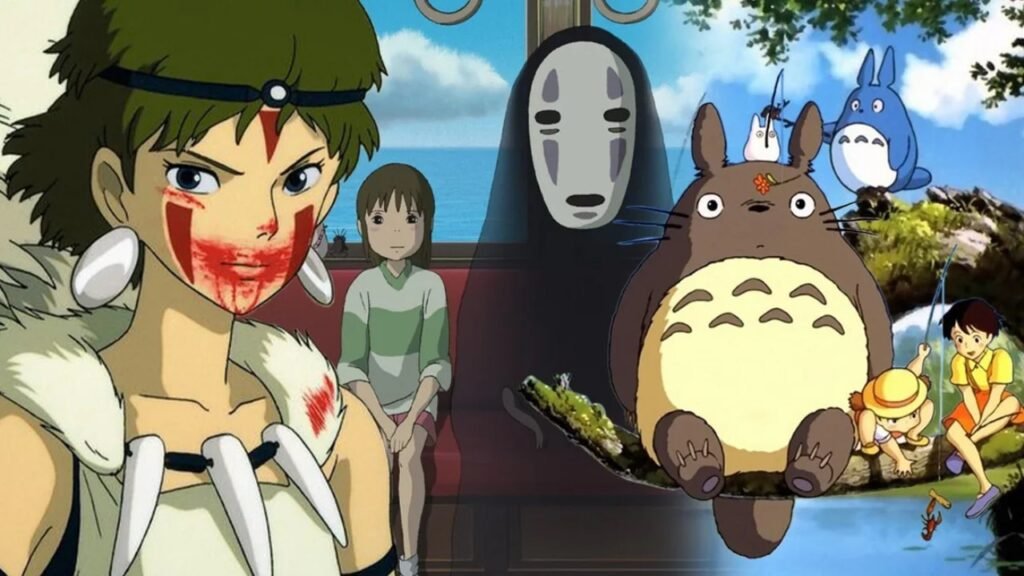
The 5 Greatest Hayao Miyazaki Movies, Ranked: Why These Films Still Mean So Much to Fans
By Fergs
From the magical world of Spirited Away to the unforgettable characters of My Neighbor Totoro, Hayao Miyazaki has created stories that stay with us long after the credits roll. We look back at five of his greatest films, what makes each one special, and why his work continues to connect with audiences across generations.
November 17, 2026
Everyone has that one animated movie they remember watching for the first time. Maybe it was the characters, the music, or a particular scene that stayed with them. Sometimes it’s difficult to explain exactly why a movie means so much to us. We just know that whenever we return to it, we experience something familiar.
Hayao Miyazaki has spent decades making those kinds of films.
In 2003, Spirited Away won the Academy Award for Best Animated Feature, bringing even greater international attention to Miyazaki and Studio Ghibli. But his career began long before that recognition. His feature directorial debut, The Castle of Cagliostro, arrived in 1979, and he helped establish Studio Ghibli alongside Isao Takahata in 1985.
Since then, his films have introduced audiences to flying castles, forest spirits, young witches, and worlds that seem to exist just beyond our own.
What makes his work remarkable isn’t simply the animation. It’s how familiar the emotions feel, even when the stories take place somewhere completely impossible.
Growing up, feeling uncertain about the future, learning to trust yourself, protecting the people you love, and trying to understand a complicated world are experiences that connect many of Miyazaki’s characters.
These are themes that audiences can appreciate differently depending on when they watch his films.
A story that once felt like a magical adventure during childhood might become something much more personal when revisited as an adult.
Choosing only five movies from Miyazaki’s career isn’t easy. There are several deserving films, and fans will understandably have their own favorites.
For this ranking, we’re considering storytelling, animation, character development, cultural influence, and how effectively each movie brings its themes together.
And if your favorite didn’t make the list, there’s a good chance we’ll be discussing it along the way.
5. Howl's Moving Castle (2004)
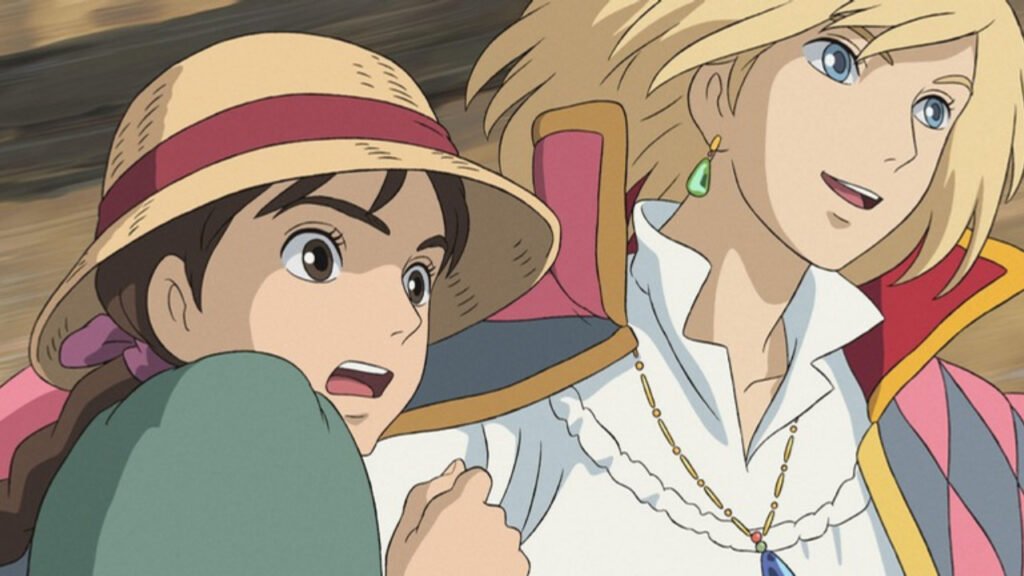
Sometimes the biggest transformation has nothing to do with magic.
There’s something about Howl’s Moving Castle that immediately draws you into its world.
Maybe it’s the enormous mechanical castle moving across the countryside, the beautiful landscapes, or the unusual collection of characters who somehow become a family.
Released in 2004, the film follows Sophie, a young woman whose life changes when a witch transforms her into an elderly woman. She eventually meets Howl, a powerful wizard whose mysterious personality hides his own insecurities.
Based on Diana Wynne Jones’s 1986 novel, Miyazaki’s adaptation places considerable emphasis on war, identity, and personal transformation.
The animation is stunning, but Sophie’s journey is what makes the movie memorable.
At the beginning, she struggles with confidence and rarely recognizes her own worth. As the story progresses, her appearance changes alongside her growing sense of independence.
Howl is dealing with his own problems. Despite his magical abilities, he often avoids responsibility and struggles to confront the destruction happening around him.
Their relationship gradually becomes the emotional foundation of the film.
And while the romance is important, the movie also contains one of Miyazaki’s recurring concerns: war.
Cities are attacked, communities are destroyed, and ordinary people suffer because of conflicts they have little control over.
The film doesn’t always explain its political storyline clearly. In fact, the complicated narrative is one reason some viewers may place it lower than his other movies.
But there’s something very relatable about watching Sophie become more confident while helping someone else confront his fears.
Howl’s Moving Castle received an Academy Award nomination for Best Animated Feature in 2006.
It earns our fifth spot because of its extraordinary imagination and the emotional relationship at the center of its story.
It’s also a reminder that sometimes the person who needs rescuing isn’t necessarily the one under the magical curse.
4. Kiki's Delivery Service (1989)
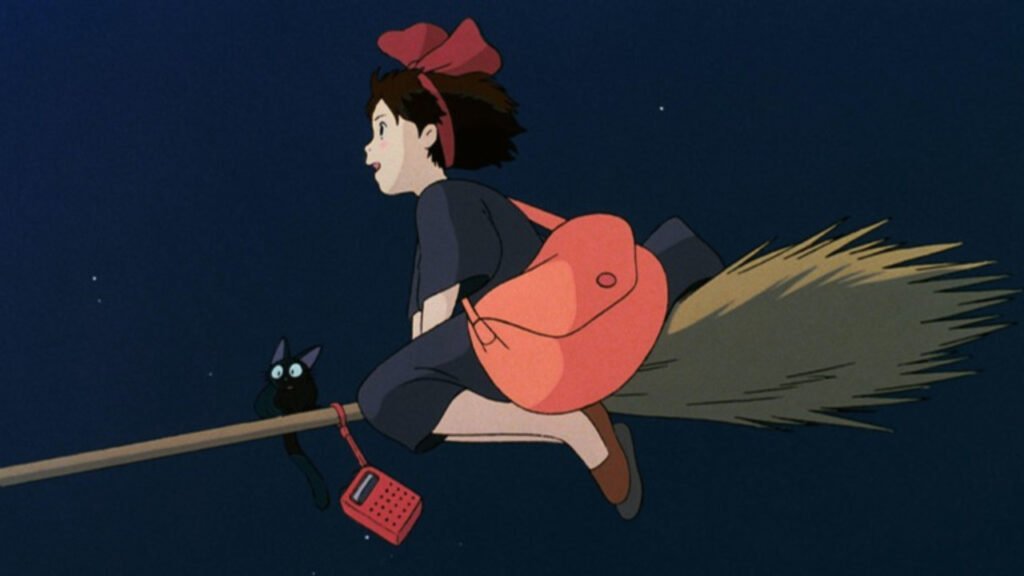
Growing up is exciting until you realize you’re responsible for figuring everything out.
If you’ve ever moved away from home, started a new job, or questioned whether you’re good enough at something, there’s a good chance Kiki’s Delivery Service will connect with you.
Released in 1989 and adapted from Eiko Kadono’s novel, the film follows thirteen-year-old Kiki, a young witch who leaves home to begin a year of independent training.
With her black cat, Jiji, accompanying her, Kiki settles in a coastal city and starts a delivery service using her ability to fly.
It sounds like a simple adventure, and for much of the movie, it is.
Kiki meets new people, finds work, and begins building a life for herself.
But things become difficult when she starts losing confidence.
Eventually, she loses her ability to fly, something that had always felt natural to her.
What makes this part of the movie so effective is that Miyazaki doesn’t treat it like a typical magical problem.
Kiki isn’t facing a powerful villain. She’s dealing with exhaustion, insecurity, loneliness, and the pressure of trying to succeed.
That’s a feeling many viewers can recognize.
Sometimes something we enjoy begins to feel like an obligation. We compare ourselves with other people, question our progress, and lose some of the confidence we once had.
Kiki’s friendship with Ursula, an artist who has experienced her own creative struggles, helps her understand that these feelings are part of growing and developing her abilities.
The film never suggests that independence means having every answer.
Instead, it shows the importance of accepting help, making connections, and learning that struggling doesn’t mean you’ve failed.
That’s why Kiki’s Delivery Service deserves fourth place.
It’s one of Miyazaki’s most relatable movies, especially for anyone who’s ever felt uncertain about where life is taking them.
And sometimes the hardest part of growing up isn’t learning something new. It’s learning how to believe in yourself again.
3. My Neighbor Totoro (1988)
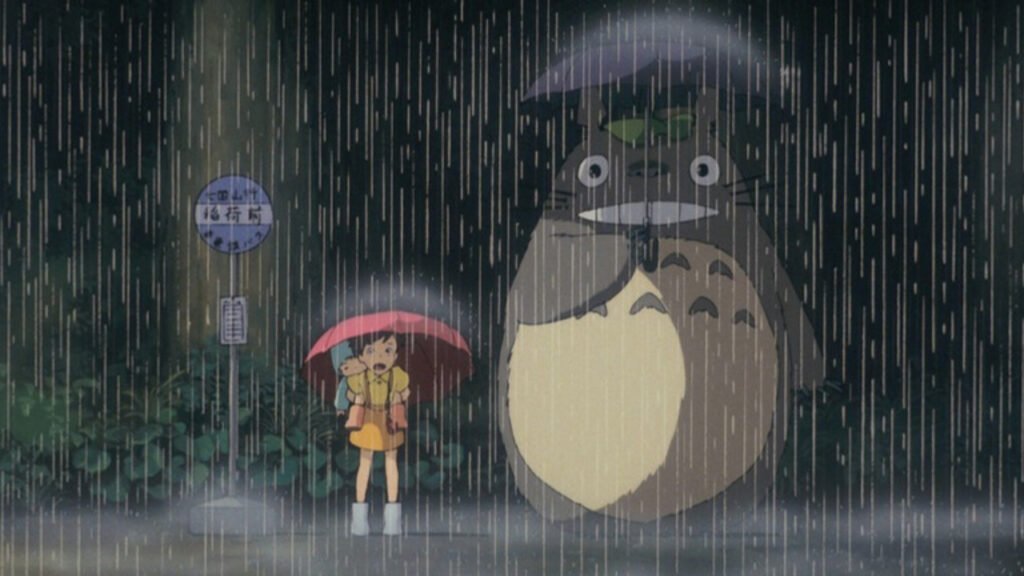
Not every unforgettable story needs a villain.
Few characters in animation are as recognizable as Totoro.
But what’s interesting about My Neighbor Totoro is how little the film relies on the type of conflict we normally expect from animated adventures.
Released in 1988, the movie follows two sisters, Satsuki and Mei, who move to the Japanese countryside with their father while their mother recovers from an illness.
As they explore their new home, they encounter mysterious forest spirits, including the large, gentle creature known as Totoro.
There’s no evil ruler to defeat or world-ending threat to prevent.
Instead, Miyazaki invites us to experience the world through the curiosity of two children.
The girls explore their surroundings, meet unusual creatures, and discover something wonderful in places that adults might overlook.
One of the film’s most memorable scenes takes place at a bus stop in the rain.
Get the history behind the stories.
Two emails a week. No algorithm deciding whether you see them.
Totoro appears beside Satsuki, and the two share a quiet moment as they wait.
There’s very little dialogue, but the animation, music, and atmosphere make the scene unforgettable.
It’s the kind of moment that reminds us how powerful animation can be without constantly needing action or dramatic explanations.
Underneath that sense of wonder, however, is a story about family.
The sisters are worried about their mother’s health, even when they don’t fully understand everything happening around them.
Their experiences with Totoro offer comfort during an uncertain time.
That’s what makes the movie special.
It allows childhood excitement and real emotional concerns to exist together.
The film appeared in the British Film Institute’s 2022 Sight and Sound critics’ poll of the greatest movies ever made, and Totoro eventually became Studio Ghibli’s mascot.
But the movie’s influence is about more than its famous character.
My Neighbor Totoro earns third place because it reminds us that storytelling doesn’t always need enormous stakes.
Sometimes a story about family, imagination, and finding comfort during difficult moments can be just as meaningful.
2. Princess Mononoke (1997)
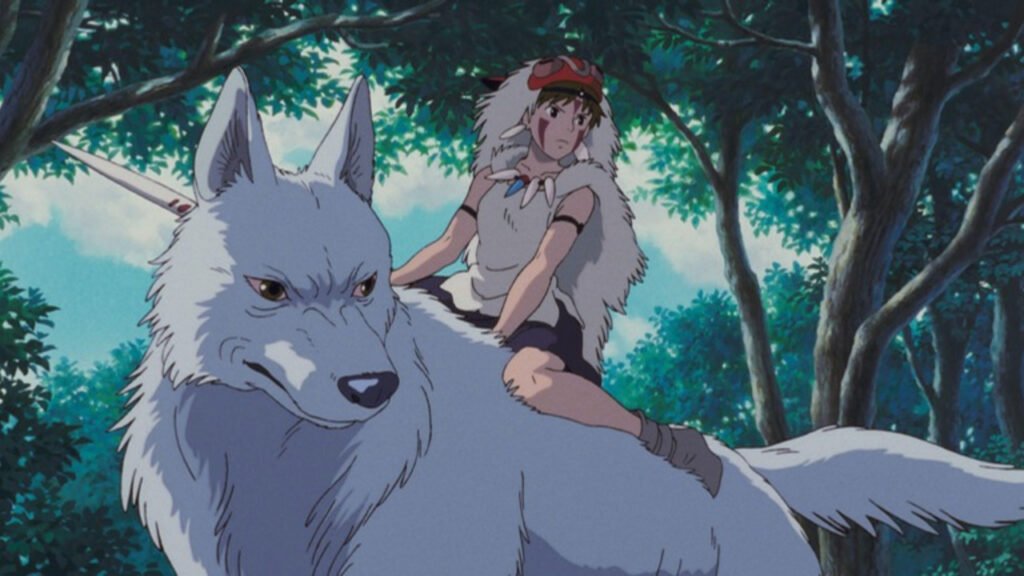
What happens when both sides of a conflict believe they’re doing the right thing?
If My Neighbor Totoro represents Miyazaki’s gentler approach to nature, Princess Mononoke shows what happens when humanity and the natural world come into direct conflict.
Released in 1997, the film follows Ashitaka, a young prince who becomes cursed after protecting his village from a corrupted boar god.
His journey leads him to Iron Town, an industrial community whose expansion threatens the surrounding forest and its supernatural inhabitants.
The conflict places him between Lady Eboshi, the leader of Iron Town, and San, a young woman raised by wolves who fights to defend the forest.
What makes Princess Mononoke extraordinary is that Miyazaki doesn’t give us an easy villain.
Lady Eboshi is responsible for destroying parts of the forest, but she also provides employment and protection for people who have been rejected or mistreated elsewhere.
San wants to protect nature, but her anger toward humanity can make her just as dangerous as the people she opposes.
And Ashitaka finds himself trying to understand both sides.
That’s what makes the story so compelling.
As viewers, we’re encouraged to recognize that people can have understandable reasons for their decisions while still causing harm.
The movie explores environmental destruction, industrial progress, violence, and the difficulty of finding peaceful solutions when different groups are fighting for survival.
Its action sequences are also among Miyazaki’s most intense.
Unlike some of his family-oriented films, Princess Mononoke doesn’t shy away from violence or the consequences of conflict.
Its success was significant for Studio Ghibli. The movie became Japan’s highest-grossing film at the time before Titanic surpassed it.
But the film’s importance goes well beyond box-office records.
It demonstrated how animated fantasy could explore complicated social and environmental issues without simplifying them for the audience.
And that’s why it earns second place.
Princess Mononoke respects viewers enough to let them wrestle with difficult questions rather than telling them exactly what to believe.
It’s a movie that can lead to a different conversation every time you watch it.
1. Spirited Away (2001)
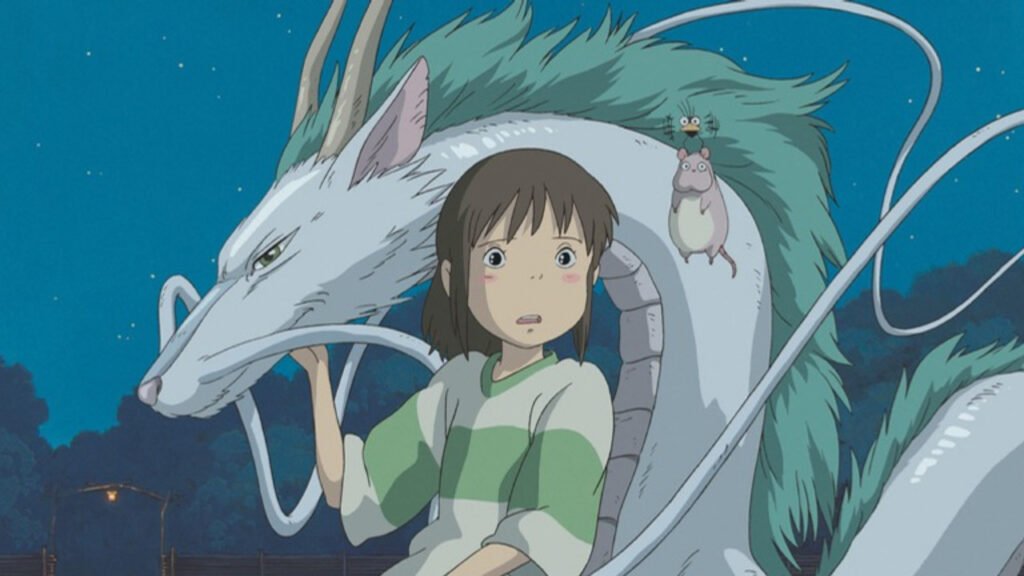
An unforgettable journey about courage, identity, and finding yourself in an unfamiliar world.
For our number one selection, we’re going with Spirited Away.
Released in 2001, the film follows ten-year-old Chihiro, whose parents are transformed into pigs after the family enters a mysterious supernatural world.
Stranded without her parents, Chihiro must find work at a bathhouse operated by the witch Yubaba while searching for a way to save her family.
The setting is filled with strange creatures, unusual rules, and characters who aren’t always what they seem.
But beneath all the fantasy is a story about a child learning to become independent.
Chihiro begins the movie frightened and reluctant to face change.
She doesn’t possess extraordinary fighting abilities, and she doesn’t suddenly discover that she’s destined to save the world.
Instead, she learns through experience.
She works, makes mistakes, develops friendships, and gradually becomes more capable of handling situations that once terrified her.
That’s what makes her journey feel so genuine.
The world around Chihiro also gives Miyazaki opportunities to explore greed, identity, and compassion.
Her parents’ transformation follows their decision to eat food that doesn’t belong to them. Yubaba controls her workers partly by taking their names, while No-Face becomes increasingly destructive in response to the greed surrounding him.
These ideas are woven into the story without turning the movie into a lecture.
And then there are the quieter moments.
One of the most recognizable sequences takes place when Chihiro rides a train across a flooded landscape.
It’s a peaceful scene that gives both the characters and the audience time to reflect.
There isn’t much dialogue, but the atmosphere communicates an emotion that can be difficult to put into words.
That’s part of Miyazaki’s strength as a filmmaker.
He understands when to let the animation, music, and movement tell the story.
Spirited Away became Japan’s highest-grossing film following its original release, holding that distinction until Demon Slayer: Mugen Train surpassed it in 2020.
It also won the Golden Bear at the 2002 Berlin International Film Festival and the Academy Award for Best Animated Feature in 2003.
Those accomplishments brought considerable international recognition to Miyazaki and Studio Ghibli.
But awards alone aren’t the reason Spirited Away ranks first.
The movie brings together so many of the ideas found throughout Miyazaki’s career: childhood, independence, identity, environmental awareness, and learning to understand others.
It creates an extraordinary fantasy world without ever losing sight of the young girl at the center of the story.
And that’s why, for this list, Spirited Away stands above the rest.
It’s the kind of movie that can mean one thing when you watch it as a child and something entirely different when you return to it years later.
Honorable Mentions: The Movies We Couldn't Leave Out
Choosing five Miyazaki movies means leaving several deserving films off the list.
Nausicaä of the Valley of the Wind (1984) deserves recognition for establishing many of the environmental themes and strong female protagonists that would become central to Miyazaki’s later work. Its success also helped lay the foundation for Studio Ghibli.
Castle in the Sky (1986) remains an important adventure film, combining ancient technology, aviation, and environmental themes.
The Wind Rises (2013) takes a more grounded approach, exploring ambition, creativity, love, and the moral consequences of technological progress.
And The Boy and the Heron (2023), which won the Academy Award for Best Animated Feature in 2024, revisits themes of grief, loss, and the complicated process of growing up.
Any one of these movies could make a strong argument for inclusion.
That’s part of what makes ranking Miyazaki’s work so difficult.
Why We Keep Coming Back to Miyazaki's Films
Looking at these five movies, it’s interesting how different they are.
Howl’s Moving Castle gives us romance, fantasy, and war. Kiki’s Delivery Service explores independence and self-doubt. My Neighbor Totoro celebrates childhood and family. Princess Mononoke confronts humanity’s relationship with nature. And Spirited Away brings many of those themes together through one extraordinary adventure.
Yet they all feel connected.
Miyazaki understands that even the most imaginative world needs characters whose emotions we recognize.
His protagonists get frightened. They make mistakes. They question themselves and sometimes struggle to understand the people around them.
And more often than not, their greatest victories come from learning something rather than defeating someone.
Maybe that’s why his films continue to connect with audiences who discovered them at completely different points in their lives.
You can appreciate the animation when you’re young and discover a deeper meaning in the story years later.
There isn’t one correct ranking of Miyazaki’s movies. Some fans will always put Princess Mononoke first. Others might argue that My Neighbor Totoro is his most important film, while someone else may have a personal connection to Kiki’s Delivery Service that no other movie can replace.
That’s what makes these conversations enjoyable.
A great movie doesn’t have to be everyone’s favorite to mean something important to the people who love it.
So now we’re turning the conversation over to you.
What’s your favorite Hayao Miyazaki movie? Do you agree with Spirited Away taking the number one spot, or would you rank another film higher?
And if you were introducing someone to Studio Ghibli for the very first time, which movie would you show them?
Let us know your ranking and keep the conversation going with The Come Up Podcast.
MORE LIKE THIS
-
The Voices Behind Your Childhood Are Real People. Most Fans Have No Idea How Much They Shaped the Characters You Love.
6 MIN READ -
These Superhero Shows Were Cancelled for Reasons That Had Nothing to Do With Quality. Fans Never Got Over It.
6 MIN READ -
Paranoia Agent Was Built From Ideas That Didn’t Fit Into Satoshi Kon’s Films. It Was His Only TV Series.
5 MIN READ

Co-founder and co-host. Veteran. Strong writer. Sharp eye for the details nobody else notices. Calm voice when the room gets loud. The kind of fan who can quote the scene, name the director, and tell you who else was in the cast without looking it up.