
How 4Kids Almost Killed One Piece in America
By Jimigrimm
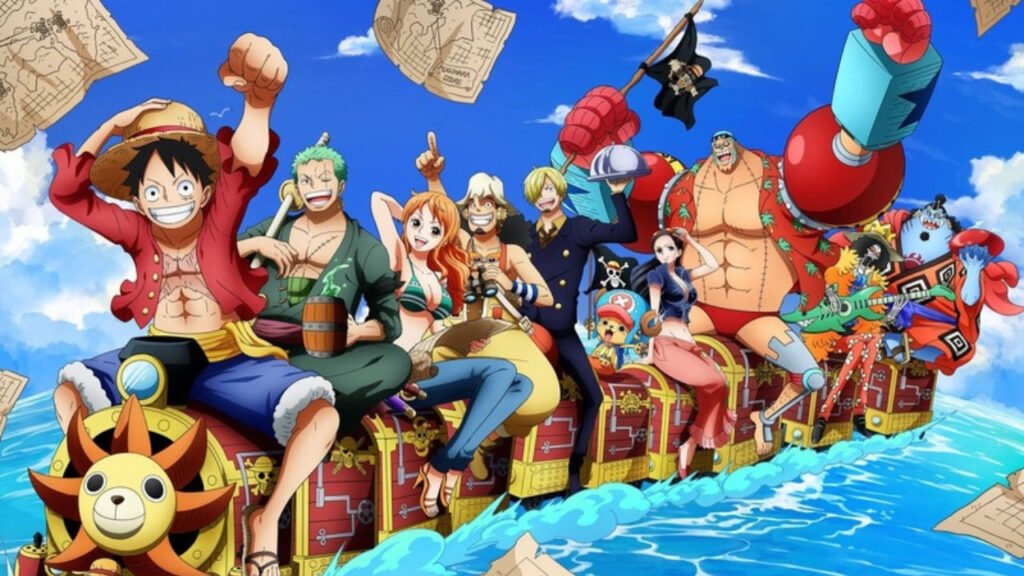
If you caught One Piece on Fox on a Saturday morning in 2004, you met a different show than the one Japan was watching. Sanji chewed a red lollipop instead of a cigarette, the guns fired corks, the swordsman was named Zolo, and the theme song was a rap.
Three years later, the company that brought it here had stopped making new episodes and lowered what it expected the show to earn. Another company had to pick the story back up at episode 144. The biggest pirate story in the world spent its first years in America in pieces, and putting it back together took more than a decade.
One Piece Was Already Huge Before 4Kids Got It
Eiichiro Oda’s manga started in Weekly Shonen Jump in 1997, and Toei’s anime premiered in Japan on October 20, 1999. When 4Kids Entertainment announced its deal on June 8, 2004, its own press release described a franchise with five theatrical movies, eight video games, more than 70 licensees and over $1 billion in Japanese retail sales. Those are 4Kids’ promotional numbers, not audited totals, but nobody was buying a small show.
It wasn’t an easy get. Animation World Network reported the deal followed a year of negotiations, and ICv2 reported other companies were chasing the rights. 4Kids came away as the TV and merchandising agent for the US, Canada, the UK, Australia, South Africa and New Zealand, and its annual report to the SEC shows it held those rights through August 2009. American readers weren’t starting from zero either. VIZ was already running the manga in the US edition of Shonen Jump and had four volumes out.
4Kids made its money on kids’ TV and the merchandise around it. It bought Saturday morning time on Fox, filled it with shows it represented, and licensed the toys and products. Chairman Al Kahn praised One Piece when the deal was announced, saying it “features a rich storyline with well-developed characters.” A year later, in an Anime News Network interview that fans reproduced at the time, he put the company’s filter more bluntly: “If we can’t merchandise it, it really doesn’t have a lot of interest for us.”
One Piece premiered on Fox Box on September 18, 2004, at 9:30 a.m. Eastern. Fox Box became 4Kids TV in January 2005, and on April 23, 2005, the dub joined Cartoon Network’s Toonami lineup at night.
What 4Kids Changed
Getting a pirate show onto Saturday morning TV meant changing a lot of what pirates do. Fan reference sites that compared the two versions shot by shot have documented the edits. In episode 3, Helmeppo’s pistol became a spring-loaded hammer. In episode 4, the guns in Shanks’ standoff with the bandits were redrawn as cork shooters, and the dialogue changed to match. Sanji’s cigarette became a red lollipop. A bottle in Shanks’ hand disappeared in one shot and got recolored in another. Even the food got edited, and Rika’s rice balls in episode 2 turned into cookies.
The violence got trimmed too. The hit from Alvida’s club on one of her crew was cut, a bruise on Helmeppo’s face was erased, and a sword held to his neck was moved away. Zoro became Zolo, Smoker became Chaser, Ace became Trace, and Devil Fruits became Cursed Fruits.
Some cuts went deeper than a prop. Laboon, the giant whale waiting at the entrance to the Grand Line for a pirate crew that promised to come back, was replaced with an iceberg. The whale and the promise Luffy makes him were gone.
The music changed as well. The Japanese opening was replaced by a rap that Shawn Conrad, then a 4Kids audio engineer, built from character notes the production gave him. “The creation of the rap was all pretty much me,” he told ComicBook.com in 2021. Kahn defended it in 2005: “we liked it, we thought it was good.” The score was new too. Composer Jeff Silverman says the first eight to ten episodes were scored with “wall to wall original score,” a library of newly written cues the show kept reusing.
143 Episodes Became 104
4Kids made 104 episodes out of material that covered Japanese episodes 1 through 143. That’s 39 fewer episodes, from a mix of whole stories being cut and episodes being merged. Japanese episodes 11 and 12 became one, and the Arlong fights and Loguetown were compressed across fewer installments.
The stories that disappeared include Buggy’s side adventure, the Warship Island story with Apis, the Koby and Helmeppo diary episodes, and Goat Island. The biggest loss was Little Garden, the giants’ island arc from Oda’s manga, Japanese episodes 70 to 77, gone except for some transition footage. Fans noticed. In an August 2005 Toonzone discussion, viewers called out the missing arc, even as others in the same thread said they were enjoying the show.
Get the history behind the stories.
One email a week. Read it before it hits the feeds.
Fan episode guides don’t agree on exactly how many Japanese episodes vanished completely. The counts run from about 20 to 28, depending on how you treat episodes where only scraps were reused. The 4Kids version ended at the Rainbow Mist story, Japanese episode 143.
4Kids Lost Faith In It
The dub didn’t bomb everywhere. A Cartoon Network ratings release from November 2005, preserved by fans on Toonzone, had One Piece’s 9:30 p.m. Toonami slot averaging 499,000 boys ages 9 to 14. That was a 4.0 rating, first in its time period for that group.
The business side looked worse. That same month, One Piece came off Fox’s Saturday lineup. 4Kids called it a midseason shuffle and ran ads promising a 2006 return. In its 2005 annual report, 4Kids lowered its estimate of what One Piece would ultimately earn and wrote off more of what the show cost. Its 2006 report listed One Piece among the properties with lower domestic broadcast sales than the year before.
The uncut release never came either. Asked in that 2005 interview whether an uncut One Piece was coming, Kahn answered, “Yes, definitely.” 4Kids never put one out. When DVD Talk reviewed the edited, English-only DVD in April 2006, it told established fans to wait for an uncut version.
On December 6, 2006, ICv2 reported an email from 4Kids marketing director Roz Nowicki: “there are no additional episodes (of One Piece) being adapted by 4Kids Entertainment.” 4Kids had made 104 episodes, and only 78 had aired in America. The rest trickled out until September 2007. The rights 4Kids disclosed ran through August 2009, and the company stopped making the show in 2006. On MangaHelpers, fans greeted the news by hoping somebody else would pick it up and finally release it uncut.
Funimation Started Over At Episode 144
In April 2007, Funimation was reported to have reached a deal with Toei. Asked in an animeOnline interview who approached whom, Funimation marketing director Lance Heiskell said, “I would say mutual.” Exactly how the rights moved from 4Kids to Funimation isn’t on the public record.
Funimation recast the show and brought back the Japanese background music. Cartoon Network wanted the TV story to keep going instead of restarting, so Funimation’s version debuted on Toonami on September 29, 2007, at 10 p.m., with Japanese episode 144. TV still meant edits. “We have to edit out some things to get it on TV,” production manager Justin Cook said. The full show went to home video, and the first uncut, bilingual box set, episodes 1 through 13, came out on May 27, 2008.
It Took Years To Come Back
The comeback wasn’t instant. Funimation’s Toonami run stopped in March 2008, and One Piece didn’t return to the block until 2013.
The rebuild happened off TV first. On May 14, 2009, Funimation, Toei, Shueisha and Fuji TV announced a subtitled simulcast for the US and Canada, close to the Japanese broadcast. The launch that month was delayed after episode 403 leaked online. In 2010, VIZ ran a push to close the gap between the Japanese and English manga. “This meant a staggering five volumes a month for six straight months,” editor Alexis Kirsch told Barnes & Noble years later.
Adult Swim’s revived Toonami picked up One Piece on May 18, 2013, at episode 207, ran it until March 2017, and brought it back in January 2022 with episodes 517 and 518. Toonami’s Jason DeMarco said at the time that “Toei VERY MUCH wanted us to run it,” according to Toonami Squad.
The show 4Kids walked away from is everywhere now. Netflix’s live-action series pulled 37.8 million global views in under two weeks in 2023 and was renewed right away. Season two drew 16.8 million views in its launch week in March 2026 and 47.3 million across the first half of the year. Nielsen ranked it 15th among streaming originals in the US for the first half of 2026, at about 5.7 billion minutes watched on TV sets.
The manga and the anime are moving too. The first One Piece omnibus ranked fifth on ICv2’s 2025 chart of US manga sales. The English dub of the Elbaph arc started its weekly run on Crunchyroll on October 20, 2026. In August 2026, Toei said its Los Angeles One Piece Fest sold out after close to 500,000 ticket lottery entries.
What's On The Record And What Isn't
Confirmed by 4Kids’ own SEC filings: it lowered its revenue expectations for One Piece, saw domestic broadcast sales fall, and held rights through August 2009. Production stopping in 2006 comes from the company email ICv2 reported. The edits are documented by fan comparisons and period reporting, and Sanji’s lollipop and the name changes are the best corroborated.
Not established: what 4Kids paid, how the rights moved to Funimation, and how much of One Piece’s slow start here came from the edits versus everything else. Some popular stories don’t hold up against the record. No verified source shows that 4Kids got One Piece in a package deal without watching it, that Oda hated the dub or pulled the rights, or that a Zorro lawsuit forced the name Zolo. Treat those as rumors.
“Almost killed” is our read of that record. The company holding the rights stopped making the show with years left on its deal and handed it off unfinished, and it took Funimation, Toonami, VIZ and the fans more than a decade to rebuild it. No document says One Piece was one decision away from disappearing here, and it never fully left. The manga kept selling, and on Toonami, boys 9 to 14 kept watching.
Which One Piece did you meet first, the 4Kids version on Saturday mornings or the uncut one later? If you started with Zolo and the lollipop, what got you to give the real thing a shot?
MORE LIKE THIS
-

Serial Experiments Lain Was Made by a Team With Almost No TV Anime Experience. The Character Designer Had Never Worked on an Anime Before.
5 MIN READ -
Attack on Titan Was Rejected for Being Too Dark. The Teenager Who Created It Refused to Change It. It Crossed Into the Prestige-TV Mainstream That Anime Almost Never Reaches.
7 MIN READ -
The Big O Was Cancelled in Japan After 13 Episodes. It Was So Popular in America That Cartoon Network Helped Fund the Other Half.
6 MIN READ

Co-founder and co-host. Veteran. Grew up on cartoons. The MCU brought all of it back and pulled him into the comics side he never picked up as a kid. Curious by default. Passionate without needing to prove anything. Good at holding a conversation.