
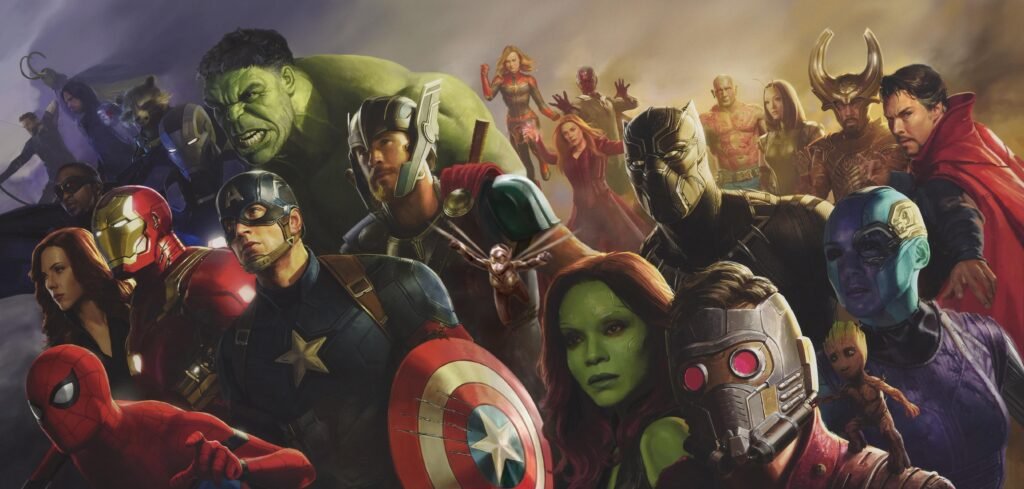
Marvel Just Lost the Team That Designed the Way the MCU Looks. The Real Story Behind Why It Happened Is Bigger Than Marvel.
By Jimigrimm
Every Marvel movie opens the same way. The logo forms, and as it builds, concept art flashes across the screen. Painted illustrations of Iron Man, Captain America, Thor, Black Panther, Spider-Man. Those aren’t stock images pulled from a folder. They’re the work of a team of artists who have been translating Marvel’s heroes from comic book pages into living, breathing movie characters since the first Iron Man film. That team designed every suit, every helmet, every visual detail that made you look at a superhero on screen and think “that looks exactly right.”
Disney just gutted nearly all of them. Not because the work was bad. Not because the movies were failing. Because a corporate restructuring doesn’t distinguish between the people who built a $31 billion visual identity and everyone else on the spreadsheet.
What the Visual Development Team Actually Did
Most people who watch the MCU have never heard of the Visual Development team. That’s by design. Their job was to be invisible. When the work is perfect, you don’t notice it. You just watch Captain America throw his shield and never think about the fact that someone had to figure out how a World War II-era costume could look heroic in a modern action movie without looking ridiculous.
Ryan Meinerding led that team. He’s been at Marvel Studios since the beginning. Jon Favreau brought him on to design Iron Man after the two worked together on a version of John Carter of Mars that never got made. Meinerding designed the Mark 1 suit, the one Tony Stark builds in the cave. He designed every single Captain America suit across every film. He led visual development on Black Panther, Spider-Man: Homecoming, Infinity War, and Endgame. In the credits for Endgame, the highest-grossing movie of all time, his name appeared before Robert Downey Jr.’s.
The team he built included artists like Andy Park, who designed Gamora, Hela, Captain Marvel, and Ant-Man. Rodney Fuentebella. Jackson Sze. Wesley Burt, who worked on Eternals, Loki, Endgame, Thunderbolts, and Deadpool and Wolverine. These weren’t freelancers cycling through on short contracts. They were full-time employees, some with over a decade at the studio, who understood the visual language of the MCU because they helped invent it.
What made Marvel’s model unusual is that most Hollywood studios hire concept artists per project. You come in, you design what needs designing, you leave when the project wraps. Marvel kept their team permanent. That permanence is what gave the MCU its visual consistency. A character could appear in a solo film, a Disney+ show, and an Avengers crossover and look like the same person in all three because the same team was designing across all of them.
That model is over. A skeleton crew remains. Future projects will rely on outside contractors hired on a per-project basis.
What Happened and Why
Disney’s new CEO Josh D’Amaro sent an internal memo announcing the elimination of roughly 1,000 roles across the entire company. He described the cuts as a move to “streamline operations” and build “a more agile and technologically-enabled workforce.” Marvel took an approximately 8% workforce reduction across both its Burbank and New York offices.
The cuts hit nearly every department. Film and TV production. Comics. Franchise. Finance. Legal. Visual development. The visual development team took the deepest hit.
Get the history behind the stories.
One email a week. Read it before it hits the feeds.
On the comics side, David Gabriel, Marvel’s Senior Vice President of Print, Sales and Marketing, was let go after 23 years with the company. Gabriel was one of the most powerful behind-the-scenes figures in Marvel Comics, overseeing the publication schedule, global licensing, and new line development for over two decades. Three editors were also confirmed gone: Devin Lewis, who spent 13 years at Marvel and worked on titles like Moon Knight and Daredevil. Darren Shan, over 10 years, who worked on X-Men titles including X-Men ’97’s comic tie-ins. Lauren Bisom, 6 years, who worked on Marvel Zombies and the kids line.
Here’s the detail that matters most: Bleeding Cool confirmed that these cuts are not related to Marvel Comics’ performance. The comics division is having some of its best sales in years. This is a Disney-level corporate decision about cost reduction that hit every division of the company. ESPN took cuts. The traditional TV business took cuts. Marvel took cuts. The layoffs aren’t a response to something Marvel did wrong. They’re a response to a new CEO restructuring a corporation.
That distinction matters because it means the people who lost their jobs didn’t lose them because their work wasn’t good enough. They lost them because their salaries appeared on a spreadsheet that needed to get smaller.
The Wesley Burt Detail
Wesley Burt, one of the concept artists who was let go, posted about his experience on social media. His layoff meeting with HR took place in a Marvel conference room. On the wall behind him during that meeting was a massive Loki mural that he had painted himself. He described “the irony of having a one-on-one HR layoff meeting in the conference room with my Loki mural on it.”
An artist, sitting in a room decorated with his own work, being told he no longer works there. That image tells you everything about how corporate restructuring treats the people who build the things that make the corporation valuable.
What This Could Mean Going Forward
The concept art for the MCU’s current slate is almost certainly finished. Leaked artwork confirmed that visual development for the end of the Multiverse Saga was well underway over a year ago. The movies and shows releasing over the next year or two were probably designed by the team that just got let go. Their work will be on screen. They won’t be employed by the company profiting from it.
The longer-term question is what happens after. The MCU’s visual consistency has been one of its defining strengths. Characters look right. Costumes evolve in ways that feel natural. The world has a coherent aesthetic even across wildly different directors and tones. That consistency came from having a permanent team with institutional memory stretching back to Iron Man. A contractor model, where different artists cycle in and out per project, can produce excellent individual work. Whether it can produce a visually unified universe across dozens of simultaneous projects is an open question nobody has an answer to yet.
The shift also changes what it means to be one of these artists. Full-time employment meant health insurance, stability, and the ability to build deep knowledge of the universe over years. Contract work means project-to-project uncertainty. The people who designed the most successful film franchise in history now have the same job security as everyone else in an industry that increasingly treats artists as temporary resources.
The Bigger Picture
This isn’t just a Marvel story. It’s an industry story. Disney is the largest entertainment company on earth, and when Disney decides that in-house creative teams are a cost to be cut rather than an investment to be protected, every other studio in Hollywood sees that decision and takes notes.
The visual development team at Marvel Studios proved that keeping artists permanent, investing in their institutional knowledge, and trusting them across an entire franchise produces results that audiences can feel even if they can’t name. The MCU doesn’t look like anything else in Hollywood because of that team. Whether it continues to look like nothing else without them is the question that matters now.
Marvel has rebuilt before. After bankruptcy in 1996. After the Phase Four growing pains. After the Kang situation collapsed. The studio has a pattern of finding its way through crises. But the people who made the MCU’s visual identity aren’t a crisis to be managed. They’re the foundation that made everything else possible.
How are you feeling about this? Does it change how you think about the MCU going forward? If you’re someone who works in a creative field, does the Wesley Burt detail sit with you differently than it does for everyone else? And the bigger question: when a company cuts the people who built what made it special, what exactly is left to streamline? We want to hear where you’re at.
MORE LIKE THIS
-
Why Does Marvel Keep Canceling Projects? Blade Is Dead After Seven Years, Wonder Man Lost a Season It Was Already Promised, and the Real Answer Is On the Record.
7 MIN READ -
The Spider-Man: Brand New Day Trailer Is Hiding a Bigger Story Than You Think. Here’s the Comics That Prove It.
14 MIN READ -
Marvel and DC Stopped Making Comics Together for Over 20 Years. The Story of Why They Stopped and What Brought Them Back Is Bigger Than the Crossovers Themselves.
6 MIN READ
Co-founder and co-host. Veteran. Grew up on cartoons. The MCU brought all of it back and pulled him into the comics side he never picked up as a kid. Curious by default. Passionate without needing to prove anything. Good at holding a conversation.