5 Anime That Turned the '90s Into Anime's Big Bang in the West. And Changed Who the Audience Was Forever.
By Jimigrimm
Before the 1990s, anime had an audience in America. It just wasn’t the audience most people think of.
It was import VHS collectors. Convention goers. College kids passing around fansubs. A small, dedicated community that had to work to find what they loved. Anime existed in the West. But it didn’t have a mainstream audience. It didn’t have kids coming home from school and flipping it on like it was normal. It didn’t have families recognizing characters in the toy aisle. The ’90s changed all of that, and it changed it fast.
But here’s what most “best of the ’90s” lists don’t talk about: the anime that mattered most in this decade didn’t just matter because they were good. They mattered because each one reached an audience that anime had never touched before. Each show on this list brought a different group of people into the fold. And once they were in, they didn’t leave.
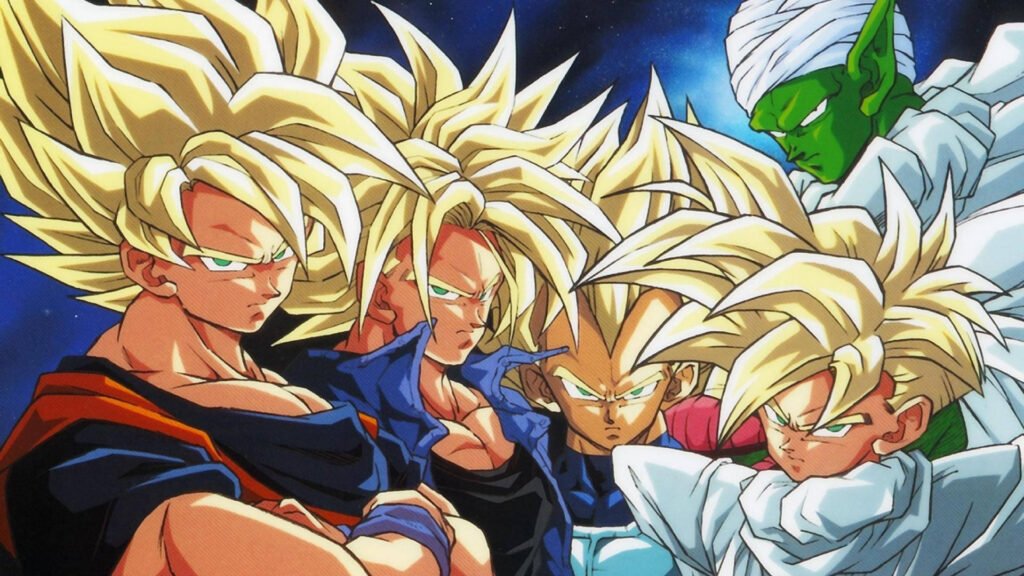
Dragon Ball Z: The Kids Who Came Home From School
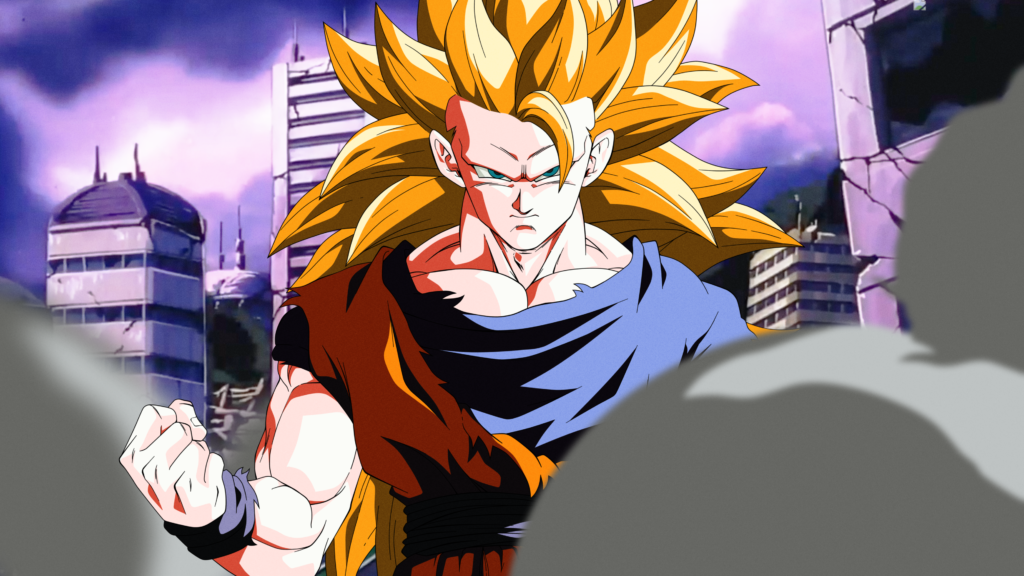
If there’s a ground zero for mainstream anime in America, it’s Dragon Ball Z on Toonami at 5pm.
DBZ actually failed in America first. FUNimation brought it over in 1996 through syndication and it got cancelled after two seasons. Nobody was watching. Then Cartoon Network put it on Toonami’s weekday afternoon block on August 31, 1998, right when kids were getting home from school and flipping through channels. That one scheduling decision changed everything.
By September 1999, Dragon Ball Z was the #1 show on all of cable television for boys 9-14 and men 12-24. Not the #1 cartoon. The #1 show. A Japanese anime on a single cable channel was outdrawing broadcast network programming on ABC, NBC, and CBS in its target demo.
The audience DBZ created was massive and it was young. These were kids who had never heard of anime before. They didn’t seek it out. It found them through Toonami. And once they were hooked, they stayed. Every anime that aired on Toonami after, Gundam Wing, Rurouni Kenshin, Yu Yu Hakusho, Outlaw Star, all of them benefited from the audience that DBZ built. Those kids grew into the adults who built the modern anime industry in the West.
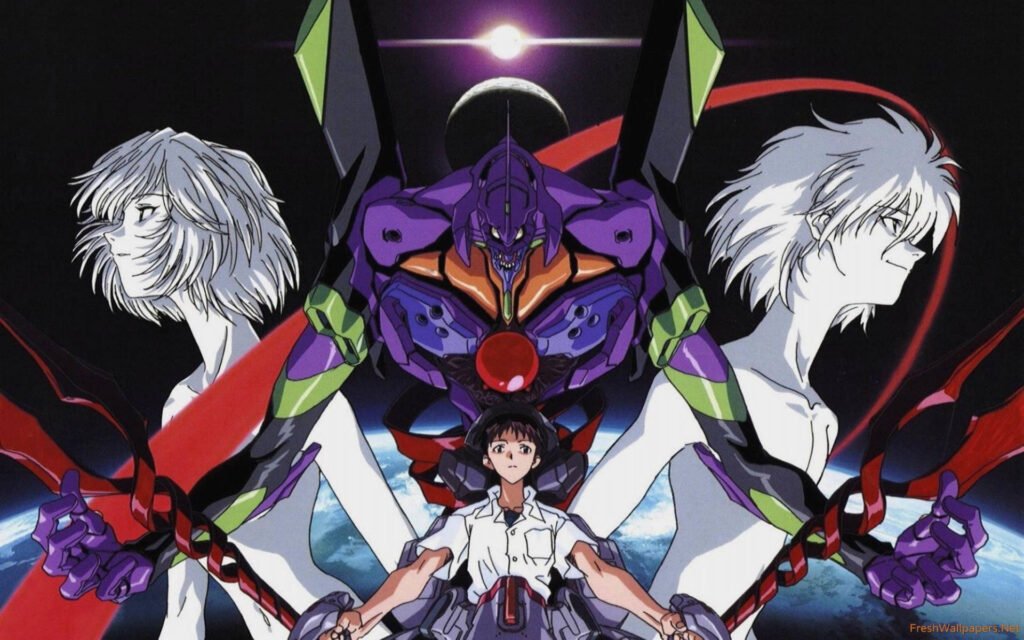
Neon Genesis Evangelion: The Adults Who Realized Anime Wasn't Just for Kids
Evangelion is the pick that separates a surface-level list from a real one. Not because it was popular with mainstream audiences in the ’90s. It wasn’t. It’s here because of who it reached and what it proved anime could do.
Before Evangelion, the Western perception of anime was largely: cool action cartoons from Japan. Evangelion destroyed that perception. Twenty-six episodes about teenagers piloting giant robots that’s actually about depression, abandonment, identity crisis, and the fear of human connection. Creator Hideaki Anno was going through his own battle with depression when he made it, and you can feel it in every episode.
The show won the Excellence Prize at the Japan Media Arts Festival. It was so intense that TV Tokyo had to tighten censorship standards for anime. And it spawned an entire wave of “post-Evangelion” shows that tried to capture the same psychological depth. But more importantly, Evangelion was the show that made older viewers, college students, film enthusiasts, people who wouldn’t normally touch animation, take anime seriously as an art form. It expanded the ceiling of what anime could be, and in doing that, it expanded who was willing to watch it.
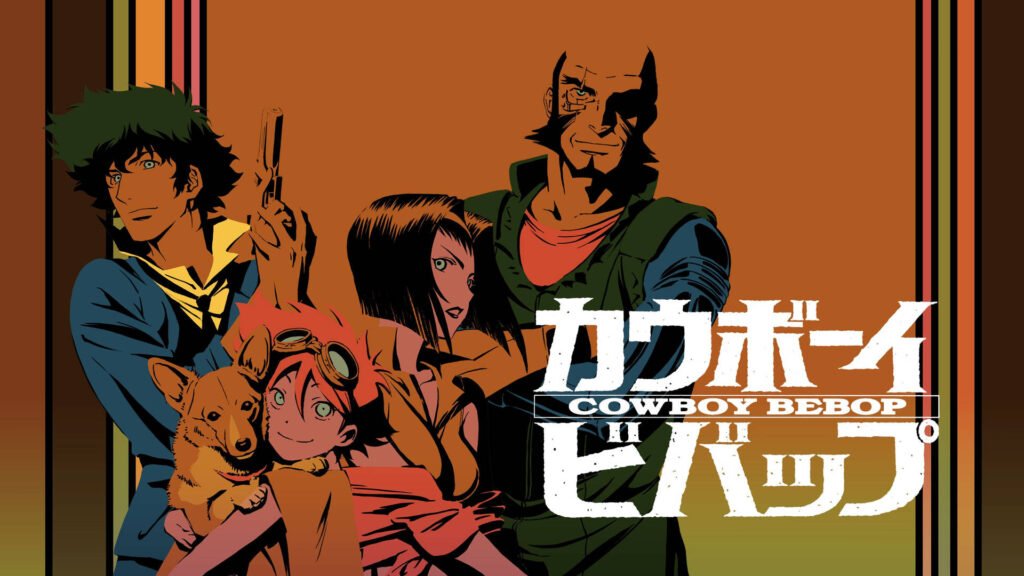
Cowboy Bebop: The People Who "Don't Watch Anime"
Every medium has a gateway. The one thing you recommend to someone who thinks they don’t like it. For anime, that gateway has been Cowboy Bebop for over two decades.
When it aired in Japan in 1998, it got censored so heavily that only half the episodes were broadcast. It found its real audience in the West when it became the first anime to air on Adult Swim in September 2001. The English dub is still widely considered the gold standard for any dubbed content, period.
What made Bebop the ultimate gateway wasn’t just quality. It was accessibility. The setting pulled from American Westerns, film noir, and Hong Kong action flicks. The soundtrack was jazz, blues, and rock. The stories were character-driven and mostly self-contained, more like a really good TV show than a typical anime. Director Shinichiro Watanabe built something designed to cross cultural borders, and it worked perfectly.
Cowboy Bebop reached the people who would have said “I don’t watch anime” and turned them into anime fans anyway. That audience, the skeptics, the adults who thought animation was for kids, the people who needed to be met on their own terms, that’s who Bebop brought in. And many of them never looked back.
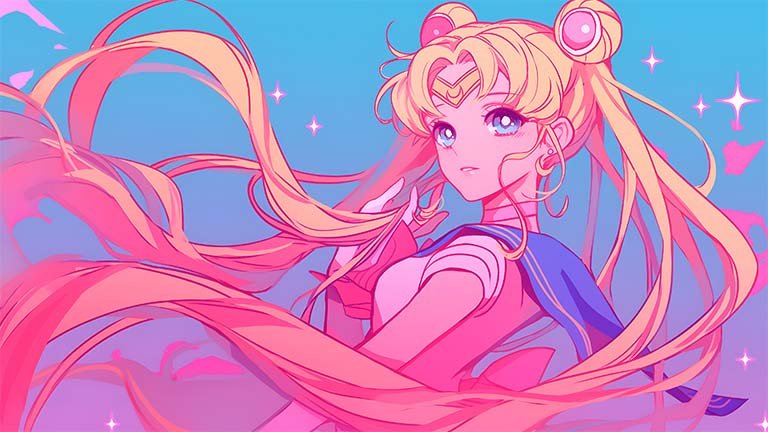
Sailor Moon: The Girls Who Finally Had a Seat at the Table
Before Sailor Moon hit US airwaves in 1995, anime in America was marketed almost exclusively to boys. Action shows, fighting shows, robot shows. The industry wasn’t targeting girls because it assumed girls weren’t interested.
Sailor Moon proved that assumption was dead wrong.
Canadian librarian and anime historian Gilles Poitras defines an entire generation of anime fans as the ones “who were introduced to anime by Sailor Moon in the 1990s,” pointing out that they were younger than previous fans and, for the first time, mostly female. That’s not somebody’s opinion. That’s a real, documented shift in who watches anime.
The manga sold over 46 million copies worldwide. The franchise generated $2.5 billion in global merchandise sales. It was called “the biggest breakthrough” in English-dubbed anime by multiple industry sources. And its fingerprints are all over Western animation. Totally Spies, Winx Club, The Powerpuff Girls, Kim Possible. All of them trace back to Sailor Moon proving that action-driven stories with female leads could find a massive audience.
DBZ and Sailor Moon aired on Toonami together. One captured the boys. The other captured the girls. Between them, the potential audience for anime in America doubled overnight. You cannot tell this story with only one of them.
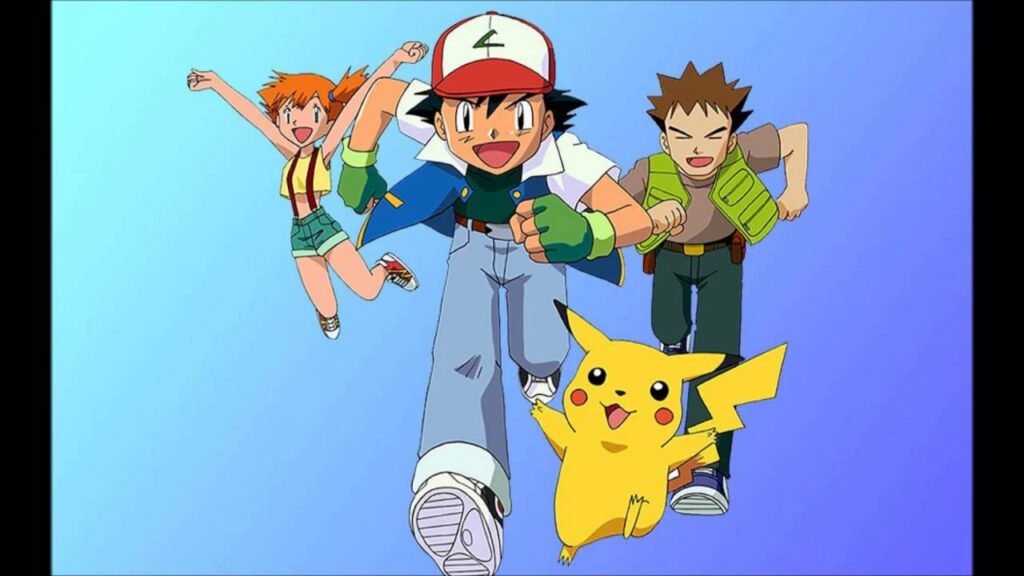
Pokemon: Everyone's Parents
This is the pick that starts arguments because the people who love anime as an art form don’t always want to acknowledge it. But the data makes it unavoidable.
Pokemon is the highest-grossing media franchise of all time. Not anime franchise. Media franchise. Bigger than Star Wars. Bigger than Marvel. Bigger than Mickey Mouse. The anime hit American airwaves in September 1998 and within months it was inescapable. The show, the Game Boy games, the trading cards, the toys, the movies, all of it hit at once.
If you’re judging Pokemon purely as anime storytelling, it’s not in the same conversation as Evangelion or Cowboy Bebop. But that misses the point of what Pokemon actually did. It brought anime into households that didn’t know what anime was. Your parents knew what Pokemon was. Your teachers knew what Pokemon was. The kid in class who wouldn’t have been caught dead watching a “cartoon from Japan” was watching Pokemon every single day.
DBZ built the anime audience. Sailor Moon doubled it. Evangelion elevated it. Cowboy Bebop converted the skeptics. And Pokemon made anime so mainstream that it stopped being something you had to explain to people. That reach matters, even if the show itself isn’t what hardcore fans point to when they talk about the art form.
Honorable Mentions
Ghost in the Shell (1995). First anime film released simultaneously in Japan, the UK, and the US. Directly inspired The Matrix. Brought anime to Hollywood’s attention as serious filmmaking. The industry influence is enormous, but its ’90s reach was niche compared to the main five.
Yu Yu Hakusho (1992). 112 episodes of supernatural action that built a loyal cult following and heavily influenced the battle shonen genre that dominates anime today.
Berserk (1997). Dark, violent, and uncompromising. Its influence shows up everywhere from Black Clover to Doom Eternal. Not for everyone, but undeniably important.
Rurouni Kenshin (1996). Brought historical Japanese storytelling to Western anime fans in a way that was accessible and exciting. A Toonami staple.
The Audience Before and After
Before the 1990s, anime fans in America numbered in the thousands, maybe tens of thousands. Import collectors, convention regulars, fansub traders. By the end of the decade, anime was reaching millions of viewers every week through Toonami alone. The audience had expanded from niche hobbyists to school-age kids, teenage girls, college students, mainstream adults, and entire families.
Each show on this list didn’t just entertain. It opened a door for a specific group of people and brought them into a world they didn’t know existed. That’s what made the ’90s anime’s Big Bang.
The question is: which show on this list was YOUR door? Tell us in the comments.
READ NEXT